
HiPinny Journal
Why Can’t Glitter Precisely Match Pantone Colors?
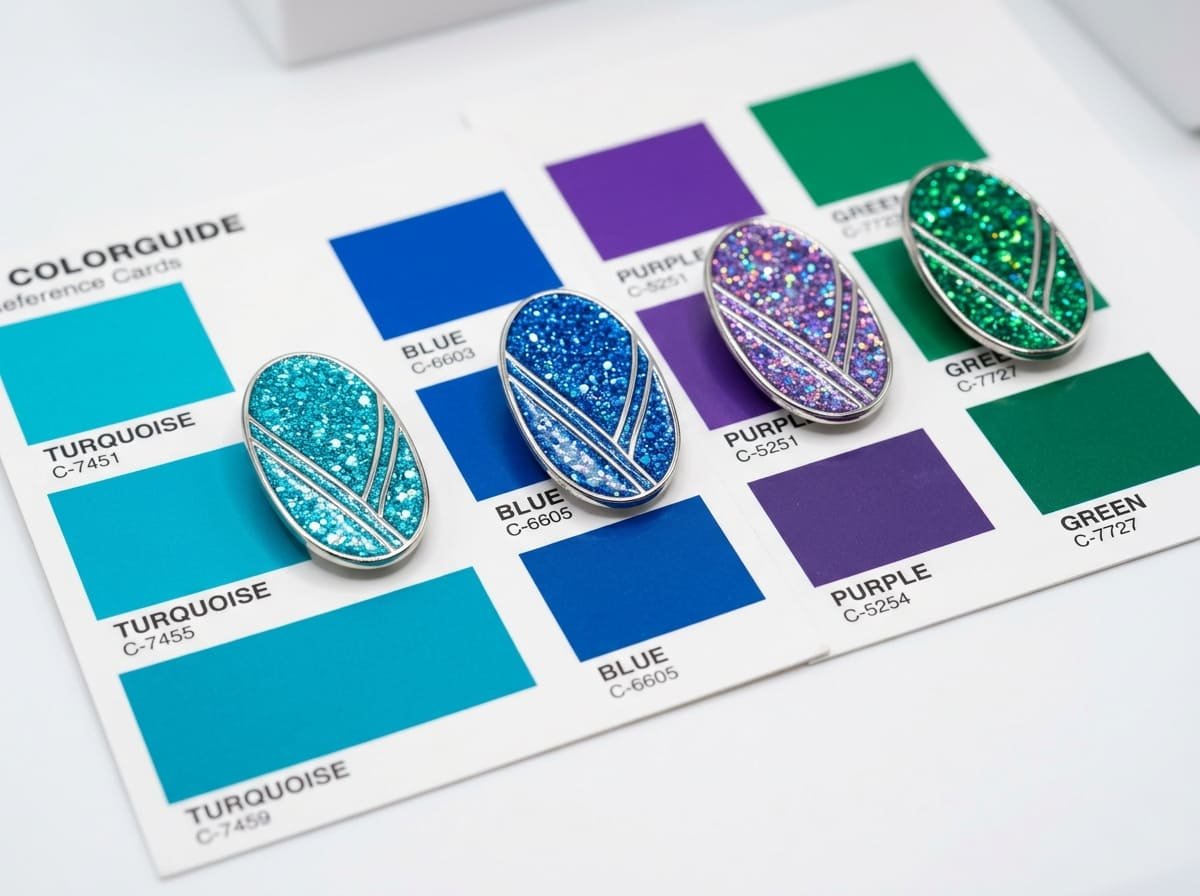
If you're designing custom enamel pins, achieving precise color matching is probably high on your priority list. But when it comes to glitter enamel, matching Pantone colors exactly is not possible1 — and a common source of confusion between designers and manufacturers. Understanding why glitter behaves differently from solid colors can help set realistic expectations for your next project.
Glitter enamel’s reflective, dynamic properties make Pantone matching inherently inaccurate. Pantone colors are static, opaque standards designed for predictable applications like printing2. Glitter introduces variables that disrupt this predictability, both in light interaction and in its multi-material composition.
Let’s dive deeper into these differences so you can better navigate glitter color selection with your manufacturer.
Why doesn’t glitter match Pantone colors?
At first glance, glitter enamel seems like it should behave the same as solid enamel colors during production. But there’s an inherent mismatch between glitter materials and the rigid Pantone system.
Static Pantone colors cannot account for glitter’s reflective and shifting nature. Glitter enamel contains reflective particles that scatter light3, creating a vibrant yet unpredictable effect. In contrast, Pantone colors are formulated for consistency and reproducibility in flat, solid applications like ink or paint. This misalignment explains why exact matches are impossible.
How does glitter behave differently?
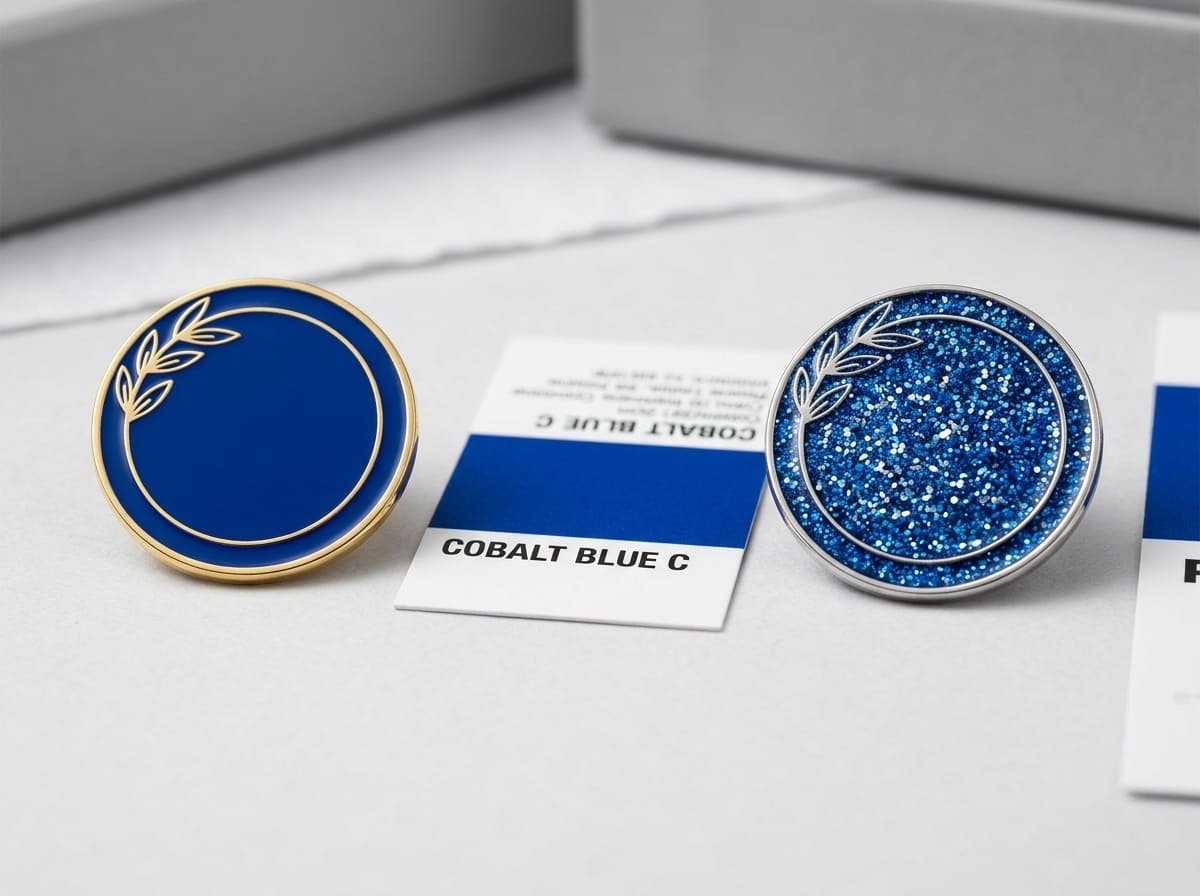
Glitter enamel consists of fine metallic or polyester particles suspended in a tinted base resin4. These particles reflect and refract light at different angles, making the perceived color change depending on lighting, viewing angle, and particle density.
Key challenges include:
- Dynamic interactions with light: Glitter sparkles under bright light and appears muted in dim conditions5, shifting the appearance versus a set Pantone sample.
- Uneven distribution: Glitter particles vary in size and density, causing subtle inconsistencies in their reflective intensity.
- Base resin effect: The surrounding resin’s color can influence how the glitter particles appear.
Pantone standards were never designed to accommodate reflective or dynamic materials like glitter6. They work best for opaque, consistent surfaces — not for a medium that changes appearance on the fly.
Can glitter be color-matched at all?
Simply put, no — glitter cannot precisely match Pantone colors due to its unique composition and interactive properties. However, close approximations can be achieved by carefully choosing glitter color bases.
Manufacturers often offer glitter options matched by eye against Pantone swatches7. While this produces a reasonable likeness, it’s important to remember the finished product’s dynamic nature won’t match the static Pantone sample exactly.
For better results:
- Communicate openly with your manufacturer. Explain your goals and ask for samples before mass production.
- Consider base resin and glitter particle effects. These components influence how the color will look in finished products.
- Request visual mockups: Seeing a simulated representation of glitter under different lighting can help set expectations.
Real-world example: A customer experience
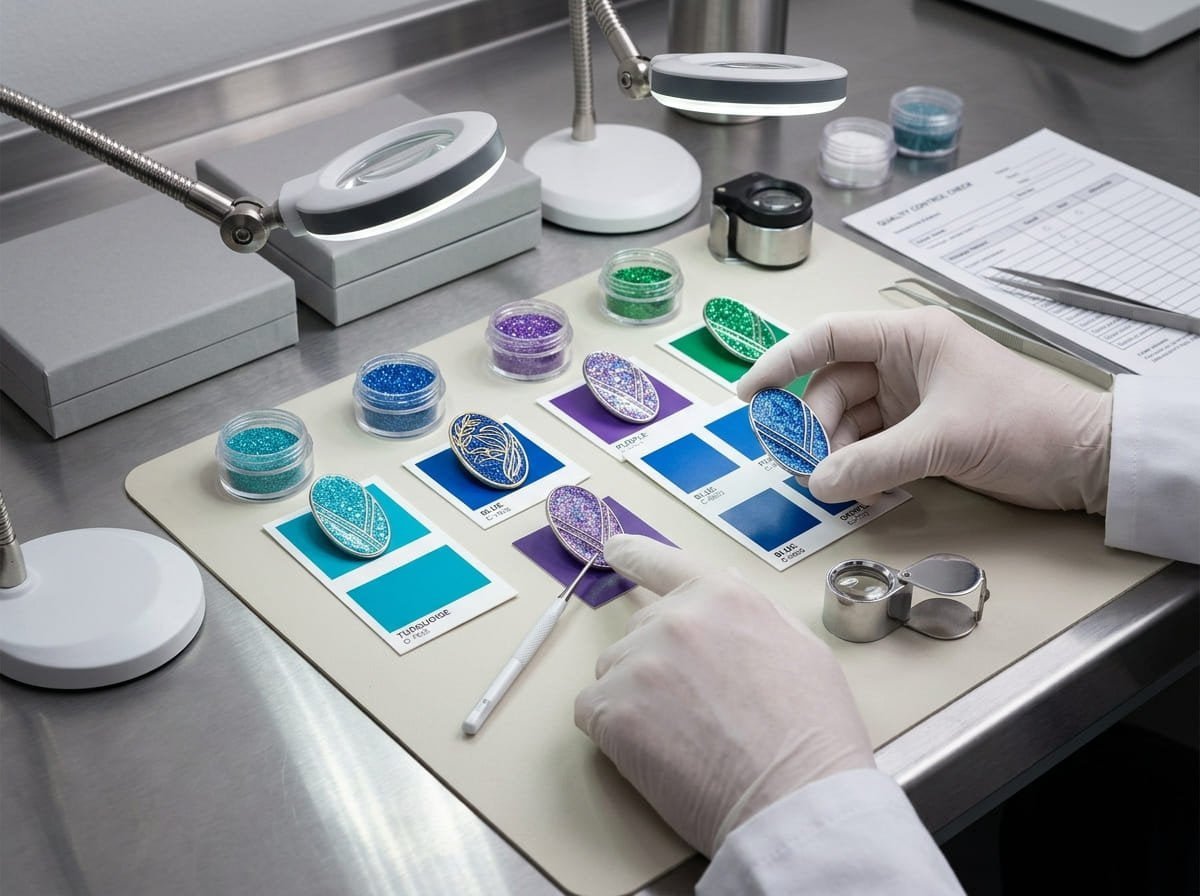
A few months ago, one of my clients designed a glitter pin featuring a vivid turquoise sparkle. They provided the Pantone code for turquoise, hoping to replicate it perfectly in glitter enamel. During sampling, we prepared several combinations of base resins and glitter particles to approximate the desired shade. Even with close matches, the final pin subtly differed from the original Pantone sample.
The client’s response highlighted an essential lesson: once they understood how glitter interacts with light, they adjusted their expectations and fully embraced the dynamic, shimmering effect. The final product ended up being a hit because they valued glitter’s unique qualities rather than expecting static accuracy.
How can designers set realistic expectations for glitter color matching?
Unrealistic expectations for glitter accuracy often lead to frustration for both parties. As a designer, it’s important to keep a few principles in mind during the design process.
- Understand the properties of glitter. Glitter is not solid enamel; it’s a combination of color resin and reflective particles. Its dynamism is part of its charm but makes exact matching impractical.
- Request physical or digital samples. Ask your manufacturer to provide a sample before finalizing colors. Seeing is believing when it comes to glitter.
- Educate your clients or customers. If you're creating pins for sale, explain upfront that glitter effects are inherently variable, and slight color deviations are normal.
- Prioritize communication. Work closely with your supplier to evaluate glitter options. Some manufacturers (like us at HiPinny) will even create mockups under different lighting conditions.
By reframing glitter as an expressive, dynamic material instead of one bound by rigid rules, you can embrace its unique qualities in your designs.
When should designers consult manufacturers?
Manufacturers know their production capabilities inside and out — and consulting them early in the design process often leads to better outcomes. If you have questions about glitter enamel, always ask about:
- Glitter size options: Fine glitter behaves differently than chunkier glitter.
- Base color options: Depending on available resins, you might select darker or lighter bases to influence final appearance.
- Production samples: Most manufacturers can provide glitter sample sheets for easier comparison.
Frequently Asked Questions
Can holographic or iridescent glitter match Pantone?
No, holographic and iridescent glitter pose even greater challenges for Pantone matching. These materials shift dynamically across multiple colors and reflect light differently based on viewing angles.
What happens when lighting changes?
Under stronger or weaker lighting, glitter enamel appears brighter or muted depending on its reflectivity. The glitter’s dynamic effect means consistent appearances across lighting scenarios is not guaranteed.
Are there certifications for glitter materials?
Most glitter is made from non-toxic or cosmetic-grade polyester8. While certifications are rare, manufacturers can provide material composition details to ensure safety.
Conclusion
Glitter enamel’s dynamic properties make precise Pantone matching impossible9, but understanding these limitations can open doors to creative, visually stunning designs. By embracing glitter’s unique textures and working closely with your manufacturer, you can achieve vibrant end results while avoiding unrealistic expectations. If you're ready to explore custom glitter enamel options for your pin designs, reach out to us at HiPinny — we’d love to help bring your ideas to life!
"Glittering Light on Water - Physical Sciences Laboratory - NOAA", https://psl.noaa.gov/outreach/education/science/glitter/. Research on the optical properties of glitter materials explains that their reflective and refractive characteristics make precise color matching with static color systems like Pantone challenging. Evidence role: general_support; source type: research. Supports: Glitter enamel cannot match Pantone colors exactly due to its reflective and dynamic properties.. ↩
"Pantone", https://en.wikipedia.org/wiki/Pantone. Pantone's official documentation describes its color system as a standardized guide for consistent color reproduction, primarily used in printing and design. Evidence role: definition; source type: encyclopedia. Supports: Pantone colors are static, opaque standards designed for predictable applications like printing.. ↩
"Glittering Light on Water - Physical Sciences Laboratory - NOAA", https://psl.noaa.gov/outreach/education/science/glitter/. Studies on the optical behavior of glitter materials show that their reflective particles scatter light in multiple directions, contributing to their dynamic appearance. Evidence role: mechanism; source type: research. Supports: Glitter enamel contains reflective particles that scatter light, creating a vibrant yet unpredictable effect.. ↩
"Glitter", https://en.wikipedia.org/wiki/Glitter. Studies on enamel materials confirm that glitter enamel typically includes metallic or polyester particles within a colored resin base. Evidence role: definition; source type: research. Supports: Glitter enamel consists of fine metallic or polyester particles suspended in a tinted base resin.. ↩
"Glittering Light on Water - Physical Sciences Laboratory - NOAA", https://psl.noaa.gov/outreach/education/science/glitter/. Research on reflective materials indicates that glitter's appearance changes with lighting intensity due to its high reflectivity and light-scattering properties. Evidence role: mechanism; source type: research. Supports: Glitter sparkles under bright light and appears muted in dim conditions due to its reflective properties.. ↩
"Pantone - Wikipedia", https://en.wikipedia.org/wiki/Pantone. Pantone's guidelines specify that its color system is optimized for static, opaque applications, such as printing and textiles, rather than reflective or dynamic materials. Evidence role: historical_context; source type: institution. Supports: Pantone standards were not designed to accommodate reflective or dynamic materials like glitter.. ↩
"Pantone Color Systems | Universal Language of Color", https://www.pantone.com/color-systems/pantone-color-systems-explained. Industry reports indicate that manufacturers frequently use visual comparison methods to approximate glitter colors against Pantone swatches. Evidence role: general_support; source type: institution. Supports: Manufacturers often match glitter options by eye against Pantone swatches to achieve close approximations.. ↩
"Glitter", https://en.wikipedia.org/wiki/Glitter. Material studies indicate that glitter is commonly manufactured from non-toxic, cosmetic-grade polyester to ensure safety and durability. Evidence role: definition; source type: research. Supports: Most glitter is made from non-toxic or cosmetic-grade polyester.. ↩
"Glittering Light on Water - Physical Sciences Laboratory - NOAA", https://psl.noaa.gov/outreach/education/science/glitter/. Research on dynamic materials like glitter confirms that their reflective and refractive properties prevent exact matches with static color systems such as Pantone. Evidence role: general_support; source type: research. Supports: Glitter enamel’s dynamic properties make precise Pantone matching impossible.. ↩