
HiPinny Journal
Why Do Enamel Pins Have Color Differences?
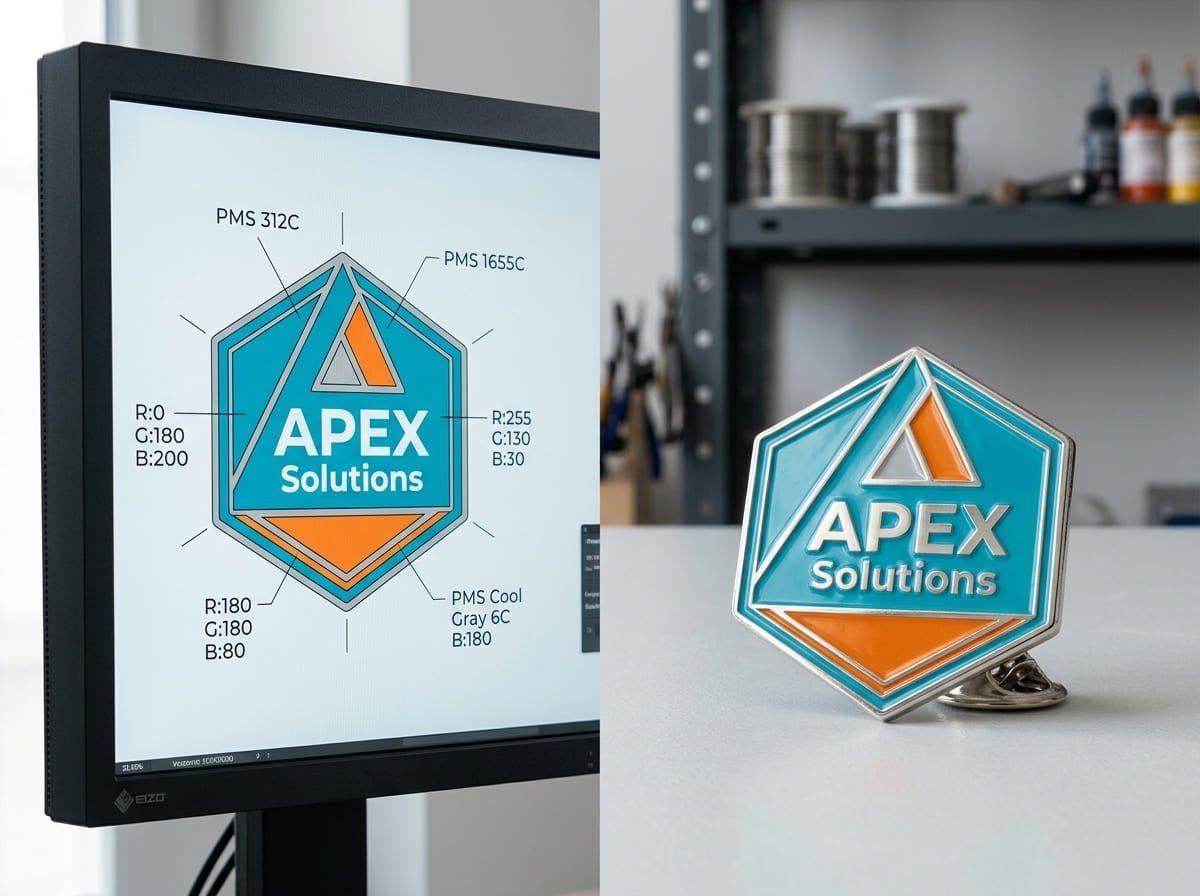
Have you ever been puzzled by the color variations between your digital design and the final enamel pin? This is a common concern among independent pin designers and small business owners. Enamel pins can have color differences due to technical constraints in manufacturing processes, but understanding these factors can help you set realistic expectations and communicate effectively with suppliers.
Why do digital designs look different from finished enamel pins?
Digital designs often use RGB or HEX color codes suited for screens, while manufacturing enamel pins relies on physical pigment and standardized color systems like Pantone. This translation from digital to physical introduces unavoidable variations due to differences in how materials hold and reflect color.1
When designing enamel pins, many creators assume their pin will perfectly replicate their digital artwork. However, RGB screens emit light and create colors through additive mixing, while enamel pigments are physical materials mixed manually, following subtractive color theory. These fundamental differences mean that your pin may not look exactly like the vibrant visual on your screen.
Additionally, suppliers depend on standard color references like Pantone to create consistency2. Pantone swatches, while reliable, are produced on paper and may still behave slightly differently when applied to enamel. Combine this with variations in lighting conditions, and color discrepancies can easily arise.
How do manufacturing processes affect colors?
The enamel pin production process introduces several stages of manual and technical input that can cause color shifts—from mixing pigments to enamel application. These stages depend heavily on precision, but even small environmental factors or human adjustments can lead to slight differences in the final colors.
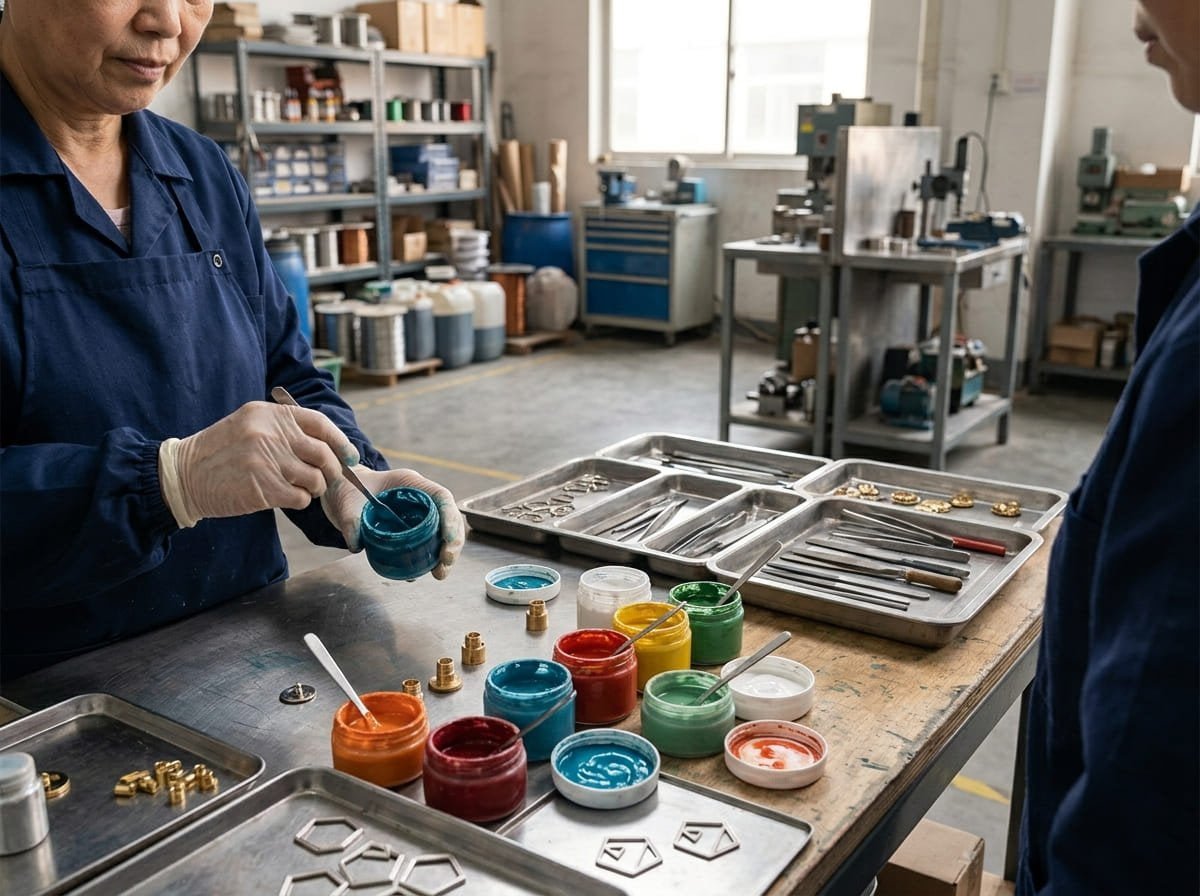
Common sources of color variations during manufacturing:
-
Pigment Mixing
Pigments are mixed manually to match the Pantone reference provided. Slight differences in ratios, temperature, or supplier-specific formulations can impact the outcome. -
Enamel Application
Enamel is applied to the pin body by hand. Variations in the thickness or texture during application can affect how the pigment behaves, especially under polishing. -
Plating Interactions
Different metal platings, like silver, gold, or black nickel, interact subtly with enamel colors.3 For example, darker platings may cause colors to appear deeper, while lighter platings may make them look brighter. -
Curing and Baking
After applications, enamel pins are cured under heat. Temperature and duration affect material properties, which can lead to slightly darker or lighter finishes than expected.4 -
Inspection Lighting
While manufacturers aim to confirm colors under neutral lighting conditions, differences in buyer settings—daylight versus indoor lighting—can further distort perceived color accuracy.
The best factories reduce variability through quality control and consistency measures, but total uniformity across every pin batch is not guaranteed, especially for small production runs.
How can you reduce color discrepancies when ordering enamel pins?
The most effective way to minimize color differences is through transparent communication during the design and ordering stages. Using Pantone swatches, discussing plating effects, and considering production tolerance ranges all help set expectations to reduce surprises after production.
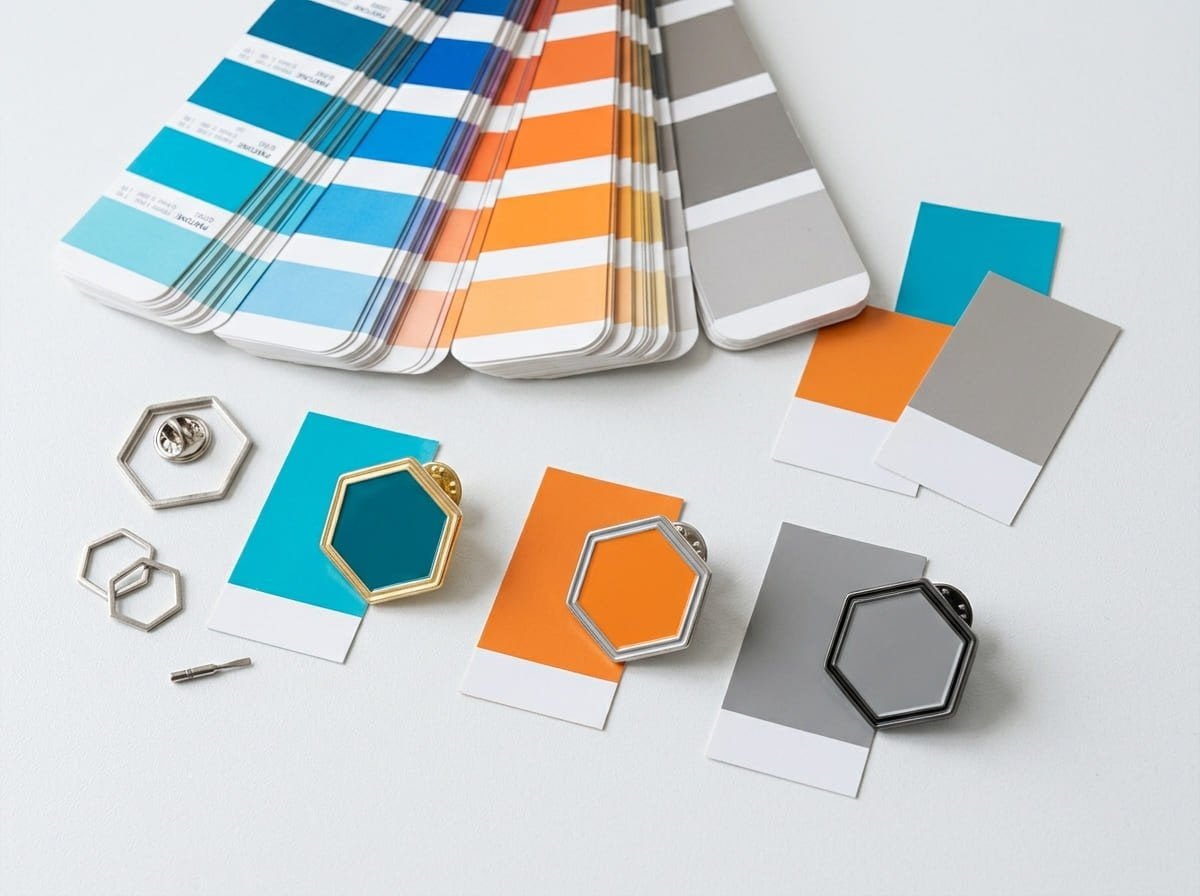
Here are practical steps to improve color accuracy with your enamel pin supplier:
-
Use a Pantone Reference
Pantone color codes are the industry standard for enamel pin production.5 When submitting designs, include precise Pantone references instead of HEX or RGB codes. This ensures your manufacturer uses the closest available pigments. -
Discuss Metallic Plating Effects
Metal platings can alter how enamel colors appear.6 If you've chosen a specific plating—for example, gold versus silver—ask your supplier about its visual impact on the enamel colors. -
Confirm a Sample or Pre-Production Proof
When possible, ask for a physical sample or photographic proof of your pin before full production. While this may increase lead times, it provides a valuable checkpoint to catch discrepancies early. -
Understand Production Tolerances
Every factory has a tolerance range for slight variations. Ask about these and clarify which colors or areas you prioritize for accuracy. For example, you might consider a lighter range acceptable for background colors but want logos to be exact. -
Inspect Design Files for Gradients or Transparency
Gradients, semi-transparent designs, or shading are difficult to replicate on enamel pins.7 Avoid these techniques in designs to ensure consistent color fills. -
Choose Reliable Suppliers
A good manufacturer will explain their production process clearly and follow your specifications carefully. Work with trusted suppliers who prioritize quality control, especially if you're producing custom designs.
These measures won’t completely eliminate color differences, but they will significantly reduce dissatisfaction and ensure your pins come closer to your original expectations.
Frequently Asked Questions
Why do my pins look different than the proof photo?
Proof photos are often taken under neutral lighting conditions that differ from how you view pins. Differences in lighting, plating reflectivity, and slight production variation make proof photos an approximate reference, not an exact match.
Can manufacturers match gradient or screen effects on pins?
Enamel pins use flat colors and cannot replicate gradient or transparency effects from digital designs. Always simplify designs to solid Pantone colors for accurate results.
Should I use Hex, RGB, or Pantone colors for my pin designs?
Always provide Pantone references for enamel pin production. HEX and RGB are screen-based systems that don’t translate accurately to the pigments used in physical manufacturing.
Does enamel pin plating impact the appearance of colors?
Yes, the choice of plating, such as gold or black nickel, can subtly alter how enamel colors appear. Dark platings make colors look richer, while lighter platings may brighten them.
Why don’t all my pins look identical within the batch?
Small production tolerances and manual processes during pigment mixing, enamel application, and polishing introduce minor variations. Reliable manufacturers keep these differences to an acceptable range.
Conclusion
Color differences in enamel pins are a natural result of transitioning designs from digital formats to physical production. Using Pantone color references, understanding plating effects, and setting realistic tolerances are essential steps to achieving better results in enamel pin manufacturing. If you've been disheartened by unexpected color discrepancies, proactive communication with reliable suppliers is the solution—and manufacturers like HiPinny are here to help. Contact us today to discuss your enamel pin designs and learn more about how we ensure consistent quality!
"Color", https://en.wikipedia.org/wiki/Color. Educational resources on color theory explain that digital screens use additive color mixing, while physical materials rely on subtractive color mixing, leading to inherent differences in color perception. Evidence role: mechanism; source type: education. Supports: The translation from digital to physical introduces unavoidable variations due to differences in how materials hold and reflect color.. Scope note: The explanation may not specifically address enamel pins but applies broadly to digital-to-physical color transitions. ↩
"Pantone", https://en.wikipedia.org/wiki/Pantone. The Pantone Matching System is widely used in manufacturing industries, including enamel pin production, to ensure color consistency across different materials and processes. Evidence role: general_support; source type: institution. Supports: Suppliers depend on standard color references like Pantone to create consistency.. Scope note: The source may not specifically focus on enamel pins but discusses Pantone's role in manufacturing broadly. ↩
"Tribological Behaviour of Enamel Coatings Created by ... - PMC", https://pmc.ncbi.nlm.nih.gov/articles/PMC9919588/. Research on enamel pin manufacturing shows that metal platings can influence the appearance of enamel colors due to differences in reflectivity and light absorption. Evidence role: mechanism; source type: research. Supports: Different metal platings, like silver, gold, or black nickel, interact subtly with enamel colors.. Scope note: The source may provide general insights into plating effects but might not include specific examples for all types of metal platings. ↩
"Influence of temperature and relative humidity on dentin ...", https://pubmed.ncbi.nlm.nih.gov/23082311/. Research on enamel curing processes indicates that variations in temperature and duration can alter the final color and texture of enamel products. Evidence role: mechanism; source type: research. Supports: Temperature and duration during curing affect material properties, leading to slightly darker or lighter finishes.. Scope note: The source may discuss enamel curing broadly and not focus exclusively on pins. ↩
"Pantone color guides? : r/EnamelPins", https://www.reddit.com/r/EnamelPins/comments/zi5sd3/pantone_color_guides/. Institutional guidelines on manufacturing standards confirm that Pantone color codes are widely adopted for ensuring color consistency in enamel pin production. Evidence role: expert_consensus; source type: institution. Supports: Pantone color codes are the industry standard for enamel pin production.. Scope note: The source may not focus exclusively on enamel pins but discusses Pantone's role in manufacturing broadly. ↩
"Tribological Behaviour of Enamel Coatings Created by ... - PMC", https://pmc.ncbi.nlm.nih.gov/articles/PMC9919588/. Research on enamel pin manufacturing shows that the choice of metal plating can influence the perceived color of enamel due to differences in reflectivity and light interaction. Evidence role: mechanism; source type: research. Supports: Metal platings can alter how enamel colors appear.. Scope note: The source may provide general insights into plating effects but might not include specific examples for all types of metal platings. ↩
"Is there any company that can do gradients? : r/EnamelPins - Reddit", https://www.reddit.com/r/EnamelPins/comments/18wa4ul/is_there_any_company_that_can_do_gradients/. Educational resources on enamel pin manufacturing explain that the use of flat colors and manual processes makes it challenging to replicate gradients or semi-transparent effects. Evidence role: mechanism; source type: education. Supports: Gradients, semi-transparent designs, or shading are difficult to replicate on enamel pins.. Scope note: The source may provide general insights but might not include specific examples of these limitations. ↩