
HiPinny Journal
How to Order Custom Enamel Pins: A Complete Guide
Ordering custom enamel pins might seem straightforward but involves several nuanced decisions that could make or break your project. Understanding design feasibility, production processes, and balancing costs with quality are critical to ensure a successful order.1 Without this knowledge, you may face inflated costs, production delays, or unsatisfactory results.
To order custom enamel pins successfully, start by ensuring your design is feasible for production, communicate clearly with manufacturers about specifications, and familiarize yourself with cost-quality trade-offs. Balancing these factors is the key to achieving the pins you envision within your budget and timeline.
Whether you’re a pin designer, small business owner, or event planner, understanding the complete ordering process will help you avoid common pitfalls. Let’s break it down step by step.
What is the first step in ordering custom enamel pins?
The first crucial step is creating a realistic, production-ready design that matches the capabilities of enamel pin manufacturers.
Without a feasible design, production delays and rework are inevitable. If your design includes non-standard shapes, oversized dimensions, or excessive detail, consult your manufacturer early to confirm feasibility.
Dive deeper: Enamel pin design basics
Every custom enamel pin starts with your creative vision, but that vision must translate into something a manufacturer can produce. Here are three key considerations:
-
Shape & Size: Non-standard shapes or sizes may require additional tooling or incur higher costs.2 Standard-sized pins (1" to 1.5") are more budget-friendly and widely accepted.3
-
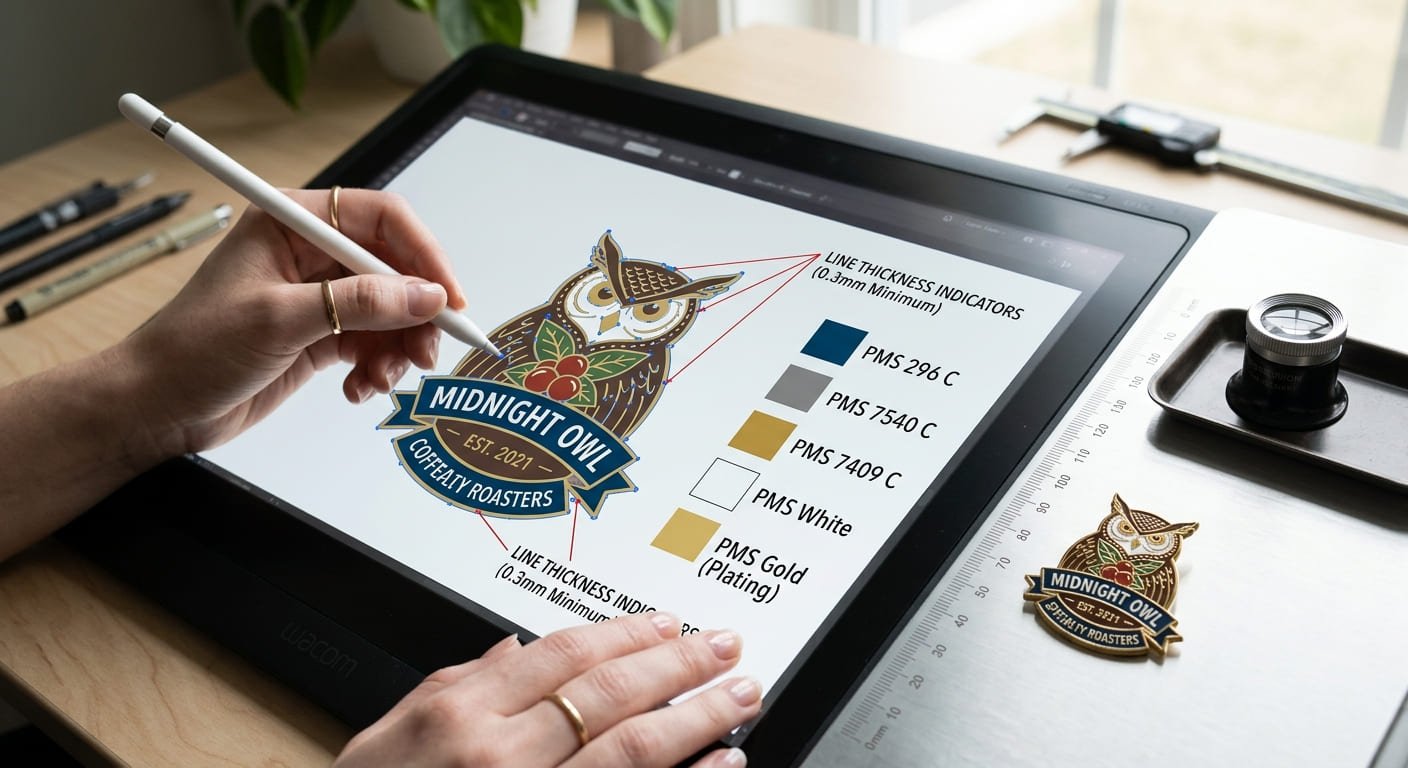
Color Matching: Enamel pins use Pantone color matching.4 Verify that the colors in your design can be replicated with enamel, as subtle gradients or metallic effects may not be achievable.
-
Detail Feasibility: Highly intricate designs may lose clarity in production.5 If your design includes text, ensure it’s legible at the pin’s final size. A good rule of thumb is to avoid fine details smaller than 0.3mm.
Collaborating with your manufacturer during the design phase is critical. Many offer design consultations to help refine your artwork for practical production while maintaining visual appeal.
How do I choose the right enamel pin type?
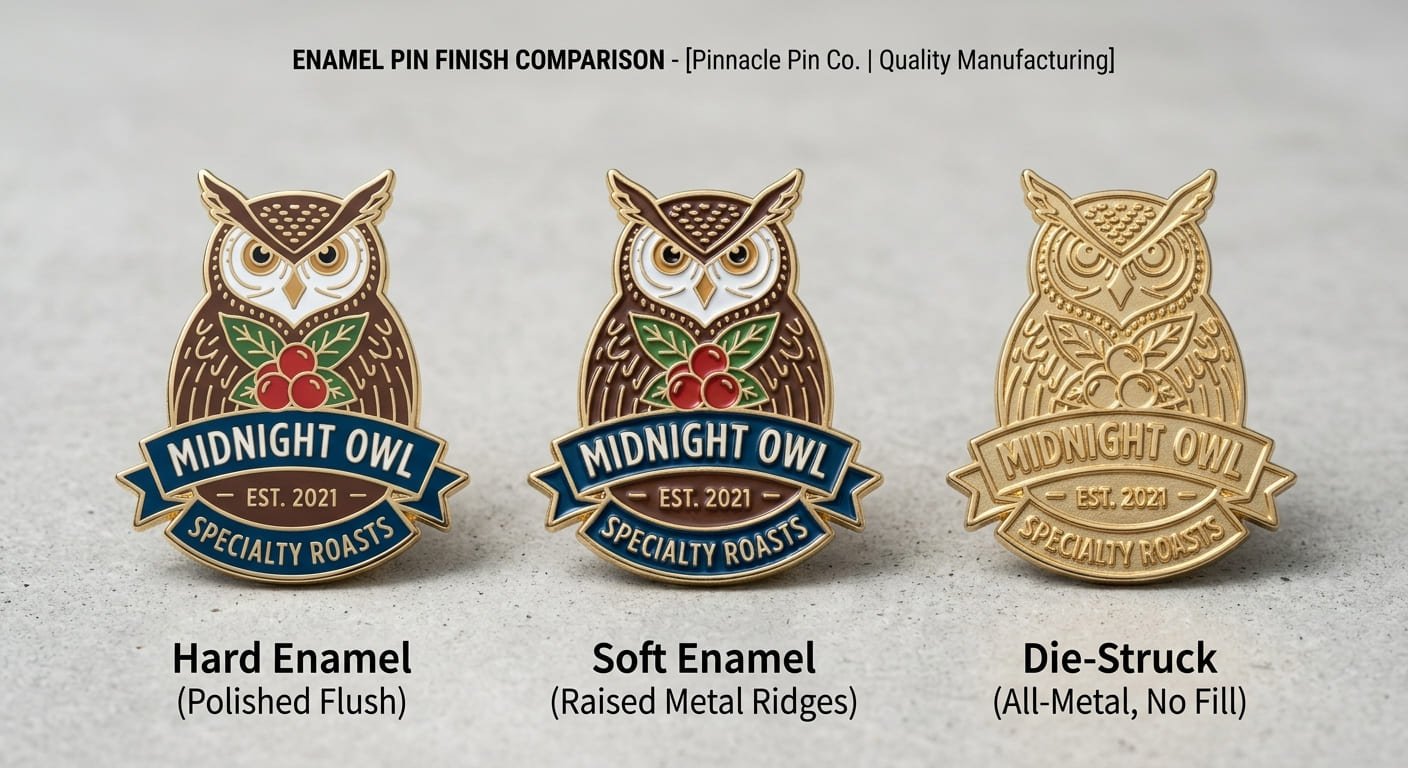
Selections like soft enamel, hard enamel, or die-struck can directly impact the look, feel, and cost of your pins. Deciding what works best depends on your project goals.
Soft enamel pins are budget-friendly and textured, while hard enamel provides a polished, smooth finish.6 Die-struck pins offer a classic metal-only aesthetic.
Dive deeper: Comparing enamel types for your needs
| Type | Features | Best For |
|---|---|---|
| Soft Enamel | Raised metal lines, recessed enamel areas | Budget projects, detailed designs |
| Hard Enamel | Smooth surface, polished, durable finish | Premium products, corporate branding |
| Die-Struck | All-metal with no enamel, intricate metal details | Timeless, understated aesthetics |
Your choice also depends on factors like logo clarity, audience preference, and intended use. For instance, soft enamel works well for creator-driven designs with intricate color schemes, whereas die-struck is ideal for corporate badges.
Discussing these options early with your supplier prevents misaligned expectations.7 It also clarifies cost differences upfront, ensuring no surprises during production.
What should I know about minimum order quantities (MOQs)?
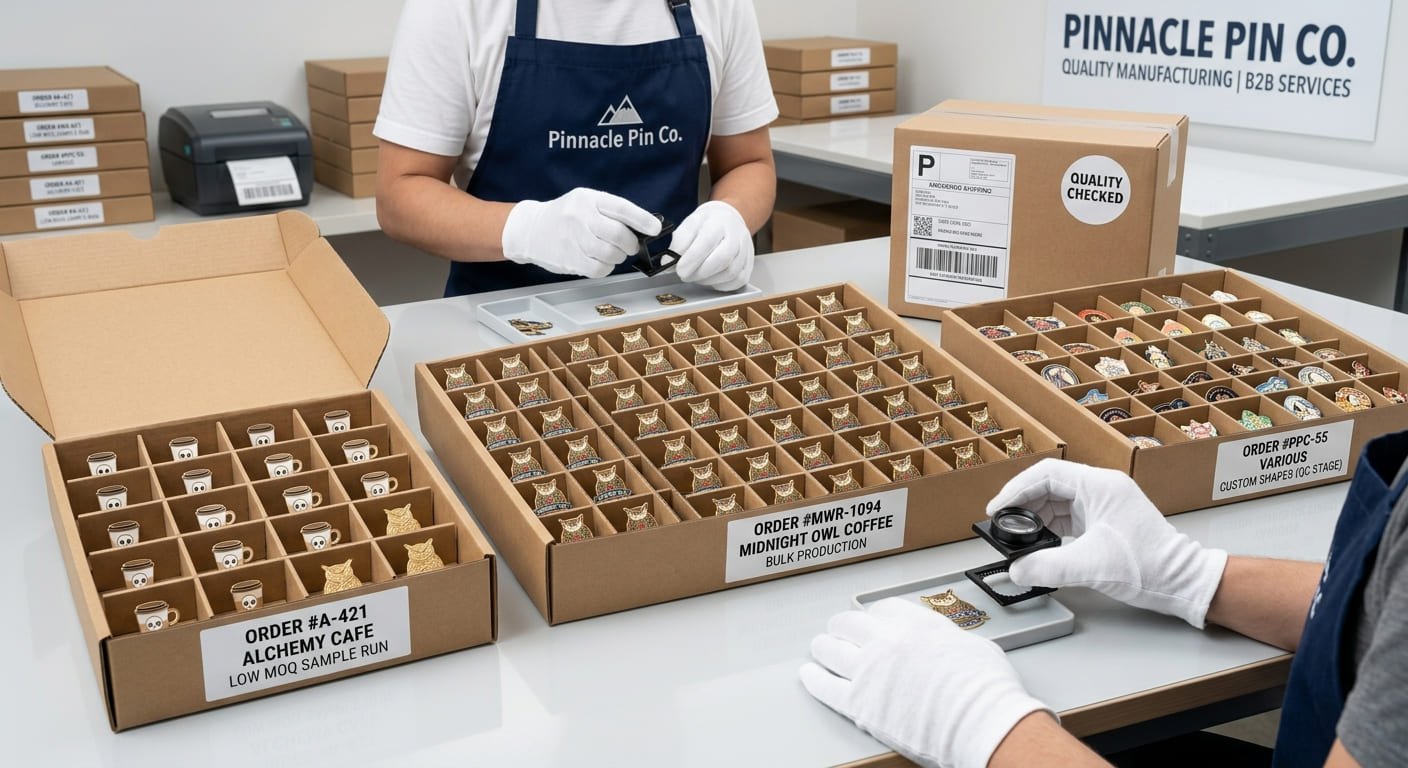
MOQ, or minimum order quantity, is more than just a number — it’s a cornerstone of enamel pin manufacturing. Most factories set MOQs to optimize production efficiency.8
While many suppliers require minimum orders of 100 or more pins, some offer flexibility, especially at higher price points. Understanding these trade-offs can help you align production with your budget.
Dive deeper: The why and when of MOQ flexibility
MOQ calculations hinge on the fixed costs of materials, molds, and setup. Here’s what to keep in mind:
-
For Small-Scale Creators: If you’re ordering just a few designs or testing the market, prioritize manufacturers offering low or no MOQ services. Be prepared to pay slightly higher unit costs to avoid over-ordering.
-
For Experienced Sellers: Bulk orders bring economies of scale. For example, ordering 300 units versus 100 can often reduce per-unit costs by 20–30%.
Additionally, clarify whether lower MOQs come with trade-offs, like limited production customization or reduced inspection. Transparent communication with your supplier is key to navigating this.9
How does supplier communication impact pin production?
Poor communication with your supplier can lead to mistakes like inaccurate colors, improper sizes, or delivery delays.
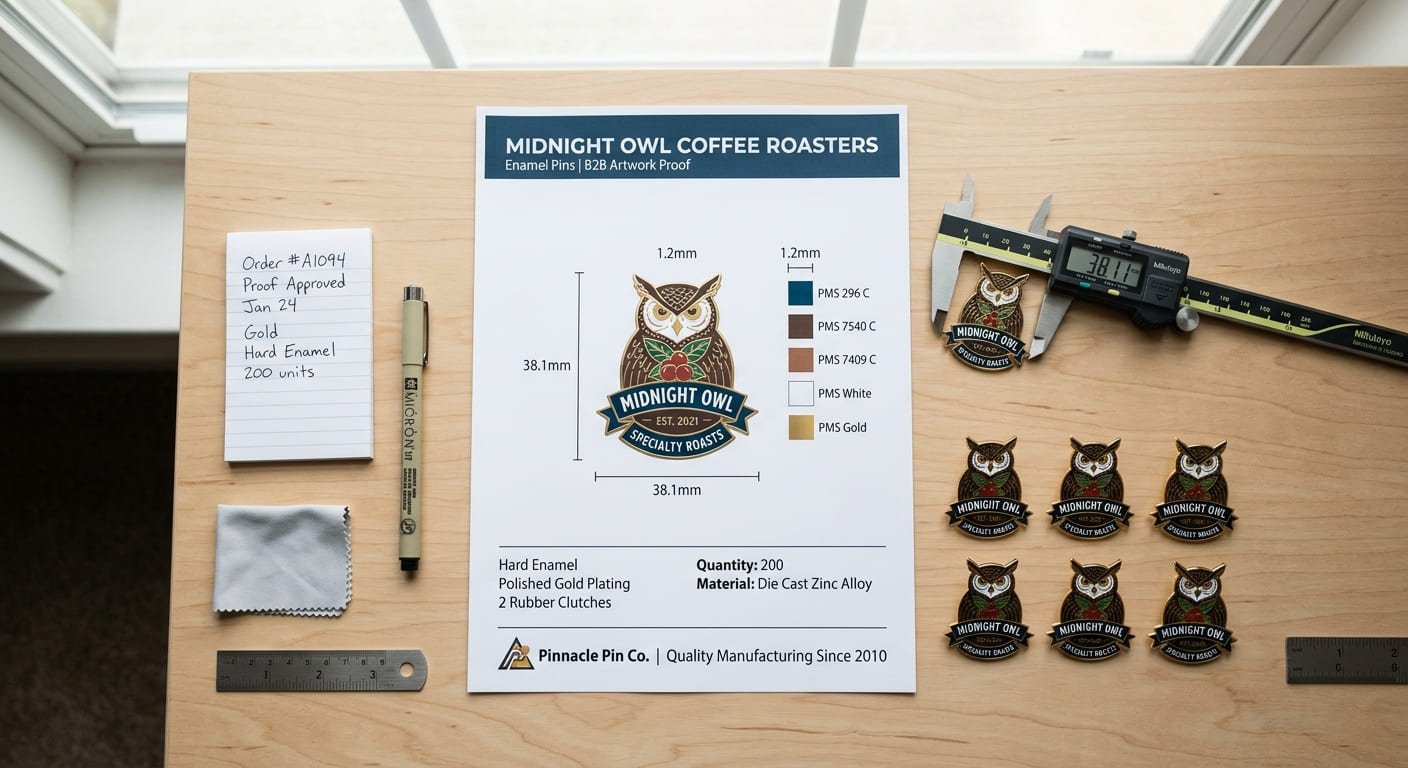
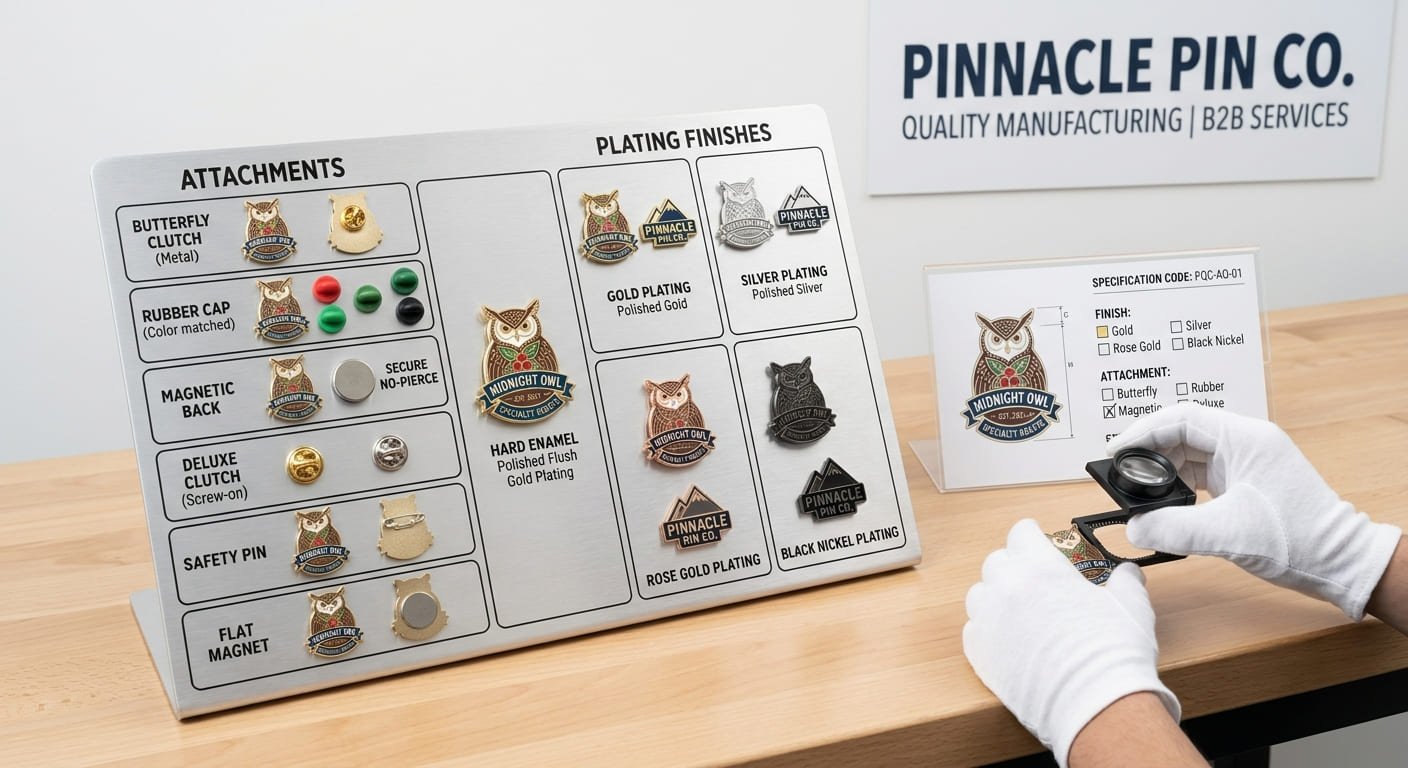
Ensure clarity by confirming technical specifications at every stage — particularly for backing options, coloring, and proof approval. Documenting discussions keeps both you and your manufacturer accountable.
Dive deeper: What to communicate to your supplier
Successful supplier relationships hinge on sharing specific details. Here’s what to focus on:
-
Backings: There are multiple options, from butterfly clutches to magnetic backings. Double-check your choice aligns with pin size and intended use.
-
Plating Options: Gold, silver, antique finishes, or custom paint fills should be confirmed early. Ask for samples if you’re unsure about the finish.
-
Production Timeline: Average production times for enamel pins range from 2–4 weeks. Factor in proofing and shipping when planning your launch or event deadlines.
A great supplier will also alert you to potential production hiccups, like overly complex designs. If they don’t offer proactive advice, ask questions to ensure everything aligns with your expectations.
How do cost and quality trade-offs work?
Achieving balance between cost and quality means understanding where you can compromise — and where you shouldn’t.
Higher quality materials or intricate designs typically increase costs, whereas simpler designs allow room for cost reduction. Understanding this dynamic can help you make smarter decisions within your budget.
Dive deeper: Key cost influencers in enamel pin production
Here’s a rundown of cost components and practical tips:
-
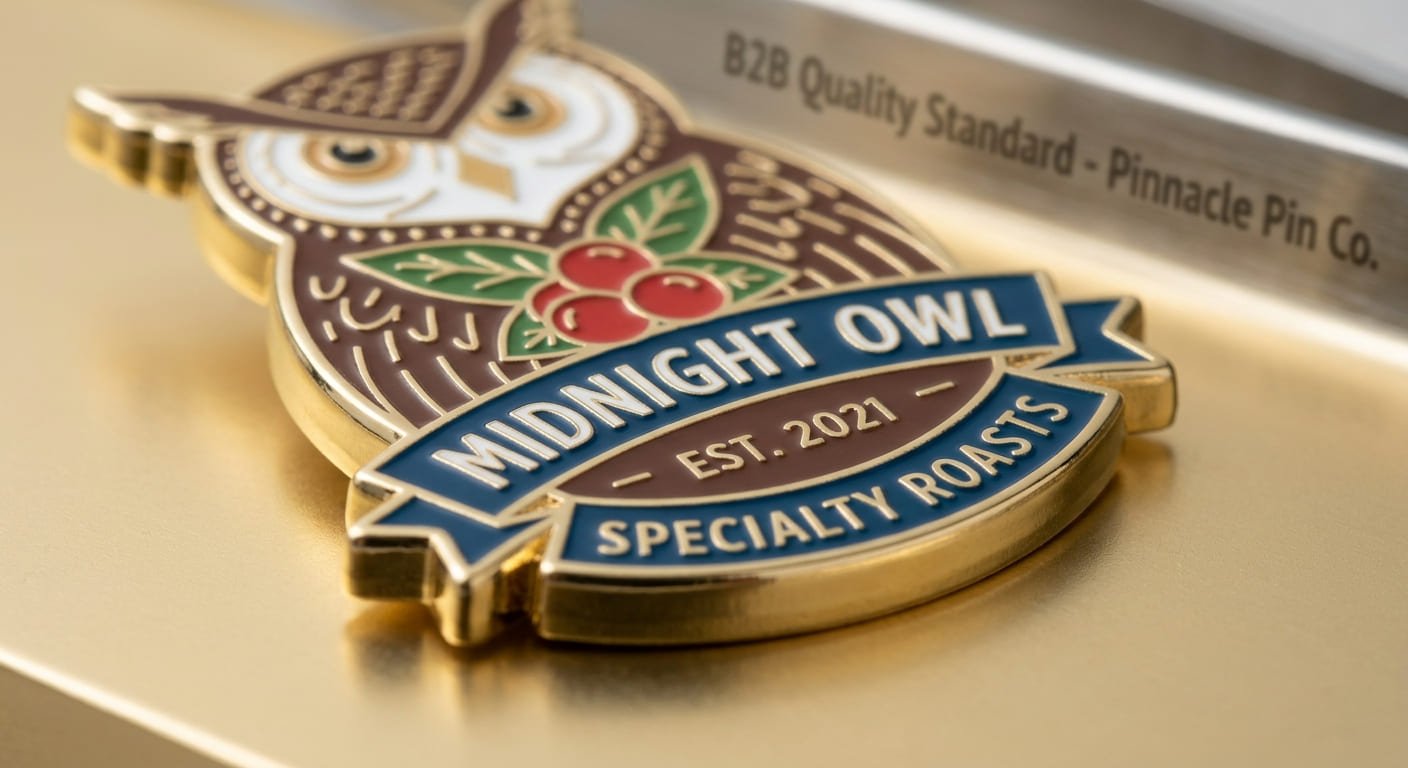
Materials & Plating: Premium finishes like rose gold cost more. Consider if they’re necessary for your audience or if standard plating suffices.
-
Pin Size: Larger pins require more materials and have higher mold costs. If budget is tight, stick to 1” - 1.25”.
-
Quantity Discounts: Ordering in bulk reduces per-unit costs significantly.10 Always ask for tiered pricing to understand thresholds.
Ultimately, research and supplier transparency will help you stay on budget without sacrificing quality. Ask manufacturers to explain quotes thoroughly so you can identify value-add services worth paying for.
Frequently Asked Questions
How do I ensure my custom pin design is production-ready?
To make your design production-ready, focus on clear outlines, limited fine details, and Pantone-matched colors. Work with manufacturers that offer artwork proofing, as they’ll alert you to any feasibility issues during design finalization.
Can I order fewer than the supplier's MOQ?
Some manufacturers, including those with no MOQ policies, can accommodate smaller orders for a higher unit price. Check with suppliers about options for sampling or limited-batch production.
How long does it typically take to produce custom enamel pins?
Standard production time is 2–4 weeks, excluding shipping. Delays could occur if your design requires extensive changes during proofing or uses non-standard materials.
What’s the difference between soft enamel and hard enamel?
Soft enamel has recessed areas and a textured surface, while hard enamel is polished smooth. Choose soft enamel for budget-friendly pins and detailed designs, or hard enamel for a premium, long-lasting finish.
What guarantees should I seek from my enamel pin supplier?
Look for manufacturers offering proof approvals, material inspections, and quality checks before shipping. Always confirm product warranties or policies regarding defects before placing an order.
Conclusion
Ordering custom enamel pins involves navigating design feasibility, production parameters, and cost-quality trade-offs. By clarifying your design, understanding manufacturing requirements, and maintaining open communication with your supplier, you can create pins that meet your vision, timeline, and budget.
The key to success lies in working with a reliable manufacturer who understands your needs and proactively supports you through the process. Whether you're a small business owner, designer, or event planner, taking the time to learn the process will pay off. Ready to bring your designs to life? Get in touch with us today to discuss your custom enamel pin project!
"Cost of quality tradeoffs in manufacturing process and", https://dspace.mit.edu/bitstream/handle/1721.1/76133/821686496-MIT.pdf?sequence=2. A study on manufacturing processes highlights that design feasibility and cost-quality trade-offs are critical factors influencing production efficiency and product satisfaction. Evidence role: general_support; source type: research. Supports: The importance of design feasibility, production processes, and cost-quality balance in manufacturing success.. Scope note: The study may focus on general manufacturing rather than enamel pins specifically. ↩
"Costs and Cost Effectiveness of Additive Manufacturing", https://nvlpubs.nist.gov/nistpubs/SpecialPublications/NIST.SP.1176.pdf. Educational resources on manufacturing processes explain that custom shapes often necessitate unique molds, increasing both setup time and costs. Evidence role: mechanism; source type: education. Supports: Non-standard shapes or sizes in manufacturing often require specialized tooling and increase production costs.. Scope note: The explanation may apply broadly to manufacturing and not specifically to enamel pins. ↩
"Button pin size preference at cons", https://www.facebook.com/groups/68924042904/posts/10160326257152905/. Research on enamel pin production indicates that standard sizes reduce material waste and are preferred for their versatility. Evidence role: general_support; source type: research. Supports: The cost-effectiveness and popularity of standard-sized enamel pins.. Scope note: The research may not provide specific cost comparisons for different sizes. ↩
"Pantone Color Systems | Universal Language of Color", https://www.pantone.com/na/en-us/color-systems/pantone-color-systems-explained?srsltid=AU7gw4Vkbay2SQX8IlXVumVaB77zqlEhcKdn_M7sjJ8w27AciuazZ-TS. Educational materials on color matching explain that Pantone systems provide standardized color codes, ensuring consistency across production batches. Evidence role: mechanism; source type: education. Supports: The use of Pantone color matching in enamel pin production for accurate color reproduction.. Scope note: The materials may not focus specifically on enamel pin production. ↩
"Full article: Challenges in design and manufacturing", https://www.tandfonline.com/doi/full/10.1080/09511920500398922. Research on manufacturing limitations indicates that fine details below certain thresholds often become indistinct during production processes. Evidence role: mechanism; source type: research. Supports: The challenges of producing intricate designs in enamel pins.. Scope note: The research may focus on general manufacturing rather than enamel pins specifically. ↩
"Differences between soft and hard enamel pins", https://www.reddit.com/r/EnamelPins/comments/1i4qa4q/what_is_everyones_preferenceperceived_value_of/. Encyclopedic entries on enamel pin types describe soft enamel as textured and cost-effective, while hard enamel is smooth and premium-priced. Evidence role: definition; source type: encyclopedia. Supports: The differences in texture and cost between soft and hard enamel pins.. Scope note: The entry may not provide specific cost figures or production details. ↩
"Practical Strategies for Improving Manufacturing Productivity", https://mep.purdue.edu/news-folder/practical-strategies-for-improving-manufacturing-productivity/. Educational guides on supplier relationships emphasize that early discussions help clarify specifications and avoid production errors. Evidence role: expert_consensus; source type: education. Supports: The importance of early communication with suppliers to align expectations.. Scope note: The guides may not provide enamel pin-specific examples. ↩
"Minimum Order Quantity (MOQ): Formula, Tips, & Benefits", https://www.netsuite.com/portal/resource/articles/inventory-management/minimum-order-quantity-moq.shtml. Institutional reports on manufacturing practices explain that MOQs reduce per-unit costs by streamlining material usage and setup processes. Evidence role: mechanism; source type: institution. Supports: The role of MOQs in optimizing production efficiency.. Scope note: The report may focus on general manufacturing rather than enamel pin production. ↩
"An approach to social flexibility: Congruency effects during ...", https://pmc.ncbi.nlm.nih.gov/articles/PMC7313956/. Institutional studies on supplier relationships highlight that transparency fosters better negotiation outcomes and production alignment. Evidence role: general_support; source type: institution. Supports: The role of transparent communication in managing MOQ flexibility and production trade-offs.. Scope note: The studies may focus on general supplier relationships rather than enamel pin production. ↩
"11 Ways to Reduce Manufacturing Costs", https://pe.gatech.edu/blog/industry-trends/how-to-reduce-manufacturing-costs. Educational resources on manufacturing economics explain that bulk orders reduce per-unit costs by spreading fixed costs over larger quantities. Evidence role: statistic; source type: education. Supports: The cost-saving benefits of bulk orders in manufacturing.. Scope note: The explanation may not include specific enamel pin examples. ↩