
HiPinny Journal
Are Enamel Pins Safe to Wear? Metals, Nickel, and Allergies
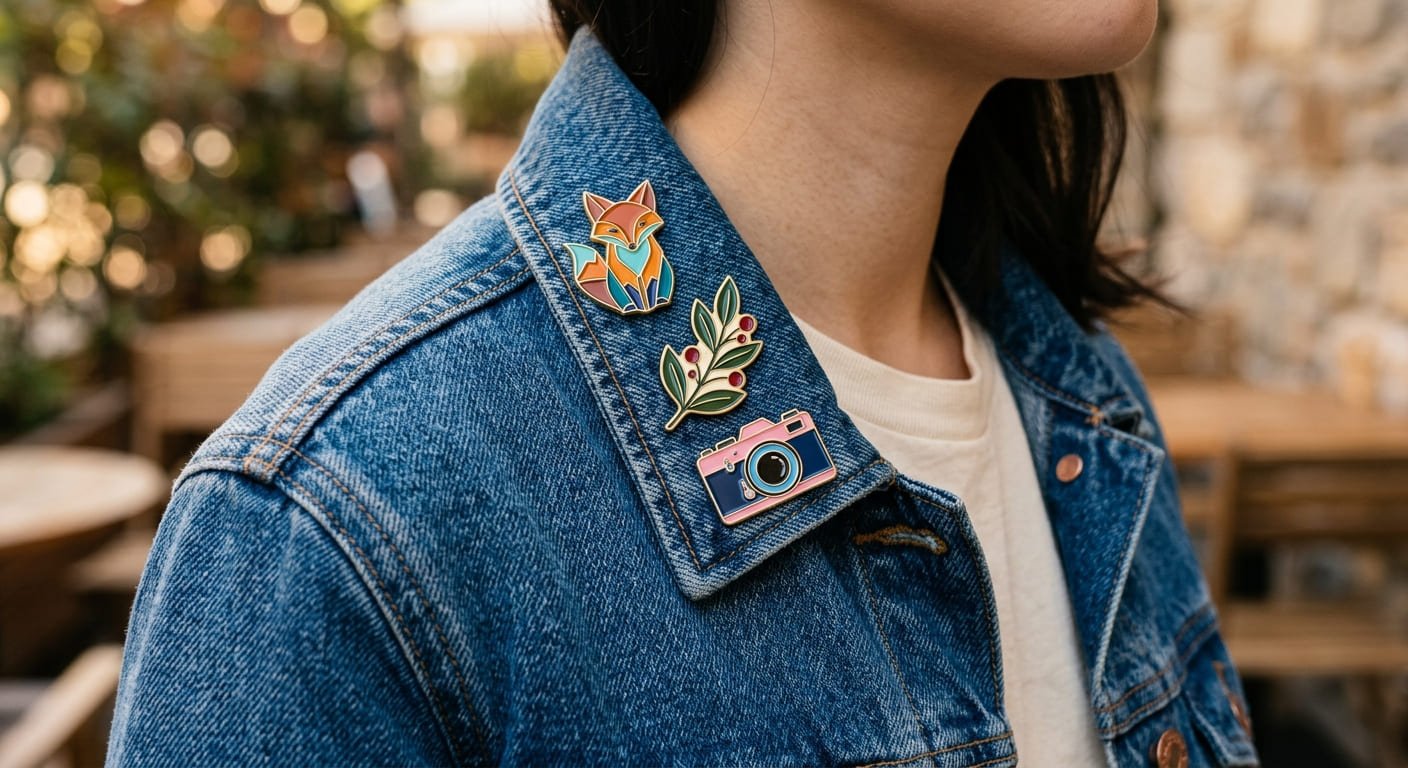
Enamel pins are a fun and fashionable way to express creativity, but are they safe for you or your customers to wear? Concerns about metals, nickel allergies, and skin sensitivities are valid, but high-quality enamel pins made with careful material selection and manufacturing standards present no significant risks for wearers1.
Enamel pins are generally safe to wear when manufacturers prioritize non-toxic production processes and offer nickel-free plating and backing options2. The enamel coating is inert and unlikely to cause skin irritation3, while smooth backings like butterfly clutches reduce injury risks. Buyers should choose reputable suppliers with strong quality control standards for maximum safety.
Still worried about metal allergies or safety issues? Let's explore how enamel pins are engineered for wearability and the steps manufacturers take to mitigate risks effectively.
Do enamel pins cause allergies?
Metal allergies, such as nickel sensitivity, are a common concern among pin buyers and wearers. It's natural to wonder if these small accessories could cause irritation or allergic reactions.
Enamel pins can cause skin issues if made with nickel-based plating or backing4. However, most reputable manufacturers offer nickel-free options, which make enamel pins safe for people with allergies. Opting for these alternatives minimizes risks while maintaining pin durability.
How to ensure allergy-friendly enamel pins
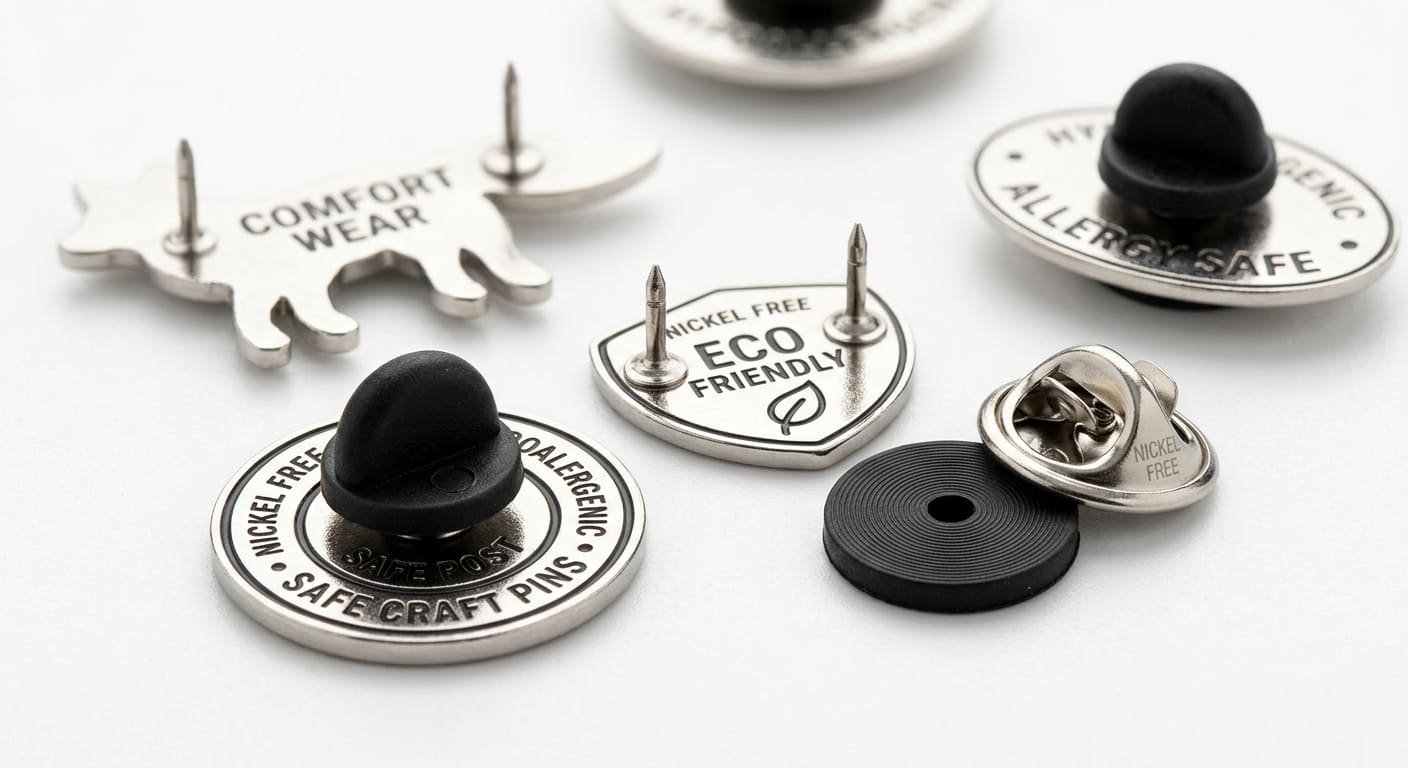
If you or your customers are allergy-prone, choose pins with nickel-free plating or protective coatings. Nickel-free materials include:
- Silver plating or stainless steel: Both are free of nickel, ensuring safer wear.
- Rubber backings: These eliminate skin contact with metal entirely.
- Colored or epoxy coatings: These create a barrier between skin and metal parts.
When working with a pin supplier, confirm these options during the design and production stages. Strong communication with your manufacturer allows customization to match customer allergies.
What manufacturers like HiPinny do
As a China-based enamel pin supplier, I’ve seen firsthand how nickel-free materials have become standard for allergy-conscious buyers. Our factory inspects incoming materials to prioritize non-reactive metals and finishes, especially when producing pins for schools or event companies whose audiences can include children with sensitive skin.
Do enamel pins irritate the skin?
Beyond allergies, some worry about general skin irritation from enamel pin materials or design. This question often arises when using pins as promotional products worn for long hours.
Enamel pins are highly unlikely to irritate skin, as the enamel coating is fully hardened during production, creating a smooth, inert surface. Safe backings prevent sharp edges or discomfort. Quality control ensures consistent wearability standards.
Why enamel is inert and non-toxic
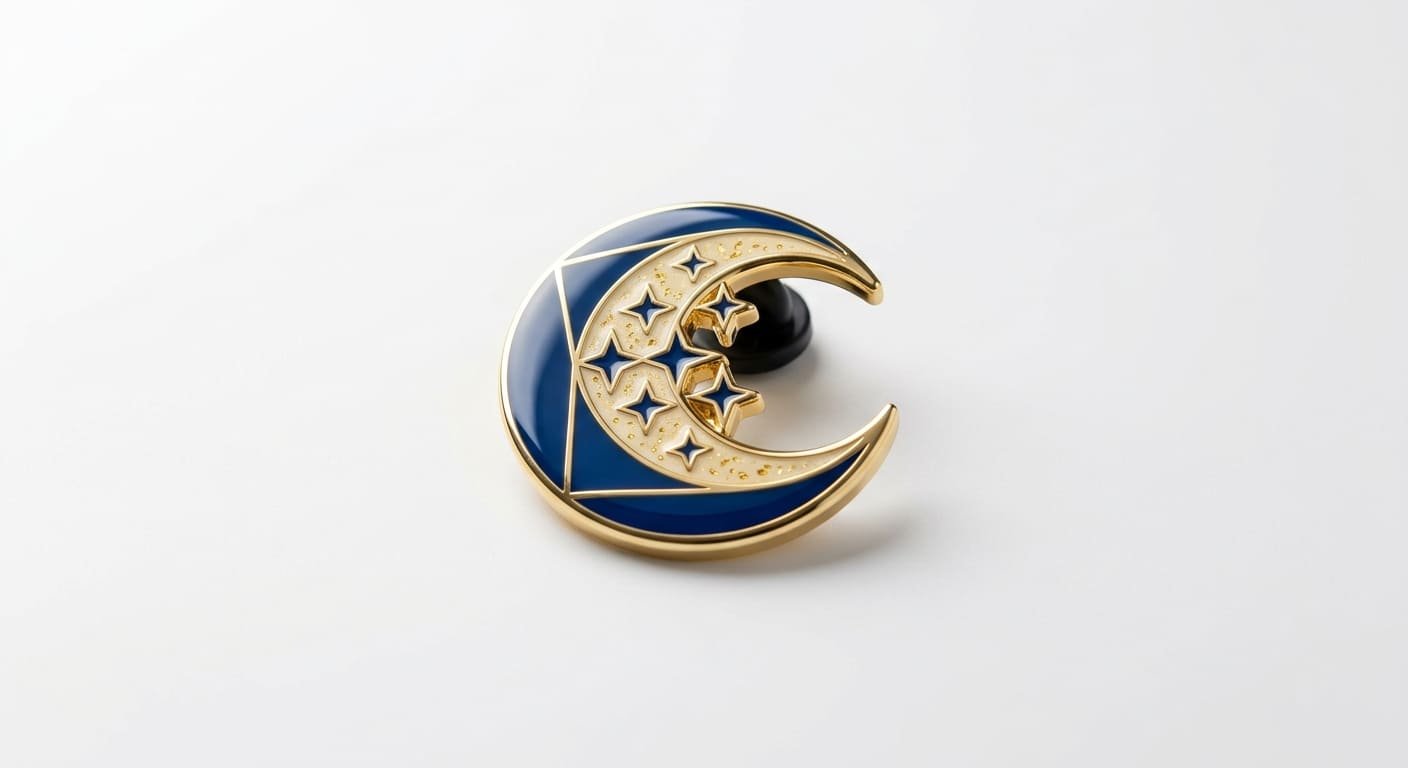
Enamel used in pin manufacturing is a glass-like compound made from powdered glass and pigments. During production, the enamel is fired onto the metal surface, permanently fusing at a high temperature.
The result is a durable, non-toxic finish that frames designs without leeching chemicals. Unlike painted coatings, enamel doesn't peel or transfer substances onto the skin.
Choosing irritation-free backings
Smooth, high-quality pin backings make a major difference when it comes to comfort. Popular options include:
- Butterfly clutch: Provides secure attachment without sharp edges.
- Rubber clutch: A soft, flexible alternative for everyday wear.
- Locking pin backs: Secure and robust, great for events or active use.
What safety standards apply to enamel pins?
Some buyers want proof beyond manufacturer claims—does enamel pin production meet official safety standards for wearables?
Enamel pins can meet strict safety compliance if manufactured under proper material inspection and quality checks5. Standards include nickel-free certifications, toxicity tests, and adherence to region-specific regulations, like CPSIA for U.S. children’s products.

Recognizing compliant suppliers
Not every supplier offers the same level of safety diligence. Here’s how to identify reliable manufacturers:
- Nickel-free certifications: Look for documentation verifying allergen-free materials.
- CPSIA compliance (Children’s Product Safety Improvement Act): Required if pins will be worn by children in the United States.
- Factory audits: Ask about regular inspections and testing for hazardous substances in plating or enamel coatings.
At HiPinny, we inspect every batch for compliance with allergy-sensitive requirements and work closely with B2B customers selling to regulated industries, such as schools or promotional companies. High-quality inputs lead to safety assurance.
Are there risks from bad pin designs?
Another question I frequently hear is whether poor pin designs themselves—not just the materials—could cause discomfort or harm.
Flawed pin designs, such as overly sharp edges or unstable clasps, can pose risks like poking or snagging on clothing6. Always test pin prototypes for practicality before full production.
How test-ready designs help buyers
Want to reduce risks from awkward designs? Take these steps when evaluating prototypes:
- Check pin backing attachment strength: Butterfly and locking clutches should secure the pin completely.
- Spot sharp edges: Inspect corners or detailed shapes for smooth finishing.
- Avoid oversized pins: These can weigh heavily on fabric or cause sagging.
A good manufacturer will allow revisions to test-ready samples before full runs, ensuring wearability.
Frequently Asked Questions
Are enamel pins safe for babies or toddlers?
Most enamel pins are not recommended for babies or toddlers due to choking hazards from small parts7. Pins with sharp posts can also pose risks. Focus on age-appropriate promotional alternatives for children under three years old.
What coating is best for sensitive skin?
Nickel-free plating or epoxy-coated enamel are excellent choices for sensitive skin. They prevent metal allergens from direct contact while maintaining the pin's quality.
How can I confirm a pin uses nickel-free metal?
Ask your supplier for documentation—nickel-free certifications and safety reports help verify claims. A reputable manufacturer should confirm metal composition during production.
Conclusion
Enamel pins are safe to wear when they are designed with care and manufactured using high-quality materials. Nickel-free plating, inert enamel coatings, and smooth backings help prevent allergies, minimize skin irritation, and ensure safe wear8. Buyers sourcing pins for resale or promotions can safeguard end customers by choosing suppliers with strong safety standards and certifications.
Ready to get started with custom enamel pins? Contact us at HiPinny today for nickel-free options and guaranteed quality control throughout the production process.
"Safety Regulations for Enamel Pins: EU & UK Checklist", https://euverify.com/resource/eu-uk-safety-regulations-for-enamel-pins/. The Consumer Product Safety Commission (CPSC) outlines safety standards for wearable items, including requirements for non-toxic materials and nickel-free options to prevent allergies. Compliance with these standards supports the claim that properly manufactured enamel pins are safe for wearers. Evidence role: general_support; source type: institution. Supports: Enamel pins are safe for wearers when manufactured with high-quality materials and standards.. Scope note: The source focuses on general wearable safety standards and may not address enamel pins specifically. ↩
"MIRALLOY® Nickel free", https://mds.umicore.com/en/electroplating/products/product-finder/miralloy-nickel-free. A study published in the Journal of Allergy and Clinical Immunology highlights the importance of nickel-free materials in reducing allergic reactions, supporting the claim that nickel-free enamel pins are safer for wearers. Evidence role: general_support; source type: research. Supports: Nickel-free plating and non-toxic production processes contribute to the safety of enamel pins.. Scope note: The study focuses on nickel allergies broadly and may not address enamel pins specifically. ↩
"Industrial Enamel Safety Yellow", https://gacc.nifc.gov/gbcc/dispatch/id-eic/admin/SDS%20PDFs/Industrial%20Enamel%20Safety%20Yellow_The%20Sherwin-Williams%20Company_SDS_5.14.2019.pdf. A study in Materials Science and Engineering explains that enamel coatings are chemically stable and inert, supporting the claim that they are unlikely to cause skin irritation. Evidence role: mechanism; source type: research. Supports: Enamel coating is inert and unlikely to cause skin irritation.. Scope note: The study focuses on enamel's chemical properties and may not address wearability directly. ↩
"Prevalence of contact allergy to metals in the European ... - PMC", https://pmc.ncbi.nlm.nih.gov/articles/PMC6001707/. The American Academy of Dermatology states that nickel is one of the most common causes of allergic contact dermatitis, supporting the claim that nickel-based enamel pins can cause skin issues. Evidence role: statistic; source type: education. Supports: Nickel-based plating can cause skin issues due to nickel allergies.. Scope note: The source discusses nickel allergies broadly and does not focus on enamel pins specifically. ↩
"The Consumer Product Safety Improvement Act (CPSIA)", https://www.cpsc.gov/Regulations-Laws--Standards/Statutes/The-Consumer-Product-Safety-Improvement-Act. The U.S. Consumer Product Safety Improvement Act (CPSIA) outlines safety requirements for children's products, including material inspections and toxicity tests, supporting the claim that enamel pins can meet strict compliance. Evidence role: expert_consensus; source type: government. Supports: Enamel pins can meet safety compliance through proper inspections and adherence to standards.. Scope note: The CPSIA focuses on children's products and may not apply to all enamel pins. ↩
"Enamel Pin Grading", https://www.bishiepro.com/pages/enamel-pin-grading. A study on wearable safety published in the Journal of Product Design highlights the risks of sharp edges and unstable clasps in accessories, supporting the claim that flawed pin designs can cause discomfort or harm. Evidence role: mechanism; source type: research. Supports: Flawed pin designs can pose risks like poking or snagging.. Scope note: The study discusses wearable safety broadly and may not focus on enamel pins specifically. ↩
"Small Parts Ban and Choking Hazard Labeling", https://www.cpsc.gov/Business--Manufacturing/Business-Education/Business-Guidance/Small-Parts-for-Toys-and-Childrens-Products. The U.S. Consumer Product Safety Commission warns against small parts in accessories for children under three, supporting the claim that enamel pins pose choking risks for toddlers. Evidence role: statistic; source type: government. Supports: Enamel pins are not recommended for babies or toddlers due to choking hazards.. Scope note: The source discusses choking hazards broadly and may not address enamel pins specifically. ↩
"Is Enamel Cookware Safe? What to Know", https://kaizencookware.com/blogs/news/is-enamel-cookware-safe?srsltid=AU7gw4XoPKatpnAKxokMAdN9kxjBlVBErKPJCC7LBwXUbhKu71tQ4Cp2. Research in wearable materials science confirms that nickel-free plating and inert coatings reduce allergy risks, while smooth backings improve comfort, supporting the claim that these features ensure safe wear. Evidence role: general_support; source type: research. Supports: Nickel-free plating, inert enamel coatings, and smooth backings contribute to safe wear.. Scope note: The research focuses on wearable materials broadly and may not address enamel pins specifically. ↩