HiPinny Journal
Can AI-Generated Artwork Be Made Into Enamel Pins?
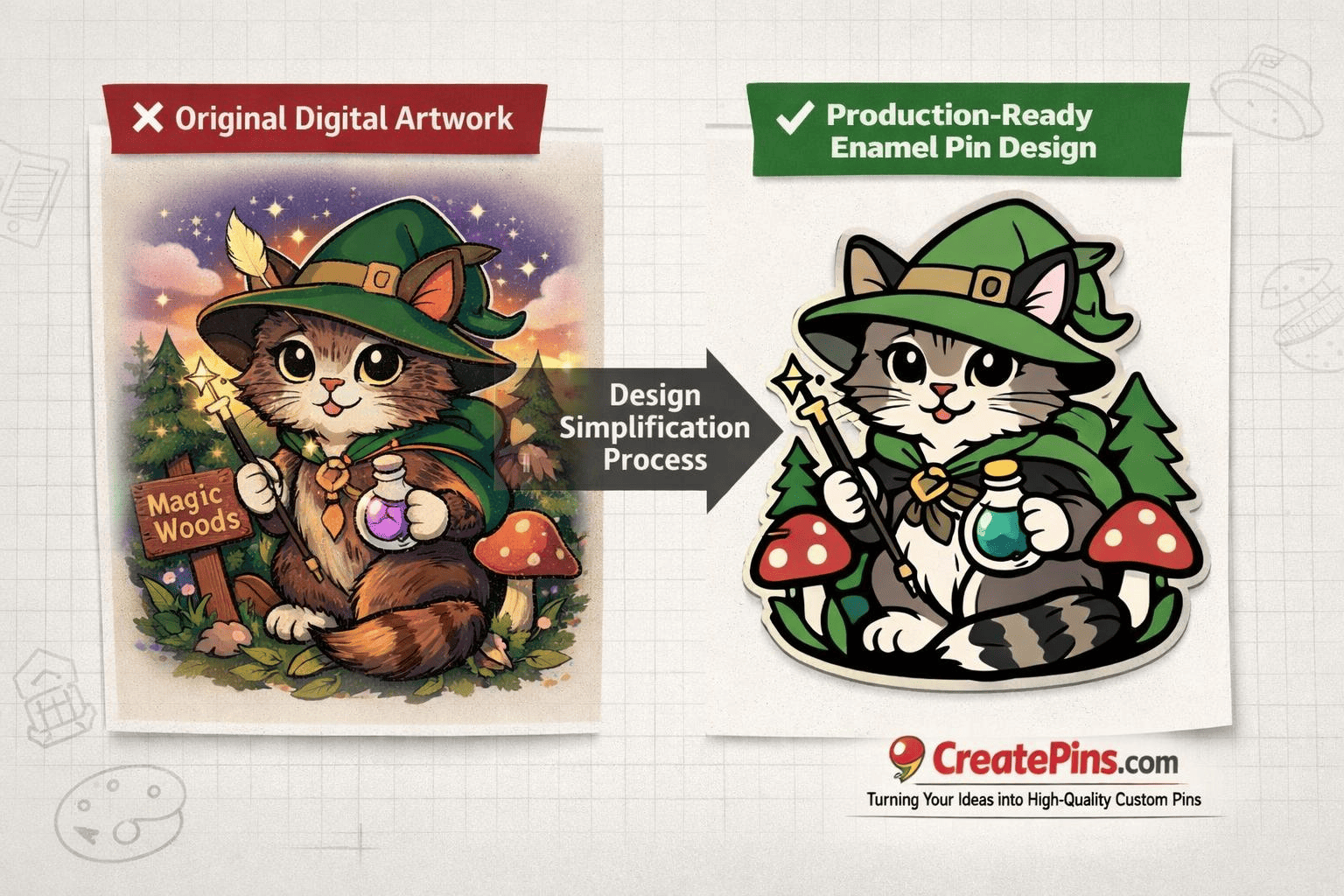
[AI-generated artwork is revolutionizing creative industries, but can it be used for enamel pin production? While AI designs can be transformed into enamel pins, limitations in detail quality, manufacturing constraints, and potential copyright issues1 must be considered. If you're curious about using AI designs for pins, this article will walk you through key factors to know.
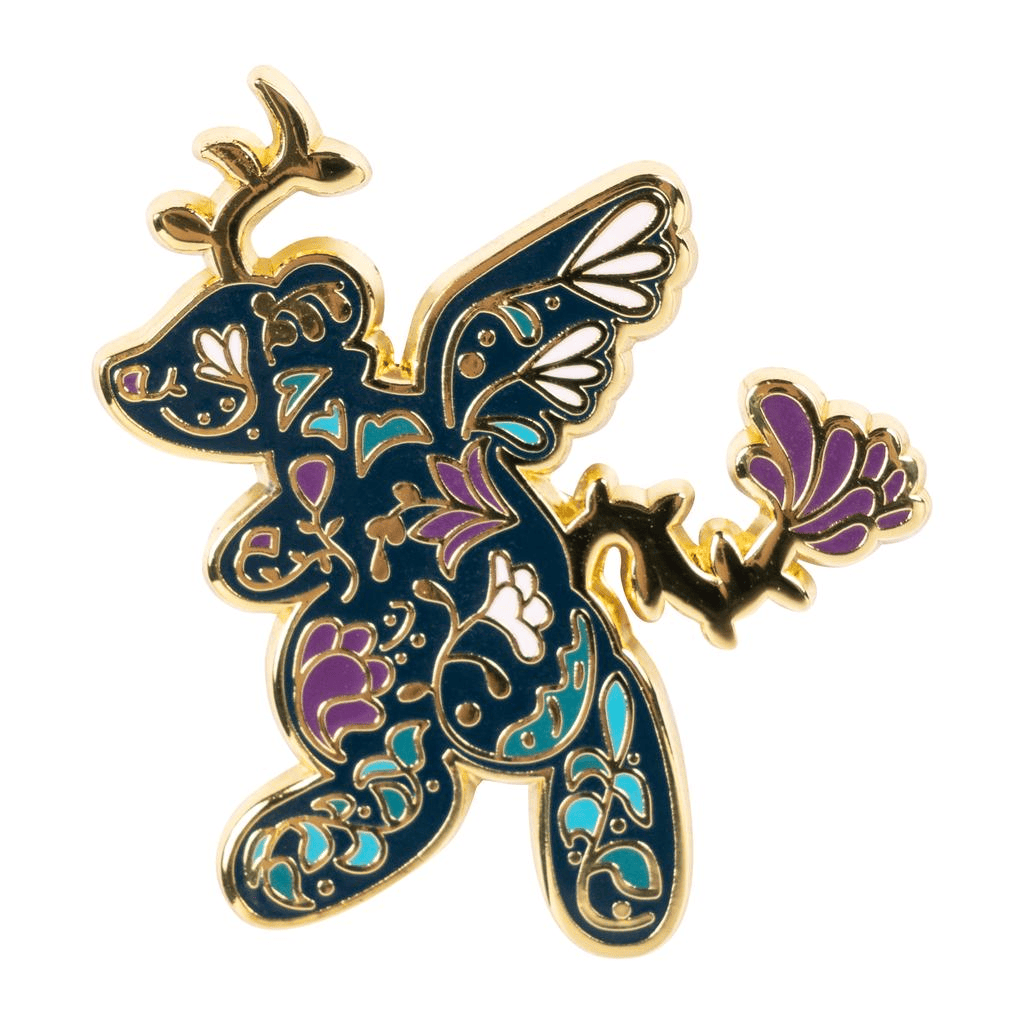
AI offers exciting possibilities for creating unique designs, but its capabilities aren’t always aligned with production needs. Let’s examine its potential—and limitations—for enamel pin manufacturing.
What are the challenges of AI artwork for enamel pin production?
AI artwork can generate stunning visuals, but that doesn’t mean every design can smoothly become a pin.
Not all AI-generated designs meet manufacturing standards. Too many details or overly intricate shapes can cause issues during production2, especially when translating digital art into physical forms like enamel pins.
Dive deeper into production constraints
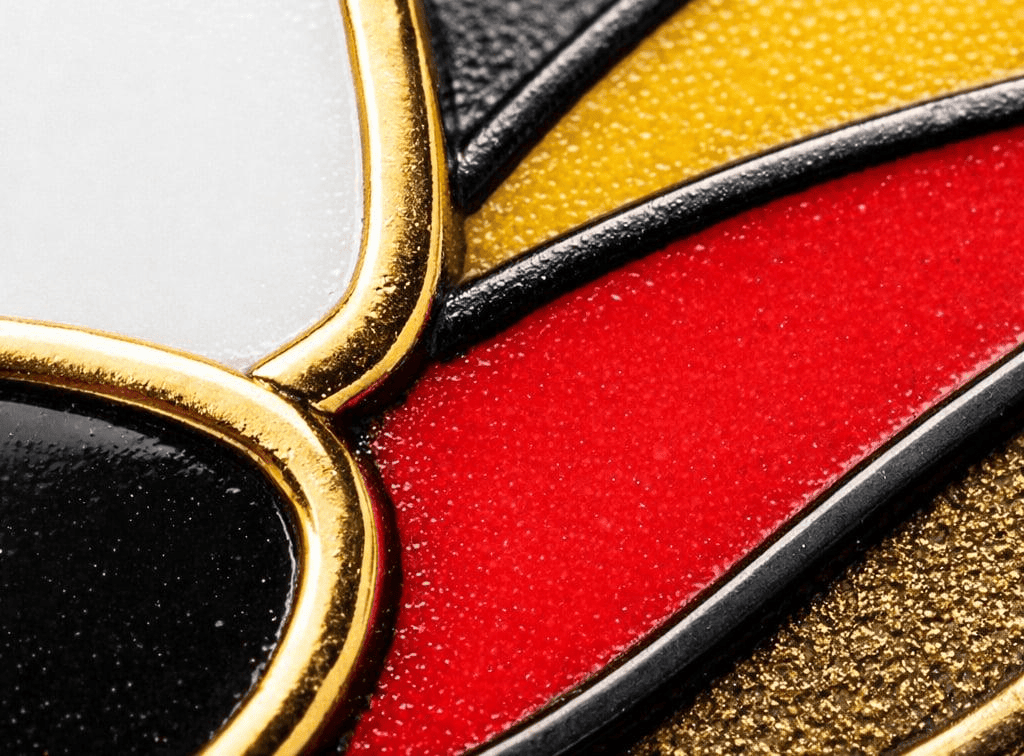
Enamel pins rely on specific manufacturing processes, such as die-cutting, stamping, and enamel filling. AI artwork often includes subtle gradients, fine details, or complex shapes—elements that don’t translate well to production-friendly designs. Key challenges include:
- Loss of fine detail: Enamel pins cannot replicate thin lines or excessively small elements. AI-generated designs might need simplification to ensure production accuracy.
- Color fidelity: Pins typically use solid colors, but AI designs often rely on gradients and blended shades3, which must be converted to solid Pantone colors during manufacturing.
- Irregular shapes: Intricate designs may require custom die molds, making production costly or impractical for smaller orders.
This is where professional design refinement becomes crucial. Customers often provide AI-created artwork, expecting pins to match exactly—but microscopic adjustments are often necessary to meet production standards.
Do AI-generated designs compromise creative control?
AI tools make designing more accessible, but do they limit your control over the final product?
AI designs can streamline the creative process4, but they often require refinement for compatibility with enamel pin standards. Depending on your brand or project, creativity may be restricted by these adjustments.
Dive deeper into creative limitations
Using AI doesn’t have to mean sacrificing originality; AI-generated designs can provide a solid starting point for your pins. However, balancing creativity with production feasibility is key. Here are common adjustments that may be necessary:
- Simplifying complex artwork: AI often generates highly detailed images that serve as inspiration but aren’t practical to recreate in pin form. Simplifying these designs doesn’t mean losing their essence—it ensures they translate effectively.
- Prioritizing solid colors: Gradients and digital effects in AI artwork must convert to distinct, solid colors for accurate enamel pin production.
- Considering pin size: Small pins magnify the challenge of retaining detail fidelity, making simplified AI designs more suitable.
I’ve worked with clients who began with stunningly innovative AI designs, only to realize that compromise was inevitable. Refining these designs with experienced pin designers can bridge the gap between aesthetic ambition and manufacturable reality.
Are there legal risks with AI-generated artwork?
Intellectual property concerns are growing in tandem with AI popularity—but what does this mean for pin makers?
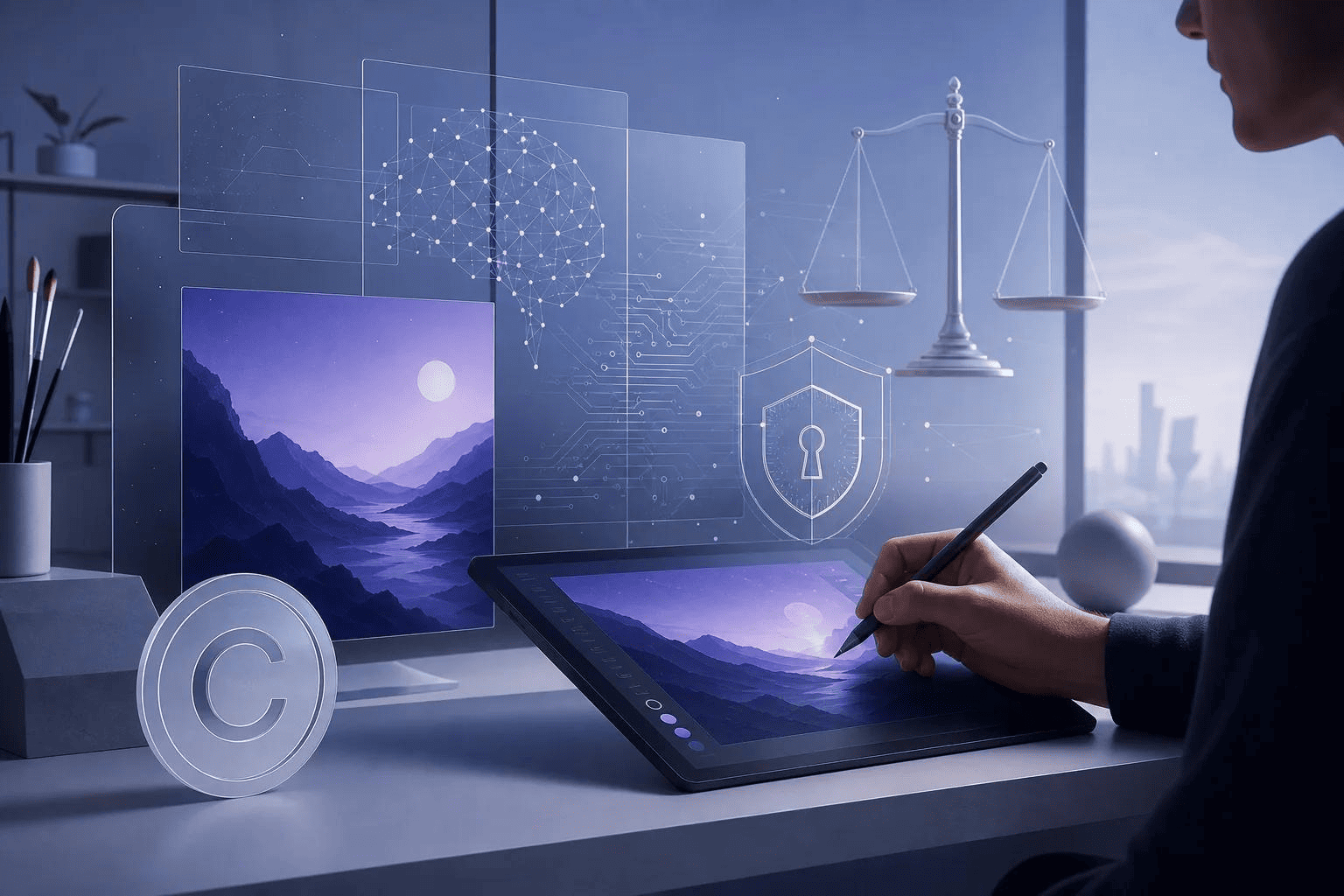
AI generates images based on existing data, which can create murky waters regarding intellectual property rights. Any pin design originating from AI artwork may require legal review to ensure copyright compliance.
Dive deeper into IP considerations
AI doesn't create artwork from scratch; it synthesizes patterns from existing images and datasets5. This opens several ethical and legal questions, particularly if your pin design closely resembles copyrighted material. Here's what you should know:
- Derivative disputes6: Some AI platforms train on copyrighted images, which could lead to disputes if their output resembles an artist’s work too closely.
- Ownership ambiguity7: When you use AI-generated designs, you may not hold full legal rights over the final image. Check the terms of the platform you’re using.
- Legal advice8: For businesses or creators launching commercial pin lines, consulting a qualified intellectual property lawyer ensures you're protected.
While I’m not a lawyer, I've seen customers underestimate these legal complexities. If you're considering turning AI-generated artwork into enamel pins, set aside time to explore the legal aspects—it could save you headaches down the road.
Which AI designs work best for enamel pins?
Are all AI-generated designs viable, or do specific styles lend themselves better to pins?
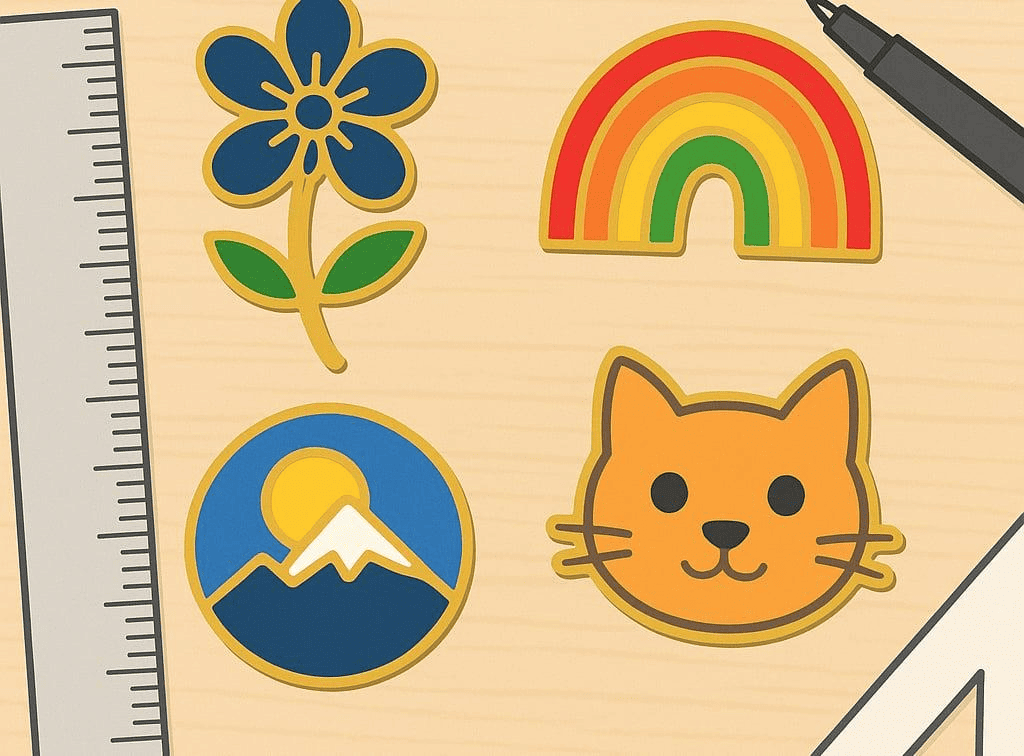
Simple, bold designs are more likely to succeed in enamel pin production. Minimalist styles with clear outlines and solid colors are ideal compared to overly intricate visuals.
Dive deeper into design optimization
Certain types of artwork are a natural fit for enamel pins. By focusing on simplicity and clarity, small business owners and designers can maximize their chances of achieving stunning results. Here’s the sweet spot for AI-generated pin art:
- Flat vector styles9: Designs resembling flat illustrations with crisp lines are easier to replicate physically.
- Simple color palettes: Choosing 4–8 solid colors avoids complications during enamel filling.
- Clear boundaries: Defined edges or borders help maintain design integrity when die molds are created.
- Minimal text: Large, readable fonts are manageable; small lettering is difficult to produce with clarity.
AI-generated artwork that follows these guidelines will likely convert smoothly to physical pins, minimizing the need for significant adjustments. If you’re unsure, collaborating with a professional designer can help you adapt your concepts to manufacturing constraints.
Frequently Asked Questions
Can I use AI artwork for commercial pin production?
Yes, but you may need to refine designs to meet manufacturing standards and verify copyright compliance for commercial use.
Do all AI designs need adjustments for enamel pins?
Most do. Intricate elements, gradients, and irregular shapes typically require simplification for production accuracy.
What’s the best design style for AI pins?
Minimalist vector designs with solid colors and defined outlines are ideal for enamel pin production10.
Do AI-generated pins cost more to produce?
Typically, refinement costs or custom die molds may increase expenses. Simple designs, however, are unlikely to increase production costs.
Can I copyright AI-generated pins?
You’ll need to consult a legal expert, as ownership rights for AI-created artwork depend on the tools and processes used.
Conclusion
AI-generated artwork can absolutely be turned into enamel pins, but it’s not a plug-and-play solution. Designs often require adjustments for manufacturing11, and legal considerations around intellectual property cannot be ignored. If you’re exploring AI for pin designs, focus on styles suited to enamel production and consult professionals for design optimization and legal advice.
Ready to bring your AI-driven ideas to life? Reach out to us—we’ll help adapt your vision into high-quality and production-ready enamel pins.
"AI and the visual arts: The case for copyright protection", https://www.brookings.edu/articles/ai-and-the-visual-arts-the-case-for-copyright-protection/. A study on AI-generated artwork highlights challenges in translating intricate digital designs into physical products, including loss of detail and manufacturing constraints. Copyright concerns are also noted due to AI's reliance on existing datasets. Evidence role: general_support; source type: research. Supports: AI-generated designs face challenges in detail quality, manufacturing constraints, and copyright issues when converted to enamel pins.. Scope note: The study may focus on broader manufacturing applications rather than enamel pins specifically. ↩
"How To Overcome Six Common Manufacturing Challenges", https://bigrep.com/posts/how-to-overcome-six-common-manufacturing-challenges/. Educational resources on manufacturing processes explain how intricate designs often require simplification to meet production standards, particularly in die-cutting and enamel filling. Evidence role: mechanism; source type: education. Supports: Intricate AI-generated designs can pose challenges during physical manufacturing processes like enamel pin production.. Scope note: The resource may not specifically address AI-generated designs but applies to detailed artwork in general. ↩
"The Influences of gradient color on the weight perception and ...", https://pmc.ncbi.nlm.nih.gov/articles/PMC10472828/. Industry guidelines for enamel pin manufacturing emphasize the use of solid Pantone colors, noting that gradients and blended shades require conversion for production feasibility. Evidence role: mechanism; source type: institution. Supports: Enamel pin production typically requires solid colors, making gradients and blended shades from AI designs unsuitable without conversion.. Scope note: The guidelines may focus on general enamel pin production rather than AI-specific designs. ↩
"Embracing Creativity: How AI Can Enhance the ...", https://www.sps.nyu.edu/about/news-and-ideas/articles/etc/2024/embracing-creativity-how-ai-can-enhance-the-creative-process.html. Research on AI in creative industries shows that AI tools can accelerate design workflows but often necessitate adjustments for physical product compatibility. Evidence role: general_support; source type: research. Supports: AI tools can simplify the creative process but often require refinement for compatibility with physical manufacturing standards.. Scope note: The research may focus on broader creative applications rather than enamel pins specifically. ↩
"When AI art has no author: Study finds generated images ...", https://news.mit.edu/2026/when-ai-art-has-no-author-generated-images-often-cant-be-traced-to-training-data-0818. Educational resources on AI explain that generative models like GANs and diffusion models create artwork by analyzing and synthesizing patterns from training datasets. Evidence role: mechanism; source type: education. Supports: AI generates artwork by synthesizing patterns from existing images and datasets.. Scope note: The explanation may focus on AI mechanisms broadly rather than specific applications like enamel pins. ↩
"AI and the visual arts: The case for copyright protection", https://www.brookings.edu/articles/ai-and-the-visual-arts-the-case-for-copyright-protection/. Government reports on intellectual property in AI highlight cases where AI-generated outputs have led to legal disputes over copyright infringement. Evidence role: case_reference; source type: government. Supports: AI platforms training on copyrighted images can lead to derivative disputes if their output closely resembles existing works.. Scope note: The report may focus on broader copyright issues rather than specific cases involving enamel pins. ↩
"AI, Copyright, and the Law: The Ongoing Battle Over ...", https://sites.usc.edu/iptls/2025/02/04/ai-copyright-and-the-law-the-ongoing-battle-over-intellectual-property-rights/. Legal studies on AI and intellectual property suggest that ownership rights for AI-generated artwork depend on the terms of the platform and jurisdictional laws. Evidence role: expert_consensus; source type: education. Supports: Legal ambiguity exists regarding ownership rights for AI-generated designs.. Scope note: The studies may not address specific cases involving enamel pins. ↩
"Copyright and Artificial Intelligence | U.S. Copyright Office", https://www.copyright.gov/ai/. Government guidelines on intellectual property recommend legal consultation for businesses using AI-generated artwork to ensure compliance and protection. Evidence role: expert_consensus; source type: government. Supports: Consulting an intellectual property lawyer is recommended for businesses using AI-generated designs in commercial pin production.. Scope note: The guidelines may not specifically address enamel pins but apply to creative industries broadly. ↩
"Manufacturing Vector Art, Icons, and Graphics for Free ...", https://www.vecteezy.com/free-vector/manufacturing. Educational resources on design for manufacturing explain that flat vector styles with defined edges are ideal for physical replication due to their simplicity and clarity. Evidence role: mechanism; source type: education. Supports: Flat vector styles are easier to replicate in physical manufacturing processes like enamel pin production.. Scope note: The resources may focus on general manufacturing rather than enamel pins specifically. ↩
"Looking for vector art tutorials for pin designs", https://www.facebook.com/groups/enamelpins/posts/958720254297383/. Institutional guidelines for enamel pin manufacturing emphasize the suitability of minimalist vector designs with solid colors and clear outlines for production feasibility. Evidence role: general_support; source type: institution. Supports: Minimalist vector designs with solid colors and defined outlines are ideal for enamel pin production.. Scope note: The guidelines may not specifically address AI-generated designs. ↩
"AI art", https://en.wikipedia.org/wiki/AI_art. Educational resources on design for manufacturing explain that artwork often needs simplification and refinement to align with production constraints. Evidence role: mechanism; source type: education. Supports: Designs often require adjustments to meet manufacturing standards, especially for enamel pins.. Scope note: The resources may focus on general manufacturing rather than enamel pins specifically. ↩