
HiPinny Journal
Enamel Pins vs. Acrylic Merchandise: Which Is Better for Your Brand?
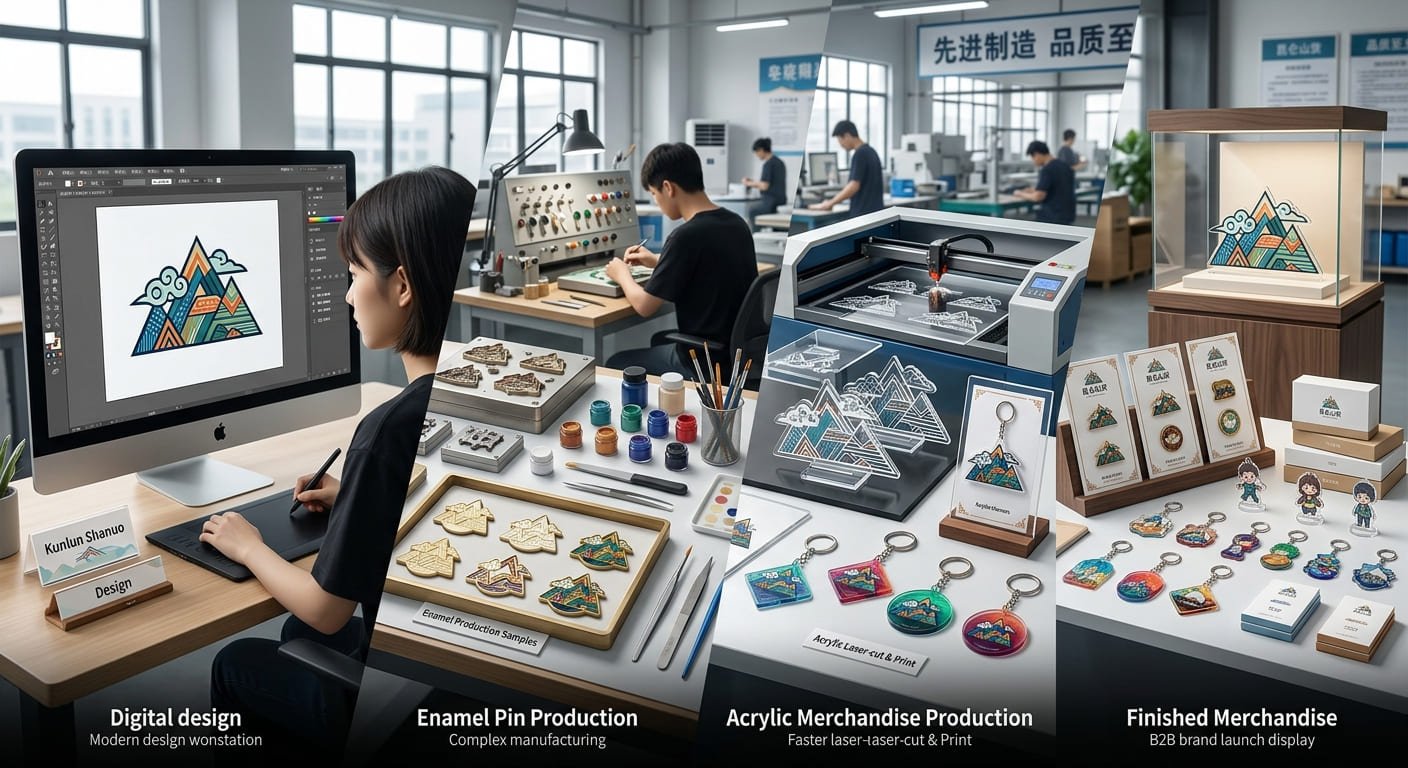
Choosing between enamel pins and acrylic merchandise for your brand can be challenging, especially if you're weighing costs, aesthetics, and audience appeal. Enamel pins and acrylic items each offer unique strengths and limitations, so understanding their differences is crucial in making the right decision for your business needs.
Enamel pins provide a premium, durable option with a classic aesthetic, while acrylic merchandise delivers vibrant, lightweight designs with more flexibility in shapes. Your choice ultimately depends on your branding goals, cost priorities, and timeline considerations.
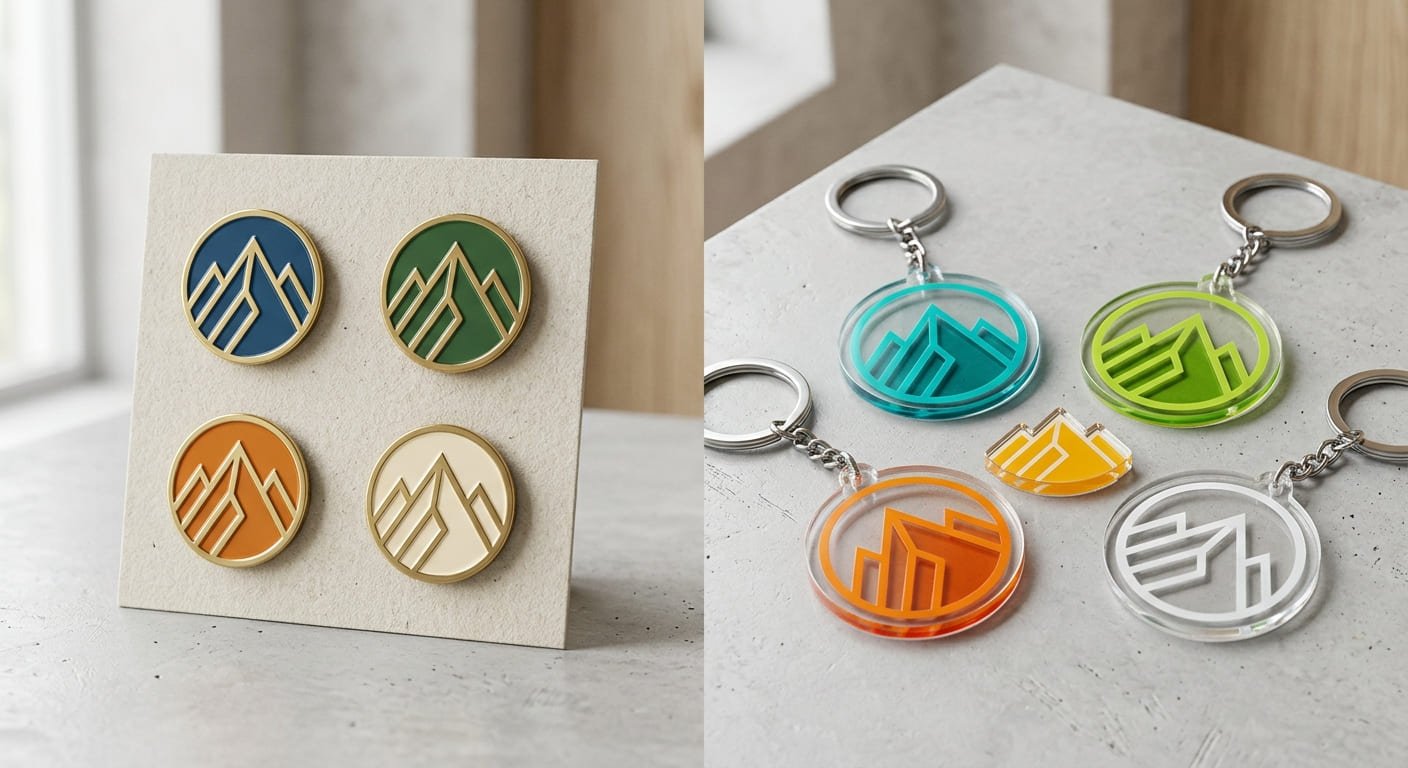
Which option aligns best with your brand identity and audience preferences? Let’s break it down below.
What are the key differences between enamel pins and acrylic merchandise?
When comparing enamel pins to acrylic merchandise, buyers often focus on superficial assumptions like price or quality. The two materials, however, differ significantly in production, design possibilities, and cost structures, making them suitable for distinct branding strategies.
Enamel pins are more durable, sophisticated, and often regarded as collectible, while acrylic products offer lightweight, budget-friendly options ideal for vibrant and flexible designs. Each option serves its purpose, depending on your branding priorities.
Dive Deeper: Enamel Pins
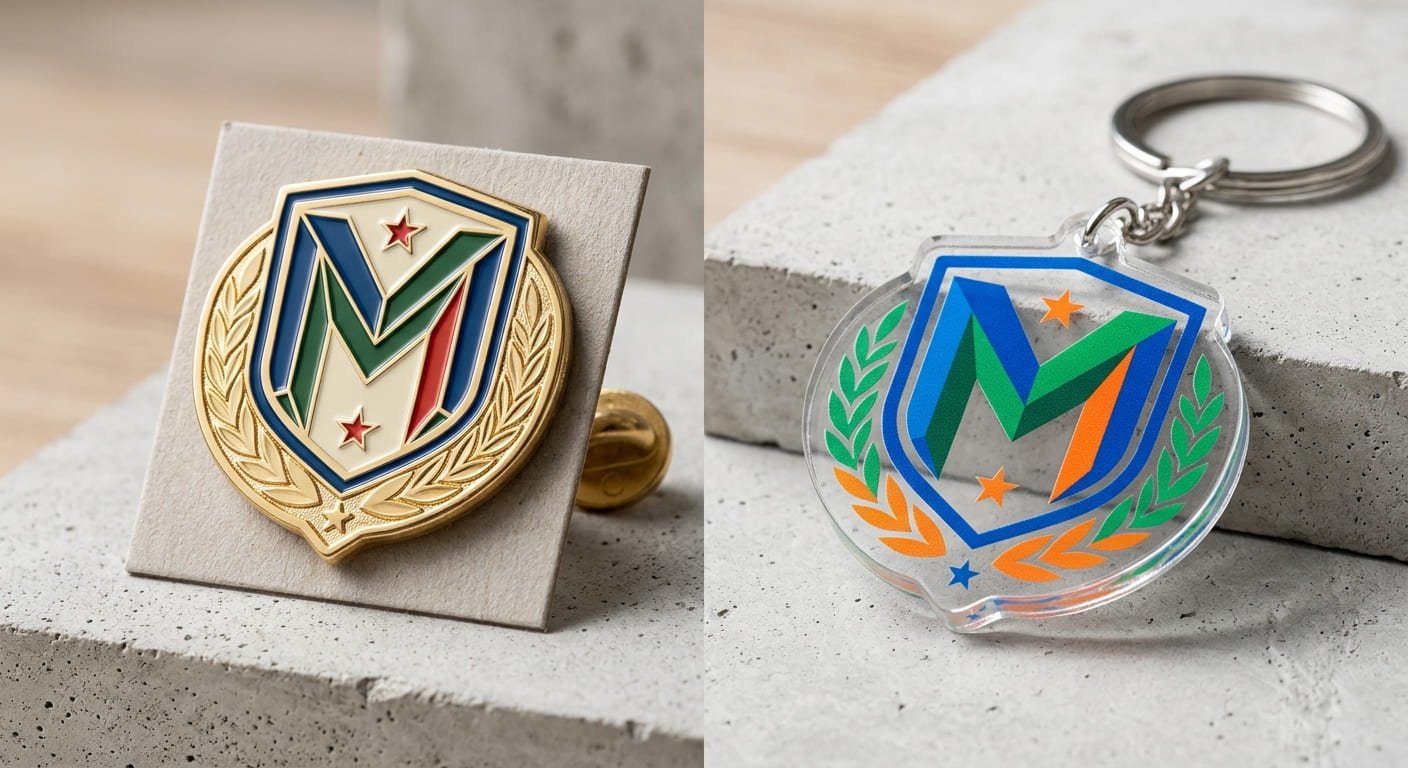
Enamel pins, typically made of metal, are known for their durability and timeless look. They are often crafted with hard or soft enamel processes, allowing for detailed designs with raised or recessed surfaces. While they require a higher upfront investment, enamel pins convey a classic, premium feel that suits collectible items or exclusive branded merchandise.
Key advantages:
- High durability: Pins resist fading or damage over time due to their metal base.
- Elegant finish: Hard enamel pins deliver a smooth, polished look, while soft enamel creates textured depth.
- Ideal for branding: Perfect for brands targeting niche collector markets or premium aesthetics.
Drawbacks:
- Higher initial cost: While cost per unit drops with higher order quantities, small orders can be relatively expensive.
- Limited flexibility: Enamel pins may not work well for designs requiring vibrant edge-to-edge printing or unconventional shapes.
Dive Deeper: Acrylic Merchandise
Acrylic merchandise, on the other hand, is lightweight and inexpensive to produce1, making it ideal for mass-market promotions or casual branding. Typical acrylic items include keychains, charms, and badges, which are often digitally printed or laser-cut for colorful and highly customized results.
Key advantages:
- Flexible designs: Acrylic allows edge-to-edge artwork and irregular shapes2, making it ideal for fun or modern designs.
- Lower starting cost: Suitable for businesses with smaller budgets or needing large quantities.
- Quick turnaround time: Faster production compared to enamel pins, ideal for tight schedule launches.
Drawbacks:
- Lower perceived durability: Acrylic pieces may discolor or scratch more easily over time.
- Less premium appeal: If your brand targets luxury or high-end markets, acrylic may lack the prestige associated with enamel pins.
How do cost factors impact your decision?
Many buyers assume enamel pins are always more expensive than acrylic merchandise. While this is generally true, the cost difference is influenced by factors like order quantities, design complexity, and materials used.
Enamel pins have higher production costs upfront, but discounts apply for larger quantities. Acrylic merchandise, though starting cheaper, can become pricier for complex designs. Balancing quantity needs and design preferences is key.
Dive Deeper: Cost Breakdown
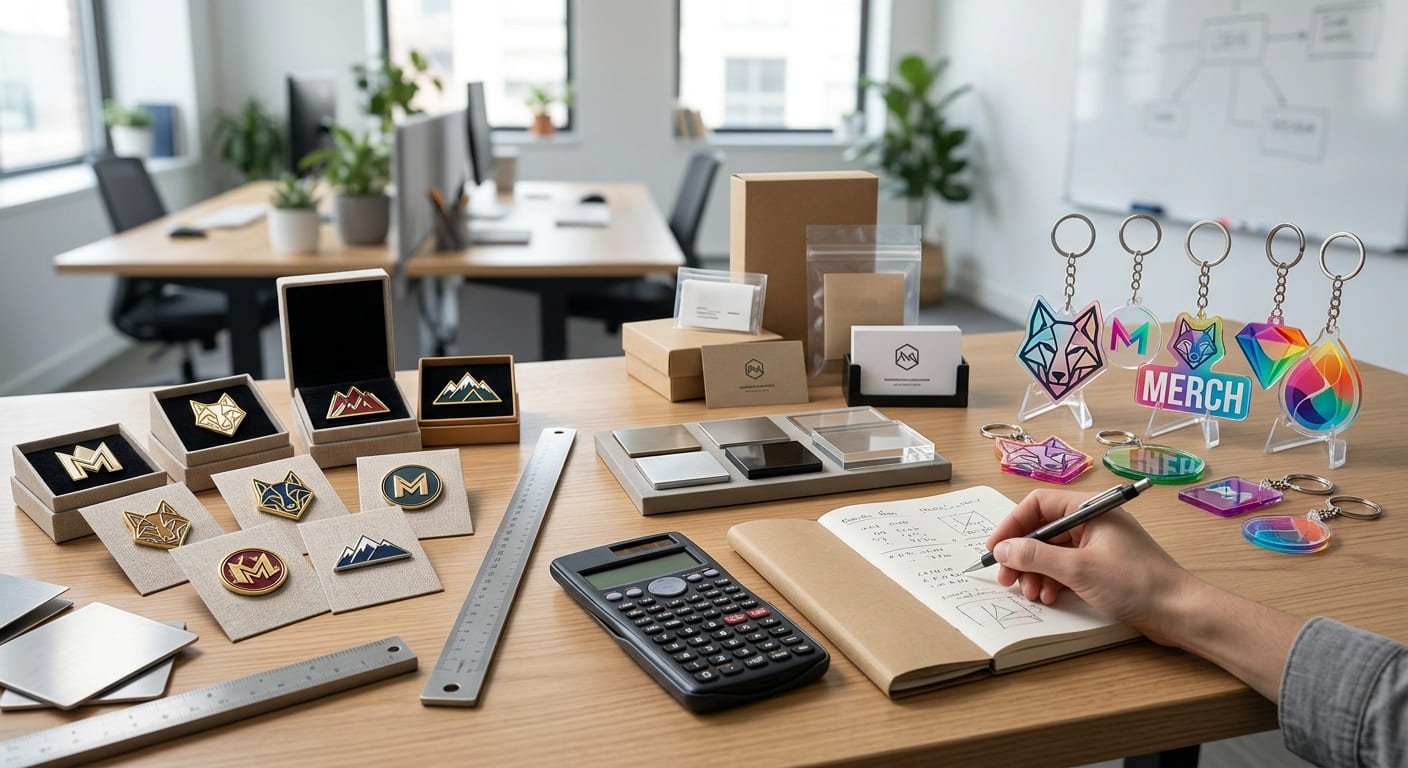
Here’s a quick comparison of how cost factors differ for enamel pins and acrylic merchandise:
| Cost Factor | Enamel Pins | Acrylic Merchandise |
|---|---|---|
| Base material | High-quality metal; costly to source | Acrylic sheets; lower material costs |
| Design complexity | Detailed engraving increases costs | Complex cutting adds to labor costs |
| Minimum order quantity | Higher MOQ, often costs more for small runs | Often available in small or flexible quantities |
| Production process | Requires painting, baking, and polish | Quicker processes, like laser cutting |
For brands focusing on long-term durability and exclusivity, enamel pins justify the cost. Budget-conscious businesses needing eye-catching bulk items will find acrylic merchandise a better fit.
Which option suits your brand aesthetic better?
Your branding strategy plays a big role here. Enamel pins excel in classic, minimalist designs3 that appeal to collectors or premium buyers, while acrylic is better suited to youthful, vibrant branding that demands colorful, unconventional designs.
The decision often hinges on what messaging you want your merchandise to convey.
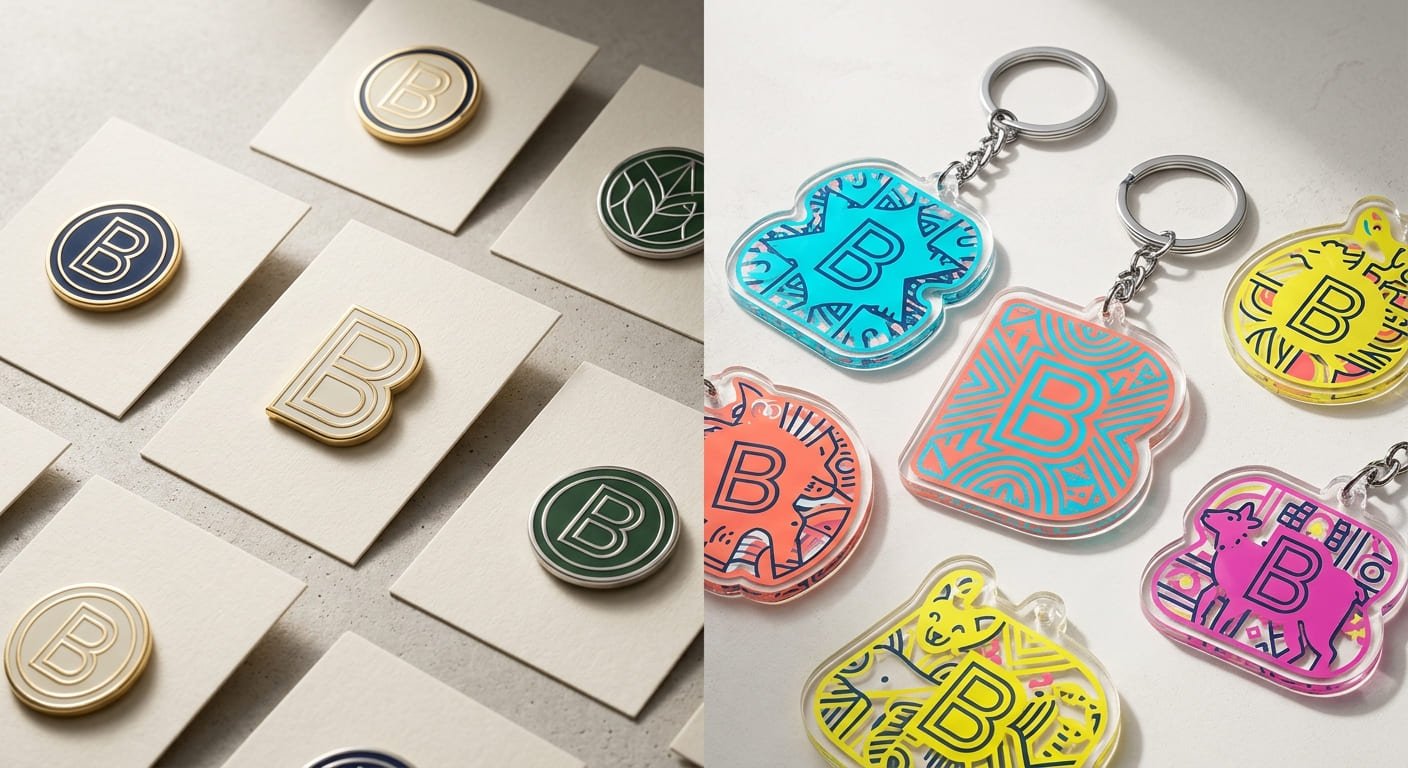
Dive Deeper: Aesthetic Considerations
Enamel pins are best when:
- Your brand represents exclusivity or lifestyle premium.
- Your audience values collectibles and timeless designs.
- You aim for elegance with plated finishes or embossed details.
Acrylic merchandise shines when:
- Your brand uses playful or dynamic visual language.
- You want artwork mapped across unconventional shapes.
- You prioritize color vibrancy and lightweight portability.
Both options can work if tailored well to your audience's taste!
How much do production timelines differ?
Production timelines often surprise buyers. Enamel pins generally take longer to produce4 due to meticulous painting and detailing processes, whereas acrylic merchandise offers faster turnaround times, especially for laser-cut or digitally printed designs.
If time-sensitive launches or events are critical, acrylic merchandise may have the advantage.
Dive Deeper: Timelines Comparison
When timelines matter, here’s a rough estimate:
- Enamel pins: Average production takes 3–4 weeks, including mold creation and quality checks.
- Acrylic merchandise: A typical order can complete within 1–2 weeks, depending on complexity.
Brands planning far ahead and prioritizing craftsmanship lean toward enamel pins. However, projects requiring quick, affordable solutions may benefit more from acrylic options.
Frequently Asked Questions
Can I order enamel pins with unusual shapes similar to acrylic charms?
Enamel pins are usually limited to simpler shapes due to metal mold constraints. For irregular designs, acrylic charms offer far more flexibility, including edge-to-edge printing.
Are acrylic pieces less durable than enamel pins?
Yes, acrylic pieces are more prone to scratches and fading. Enamel pins, crafted with metal bases and baked enamel, are superior for long-term durability.
Which is better for large-volume orders?
Acrylic merchandise typically suits large-volume orders better due to its lower cost per unit. Enamel pins, while higher in quality, are ideal for smaller runs with collectible appeal.
Are production timelines always faster for acrylic merchandise?
Generally, acrylic items have quicker turnaround times. However, complex designs or large orders may still take longer than expected, so consult your supplier.
Conclusion
Choosing between enamel pins and acrylic merchandise comes down to your branding priorities, audience preferences, budgets, and timelines. Enamel pins deliver premium durability and timeless elegance for exclusive markets, while acrylic merchandise excels in vibrant, playful designs for mass-market appeal.
Are you ready to customize enamel pins or explore acrylic merchandise? Contact us today to discuss your branding needs—we’ll help you find the perfect match!
"Design and Cost Analysis of Acrylic Acid Plant", https://scholarworks.uark.edu/cgi/viewcontent.cgi?article=1138&context=cheguht. Studies on acrylic manufacturing highlight its low material costs and lightweight properties, making it suitable for mass production. Evidence role: general_support; source type: research. Supports: Acrylic merchandise is lightweight and inexpensive to produce.. Scope note: Cost-effectiveness may depend on order volume and design complexity. ↩
"10 Advantages of Acrylic you need to know", https://uvacrylic.com/blog/10-advantages-of-acrylic-you-need-to-know/. Technical analyses of acrylic materials show that laser cutting and digital printing enable edge-to-edge designs and support irregular shapes. Evidence role: mechanism; source type: research. Supports: Acrylic merchandise supports edge-to-edge artwork and irregular shapes.. Scope note: Design flexibility may depend on the specific equipment and techniques used. ↩
"Discover 900+ Enamel Pins and pewter charm ideas", https://www.pinterest.com/markpoulin/enamel-pins/. Design trend analyses suggest that enamel pins are favored for minimalist aesthetics due to their polished finishes and clean lines. Evidence role: general_support; source type: research. Supports: Enamel pins are ideal for classic, minimalist designs.. Scope note: Preference for minimalist designs may vary across different consumer demographics. ↩
"how long is the process? : r/EnamelPins", https://www.reddit.com/r/EnamelPins/comments/uqz3jd/how_long_is_the_process/. Production studies show that enamel pins require additional steps like mold creation, painting, and baking, extending timelines compared to acrylic items. Evidence role: mechanism; source type: research. Supports: Enamel pins have longer production timelines due to detailed processes.. Scope note: Timelines may vary based on order size and design complexity. ↩