
HiPinny Journal
Enamel Pins vs. Printed Pins: Which Is Better?
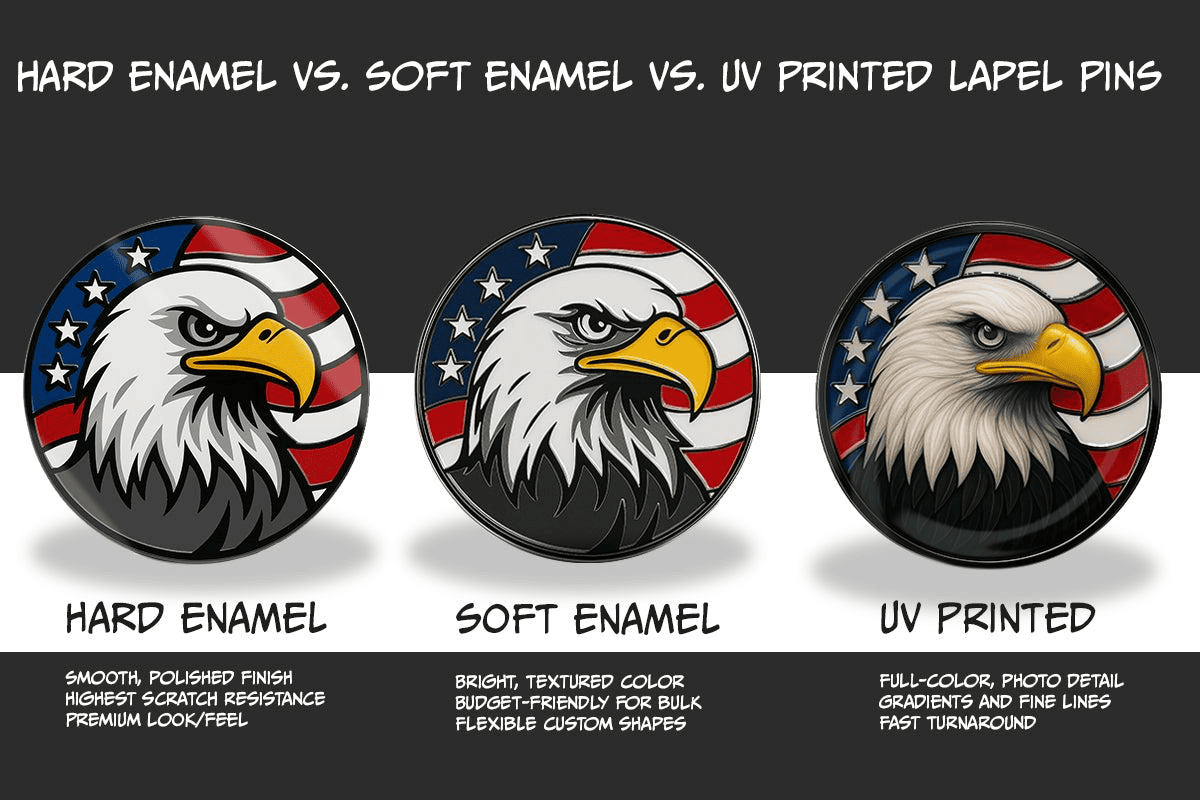
[Choosing between enamel pins and printed pins can be challenging, especially for new designers and creators venturing into custom merchandise. While enamel pins are known for their timeless charm and durability, printed pins offer greater flexibility for complex designs and vivid details. Understanding the differences in cost, design, and durability can help you make the right choice for your project.
Both enamel pins and printed pins serve different purposes and appeal to different design needs. Enamel pins provide durability and an elegant, embossed look, while printed pins excel at showcasing intricate designs with high color fidelity. Select between them based on your project’s design complexity, production budget, and intended use.
Whether you're designing pins for an event, gift shop, or your creative business, understanding the technical and aesthetic differences is crucial. Let’s dive deeper to explore how enamel and printed pins compare, along with actionable advice for making the best decision.
What are enamel pins and printed pins?
What are enamel pins?
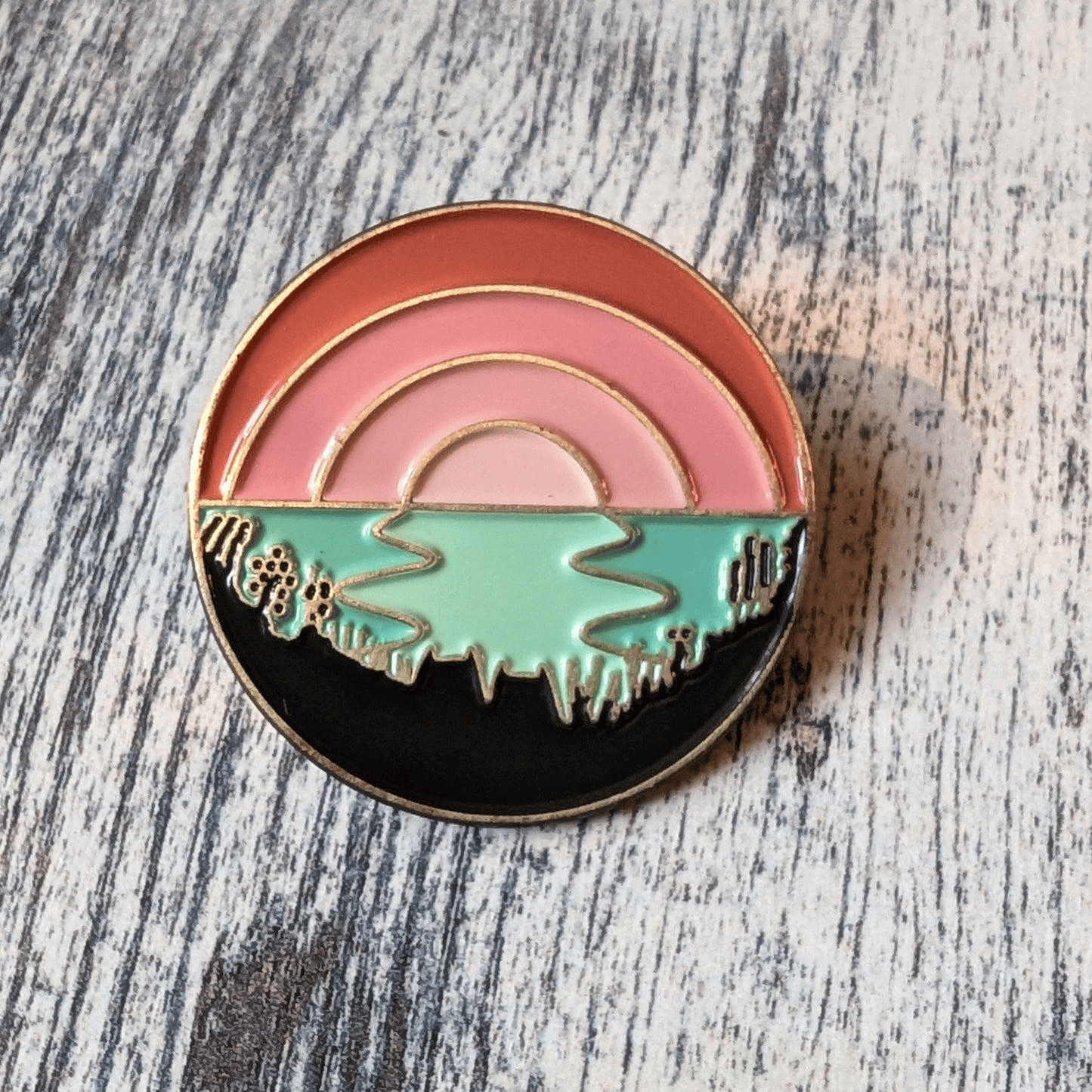
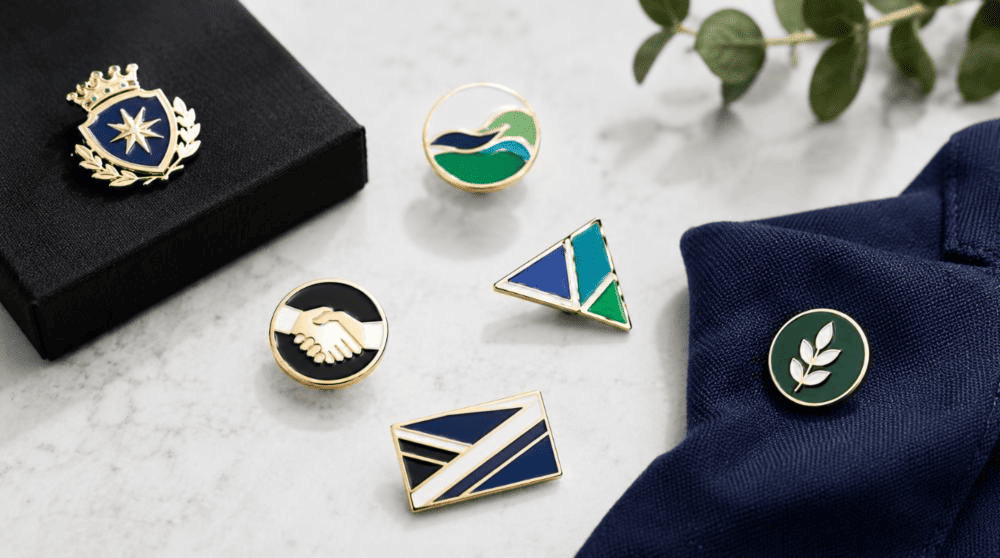
Enamel pins offer a polished and professional look, featuring raised metal edges and filled-in recessed areas that create a smooth, hard surface. These pins are typically made from metal and treated with enamel paint or epoxy, delivering excellent durability.
Enamel pins are the go-to choice for those seeking a timeless, durable option for custom designs, perfect for use as trading pins, collectibles, or accessories.1
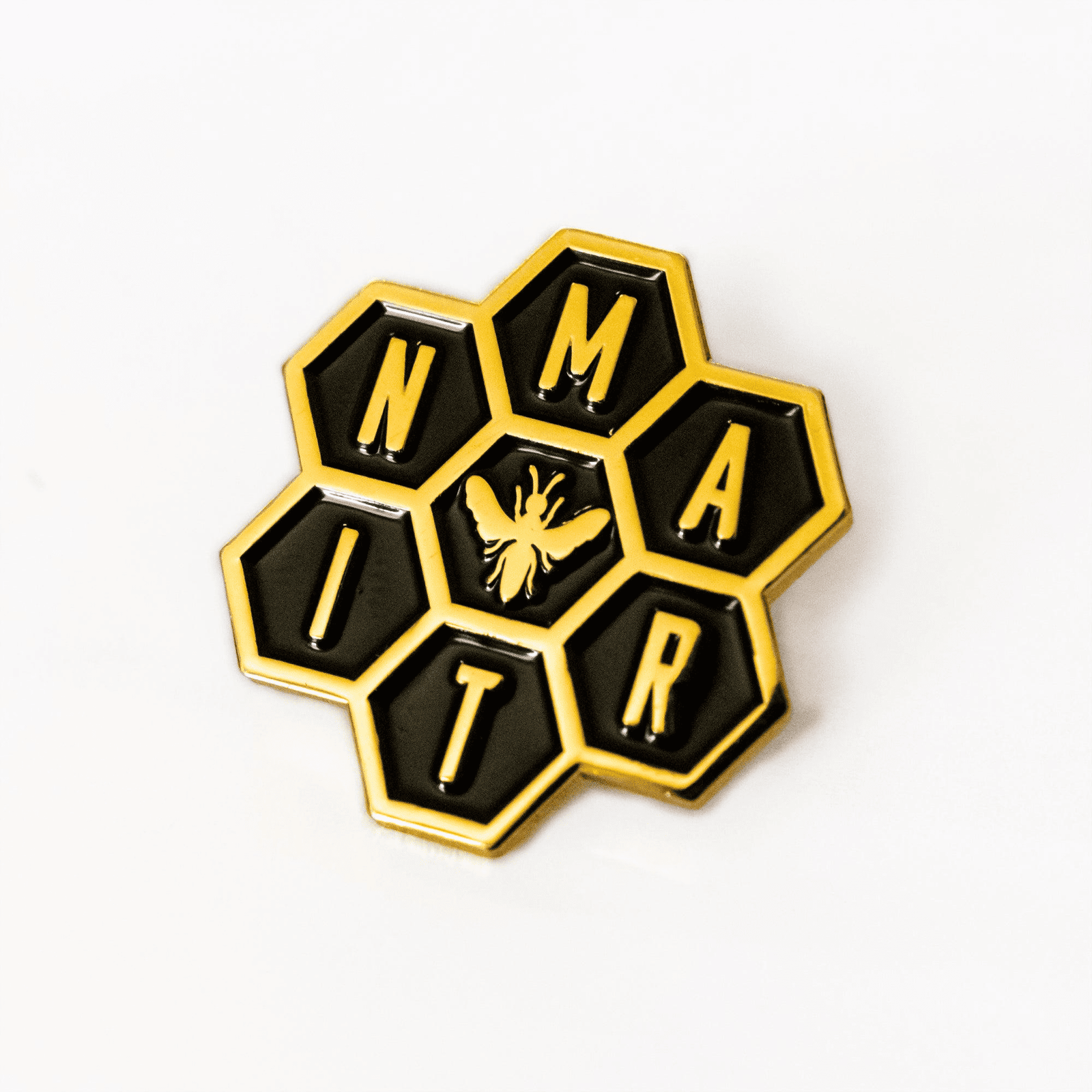
Enamel pins are created using either hard or soft enamel processes. Hard enamel pins are polished flat and have a smoother finish, while soft enamel pins retain depth in their texture through recessed areas.2 Key benefits include:
- Longevity: Metal foundations and baked enamel ensure durability.
- Premium appearance: Raised edges and glossy finishes make an impression.
- Options for customization: Available plating styles (gold, silver, black nickel) and backing choices increase personalization opportunities.
However, enamel pins impose certain design constraints. For instance, detailed graphics and gradients can be harder to achieve, as enamel relies on solid blocks of color and defined metal borders.
What are printed pins?
Printed pins directly transfer your design onto a flat metal or acrylic surface, using techniques like offset or digital printing. The design is sealed under a protective epoxy layer, ensuring clarity without raised or recessed areas.
Printed pins eliminate design constraints by allowing reproduction of complex graphics, gradients, and photographic details, ideal for bold artwork or promotional branding.3
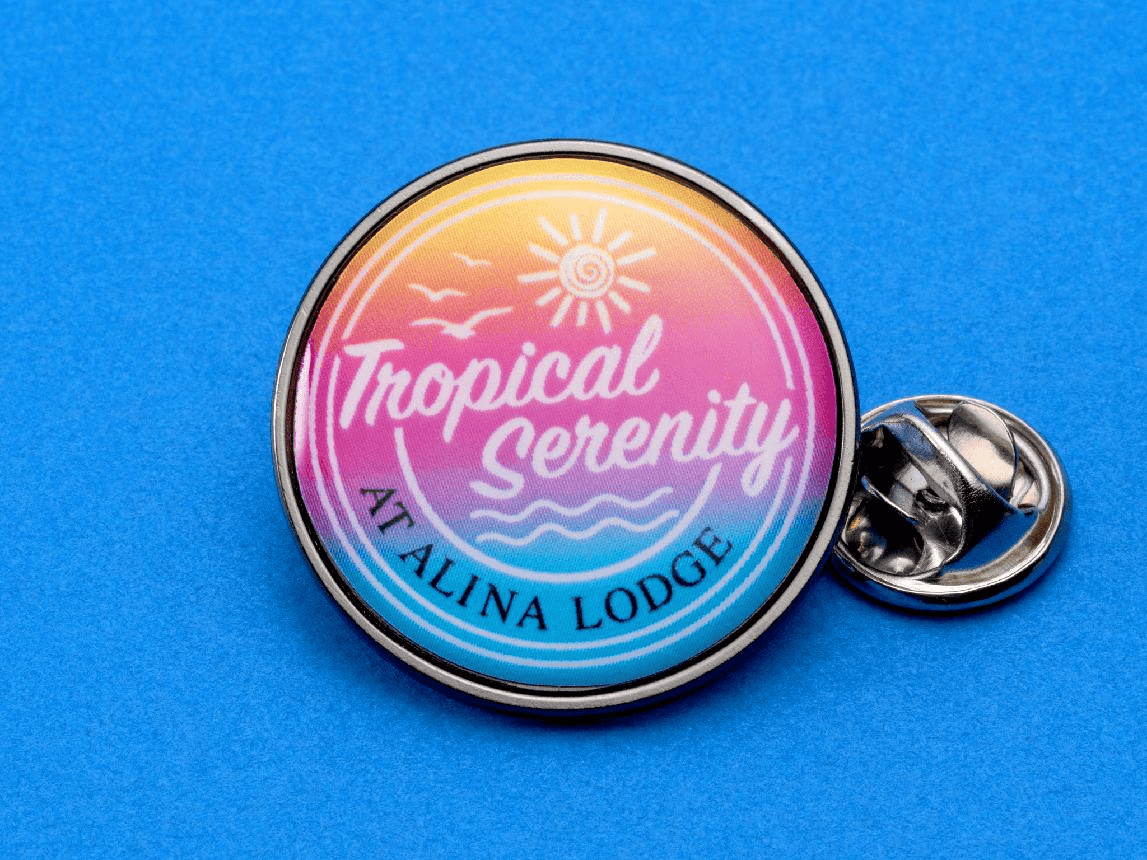
Unlike enamel pins, which require color blocking and raised edges, printed pins deliver unmatched visual realism and flexibility. Benefits include:
- High-resolution designs: Perfect for intricate details, shading, and photographs.
- Cost-efficient production: A faster, simpler process lowers costs for large runs.
- Lightweight build: Acrylic and metal bases reduce unit weight for easier handling.
However, printed pins are less durable than enamel pins. Their designs may fade or chip over time, especially when subjected to heavy use, making them less ideal for collectibles or long-term displays.
How do durability and aesthetics compare?
Which pin type is more durable?
Durability often depends on how the pins will be used.4 Enamel pins are incredibly sturdy thanks to their metal base and baked enamel, making them suitable for everyday wear and long-lasting designs, including fashion accessories or branding merchandise. In contrast, printed pins use layers of ink sealed beneath epoxy, which provides moderate protection but may degrade faster, especially under frequent handling.
Enamel pins are more durable than printed pins, resisting fading, scratches, and wear over time.5 Opt for enamel pins if your project requires longevity and resilience.
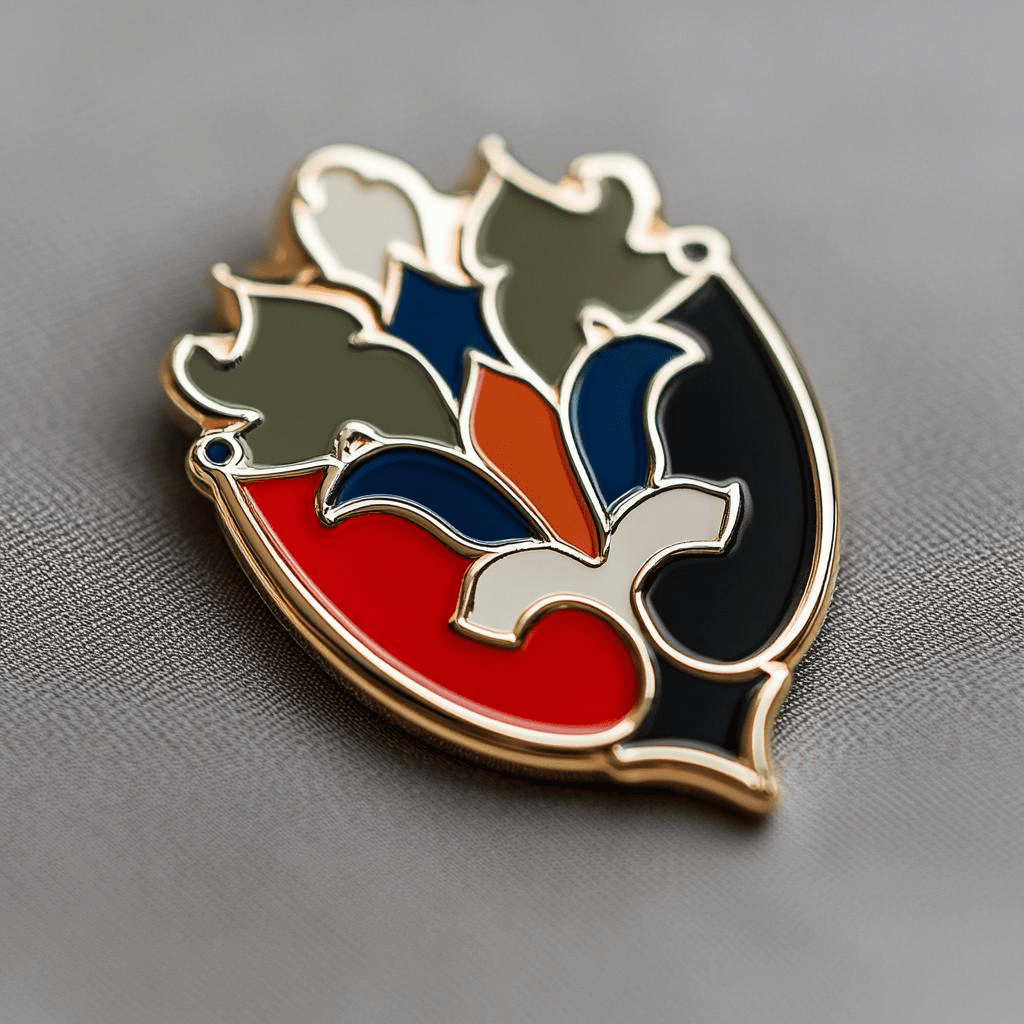
Comparative durability analysis:
| Feature | Enamel Pins | Printed Pins |
|---|---|---|
| Material strength | High (metal foundation) | Moderate (acrylic or thin metal) |
| Resistance to fading | Excellent | Limited |
| Scratch protection | Good (glossy enamel or epoxy) | Adequate but vulnerable |
Though enamel pins are sturdier, printed pins excel at short-term promotional needs where appearance matters more than longevity.
Aesthetic differences and design flexibility?
Aesthetics play a major role in pin choice. Enamel pins create a premium look with clean, raised metal edges.6 These are ideal for simple logos or geometric designs. Printed pins, on the other hand, capture intricate illustrations, photographs, and gradients, making them ideal for creative designs with high detail.
Printed pins provide unmatched design versatility, while enamel pins exude timeless, sleek elegance. Choose printed pins for artistic expression and enamel pins for classic branding.
For beginners, here's a helpful decision model based on common design types:
| Design Type | Best Choice | Why? |
|---|---|---|
| Simple logo designs | Enamel pins | Clean metal edges convey prestige |
| Illustrated or artistic work | Printed pins | Allows color blending and texture |
| Vibrant promotion graphics | Printed pins | Best for large, detailed branding |
| Collectibles or accessories | Enamel pins | Durable and polished for keepsakes |
How do production costs differ?
Are enamel pins more expensive to produce?
Yes, generally enamel pins cost more than printed pins because they require labor-intensive processes, such as stamping, coloring, and baking. Hard enamel pins are especially costly due to additional polishing. Printed pins, by contrast, skip these steps, making production faster and more affordable, especially for bulk orders.
Printed pins are more cost-effective than enamel pins, especially for elaborate designs or high-volume runs.7
Here’s what impacts cost for each type:
-
Enamel Pins:
- Labor: Manual fill and polish adds expense.
- Material: Metal plating (like gold or nickel) increases costs.
- MOQ: Some suppliers require minimum production numbers, raising upfront investments.
-
Printed Pins:
- Efficiency: Faster production reduces labor costs.
- Complexity savings: No need for color blocking or polishing improves affordability.
- Packaging and shipping: Lightweight design may cut shipping costs.
Knowing these factors can help avoid production missteps, such as underestimating budgets for enamel pins caused by intricate designs or overproducing printed pins without considering resale limitations.
Frequently Asked Questions
Are enamel pins better for collectibles?
Yes, enamel pins are ideal for collectibles because of their durability, polished look, and premium metal finish. Printed pins tend to degrade faster, making them less suitable for long-term keepsakes.
Do printed pins allow for custom shapes?
Yes, printed pins can be cut to virtually any shape using die-cutting methods, providing flexibility for irregular outlines or intricate designs.
Why do enamel pins cost more?
The higher cost comes from the labor-intensive production process, including die stamping, enamel filling, baking, and polishing. Metal materials and premium plating options also add to the price.
Which pin type is best for bulk promotional orders?
Printed pins are best for bulk
"Pin trading and collecting", https://en.wikipedia.org/wiki/Pin_trading_and_collecting. Enamel pins are widely recognized for their durability and aesthetic appeal, making them popular choices for collectibles and trading pins. However, their suitability may vary depending on the specific production quality and materials used. Evidence role: general_support; source type: research. Supports: Enamel pins are durable and commonly used for trading pins, collectibles, and accessories.. Scope note: Durability may depend on the manufacturing process and materials. ↩
"do you prefer hard or soft enamel? : r/EnamelPins", https://www.reddit.com/r/EnamelPins/comments/wdpko8/do_you_prefer_hard_or_soft_enamel/. Hard enamel pins undergo additional polishing to achieve a smooth surface, whereas soft enamel pins retain recessed textures, offering a distinct tactile feel. These differences are standard in enamel pin manufacturing. Evidence role: definition; source type: education. Supports: Hard enamel pins are polished flat for a smooth finish, while soft enamel pins retain textured recessed areas.. Scope note: Specific finishes may vary by manufacturer. ↩
"Is there any company that can do gradients? : r/EnamelPins", https://www.reddit.com/r/EnamelPins/comments/18wa4ul/is_there_any_company_that_can_do_gradients/. Printed pins use advanced printing techniques to achieve high-resolution designs, including gradients and photographic details, which are ideal for promotional branding. However, their durability may be lower compared to enamel pins. Evidence role: general_support; source type: education. Supports: Printed pins are capable of reproducing intricate designs, including gradients and photographic details, making them suitable for promotional branding.. Scope note: Durability may be compromised under heavy use. ↩
"A Holistic View of PIN Authentication in Digital Lives and ...", https://arxiv.org/html/2008.10697v1. Material studies indicate that the longevity of pins, whether enamel or printed, is significantly affected by usage conditions, including handling frequency and environmental factors. Evidence role: general_support; source type: research. Supports: Pin durability is influenced by usage conditions, such as frequency of handling and environmental exposure.. Scope note: Specific durability outcomes may vary by material and design. ↩
"I sacrificed a dyed enamel pin for the sake of science and here ...", https://www.facebook.com/itsgeoffrey/videos/i-sacrificed-a-dyed-enamel-pin-for-the-sake-of-science-and-here-are-the-results-/1531559054557860/. Studies on enamel pin production indicate that their metal base and baked enamel provide superior durability compared to printed pins, which are more prone to fading and wear. However, durability may vary based on usage conditions. Evidence role: general_support; source type: research. Supports: Enamel pins are generally more durable than printed pins, resisting fading, scratches, and wear over time.. Scope note: Durability depends on specific manufacturing processes and usage. ↩
"How do enamel pins get pretty expensive? : r/EnamelPins", https://www.reddit.com/r/EnamelPins/comments/1bbjibm/how_do_enamel_pins_get_pretty_expensive/. Design experts highlight that enamel pins, with their raised metal edges and polished finishes, are often associated with a premium aesthetic. This makes them popular for high-end branding and collectibles. Evidence role: general_support; source type: education. Supports: Enamel pins are recognized for their premium appearance, featuring clean, raised metal edges.. Scope note: Aesthetic appeal may vary by design and finish quality. ↩
"What is everyone's preference/perceived value of hard ...", https://www.reddit.com/r/EnamelPins/comments/1i4qa4q/what_is_everyones_preferenceperceived_value_of/. Industry reports suggest that printed pins require fewer labor-intensive processes, making them more affordable for bulk production compared to enamel pins. However, cost savings may depend on design complexity and production scale. Evidence role: general_support; source type: institution. Supports: Printed pins are generally more cost-effective than enamel pins, especially for complex designs or high-volume production.. Scope note: Cost differences may vary by supplier and region. ↩