
HiPinny Journal
Glitter Enamel vs. Transparent Enamel: What’s the Difference?
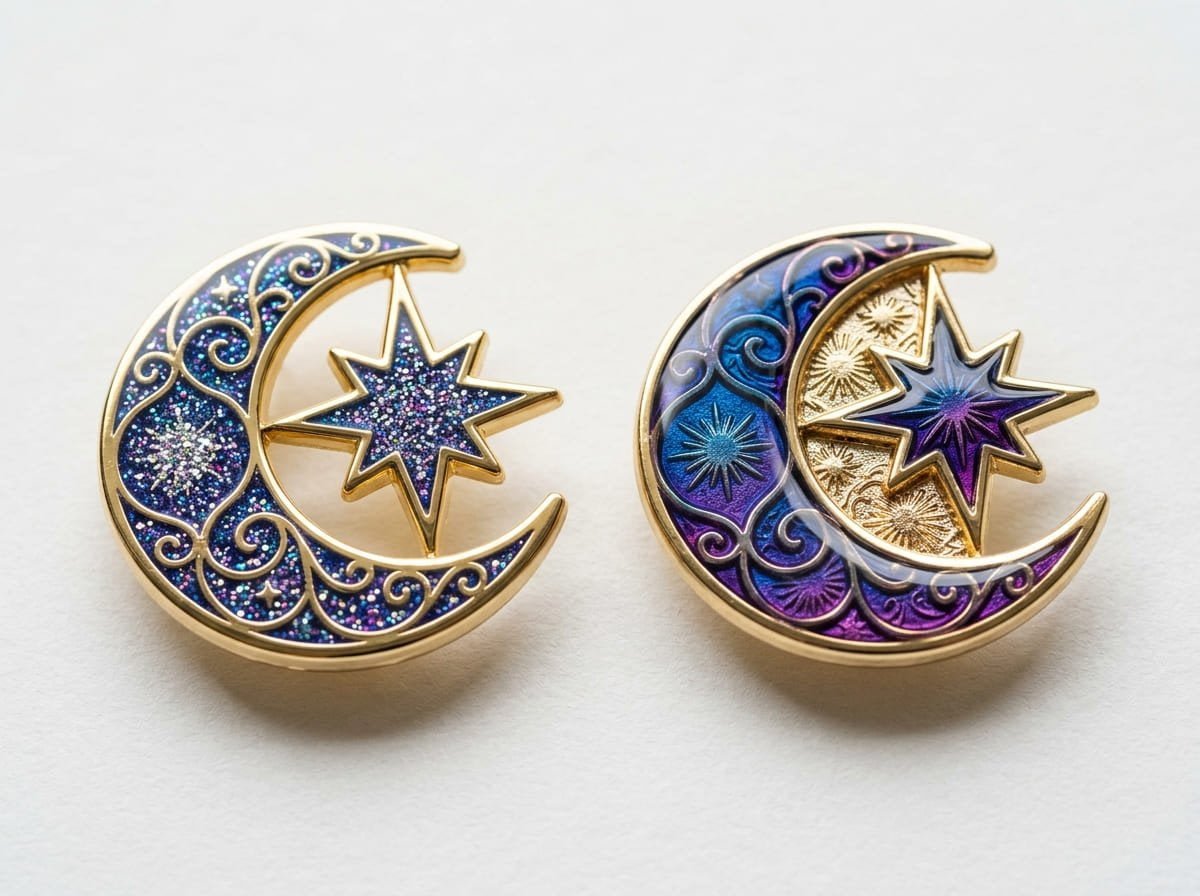
Choosing the right enamel type—glitter enamel or transparent enamel—can make or break your pin design. Glitter enamel delivers a bold, sparkling finish1, while transparent enamel offers detailed clarity and layered depth2. However, these materials come with different artistic and production implications. Let’s explore the key differences to help you make an informed decision.
Glitter enamel and transparent enamel differ in their visual effects, design adaptability, and cost considerations. Glitter enamel creates a dazzling appearance, ideal for simple, bold designs, while transparent enamel provides precise detail for intricate artwork. Designers must choose their enamel type based on creative goals, production requirements, and budget.
When designers misunderstand material compatibility, their final products often fail to match creative intentions. Below, I’ll break down the major factors you need to consider and share insights from real-world production.
How does glitter enamel elevate pin designs?
Glitter enamel’s sparkling effect and bold colors make it stand out in the world of enamel pins.
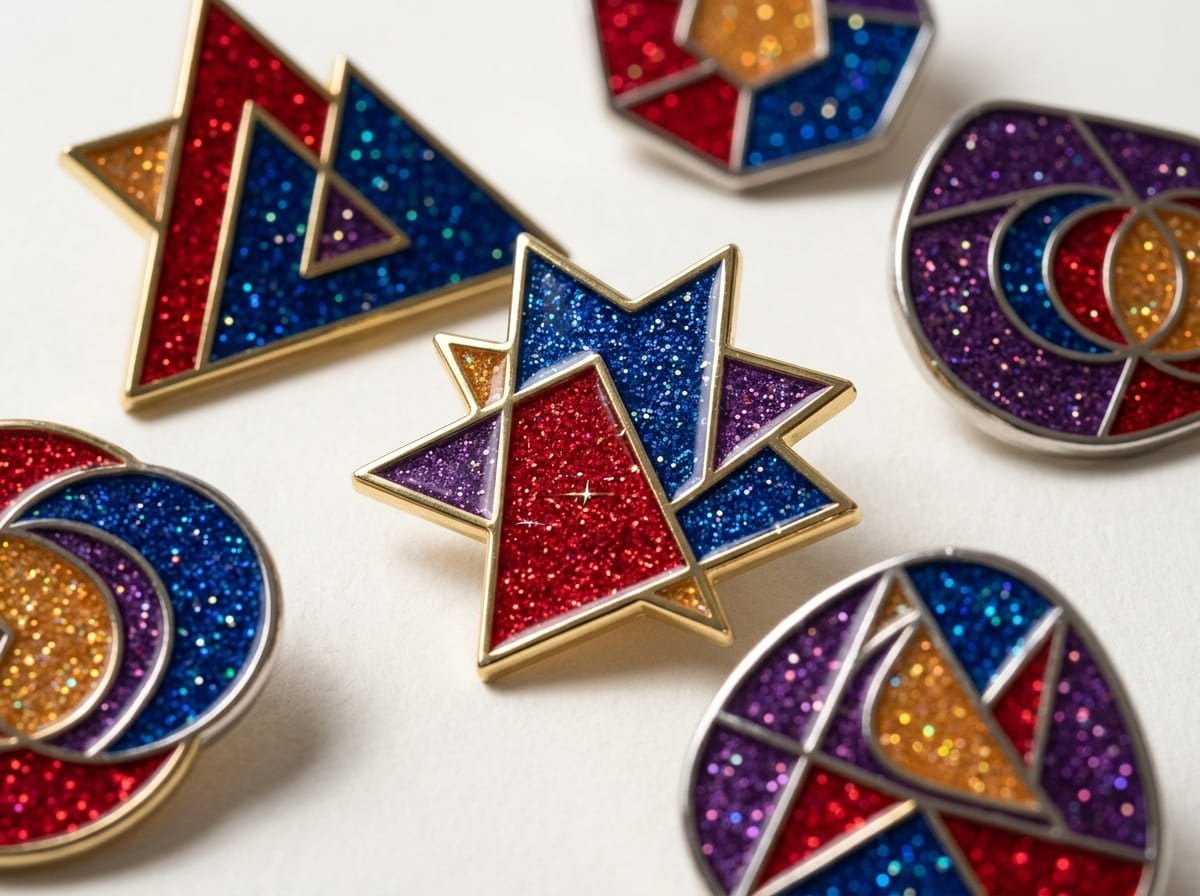
Glitter enamel uses fine particles of glitter in a colored enamel base to create a shimmering, decorative effect—ideal for bold, eye-catching designs.
Dive deeper: When to choose glitter enamel
Glitter enamel excels in designs that prioritize visual drama. Pins featuring glitter enamel often use simplified shapes and color blocks to maximize sparkle. This finish works well for logos, badges, and symbols that need to grab attention.
Benefits of glitter enamel:
- Decorative appeal: Glitter enamel creates a shimmering, almost 3D effect3. It is perfect for designs focused on aesthetics rather than detail.
- Simplified coloring: Glitter pairs best with bold lines and larger sections of solid color.
- Customizable sparkle: Different glitter sizes and densities can adjust how prominent the finish appears.
Common challenges:
While it works well for simpler designs, glitter enamel can obscure fine details. Glitter particles scatter light, which reduces the clarity of intricate patterns. Additionally, its striking appearance might not align with every brand’s aesthetic, making it less versatile than transparent enamel.
When should you use transparent enamel?
Transparent enamel offers layered clarity and refined detail that is ideal for designs emphasizing precision.
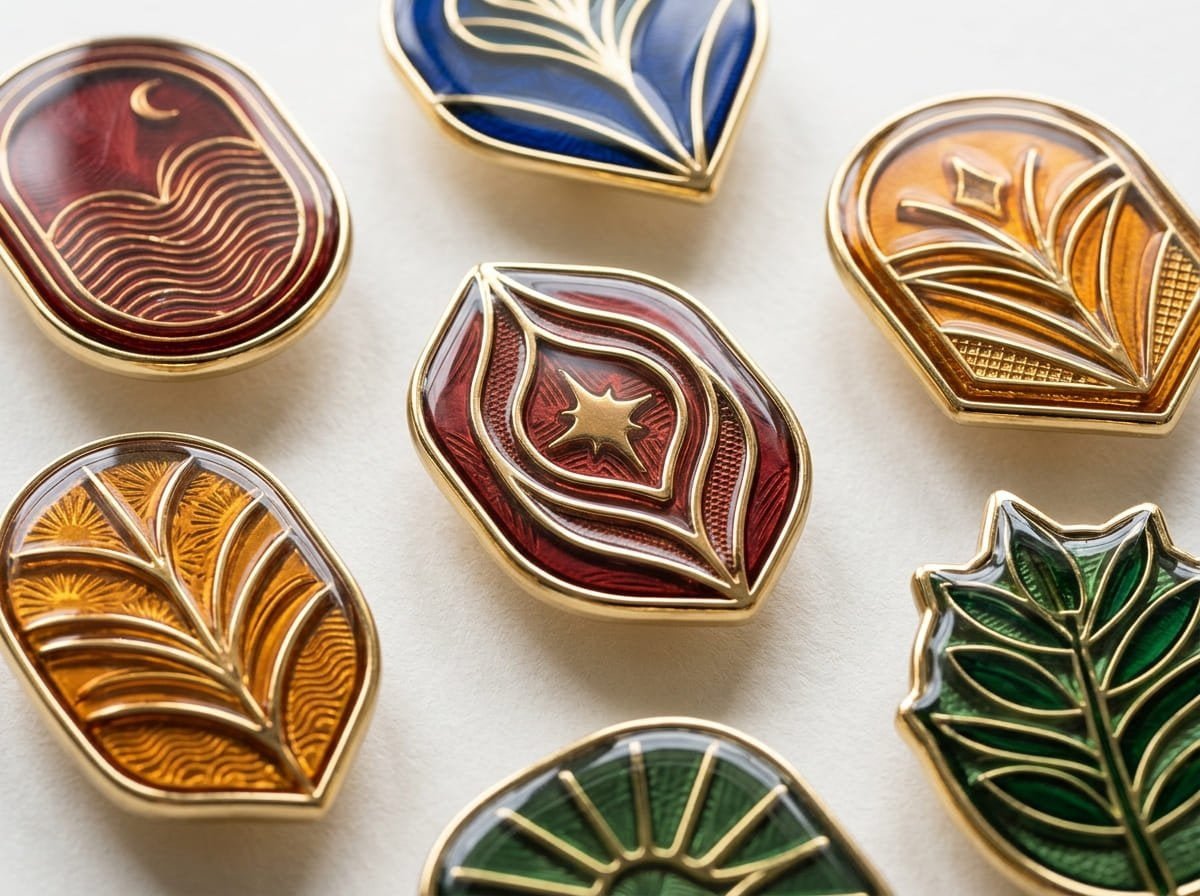
Transparent enamel creates a translucent finish that allows the base metal or underlying design to shine through, delivering nuanced colors and depth.
Dive deeper: Why transparent enamel suits complex designs
Transparent enamel shines in designs requiring sharpness, like detailed illustrations or multi-tone projects. Its ability to show depth makes it ideal for pins with gradients or layered textures. For example, many creators use transparent enamel to accentuate fine details or artistic subtleties.
Benefits of transparent enamel:
- Precision-focused effects: Transparent enamel preserves intricate linework and outlines4, making it suitable for smaller or complex patterns.
- Layering options: It can complement metal base finishes, adding dynamic depth.
- Flexible color matching: Because of its translucency, transparent enamel adapts to different tones, from soft pastels to intense hues.
Considerations:
However, transparent enamel may not deliver the same boldness or shine as glitter. It leans subtle, which means bold designs relying on heavy contrast might not stand out. Additionally, certain base metals can interact unpredictably with transparent finishes, so color consistency requires careful testing.
How do costs compare between glitter enamel and transparent enamel?
Pricing impacts many designers deciding between these enamel types, but costs vary based on batch quantity, materials, and complexity.
Glitter enamel and transparent enamel are priced similarly for most designs, though certain factors—like material wastage or color matching—can shift costs based on order size or production needs.
Dive deeper: Key cost factors to know
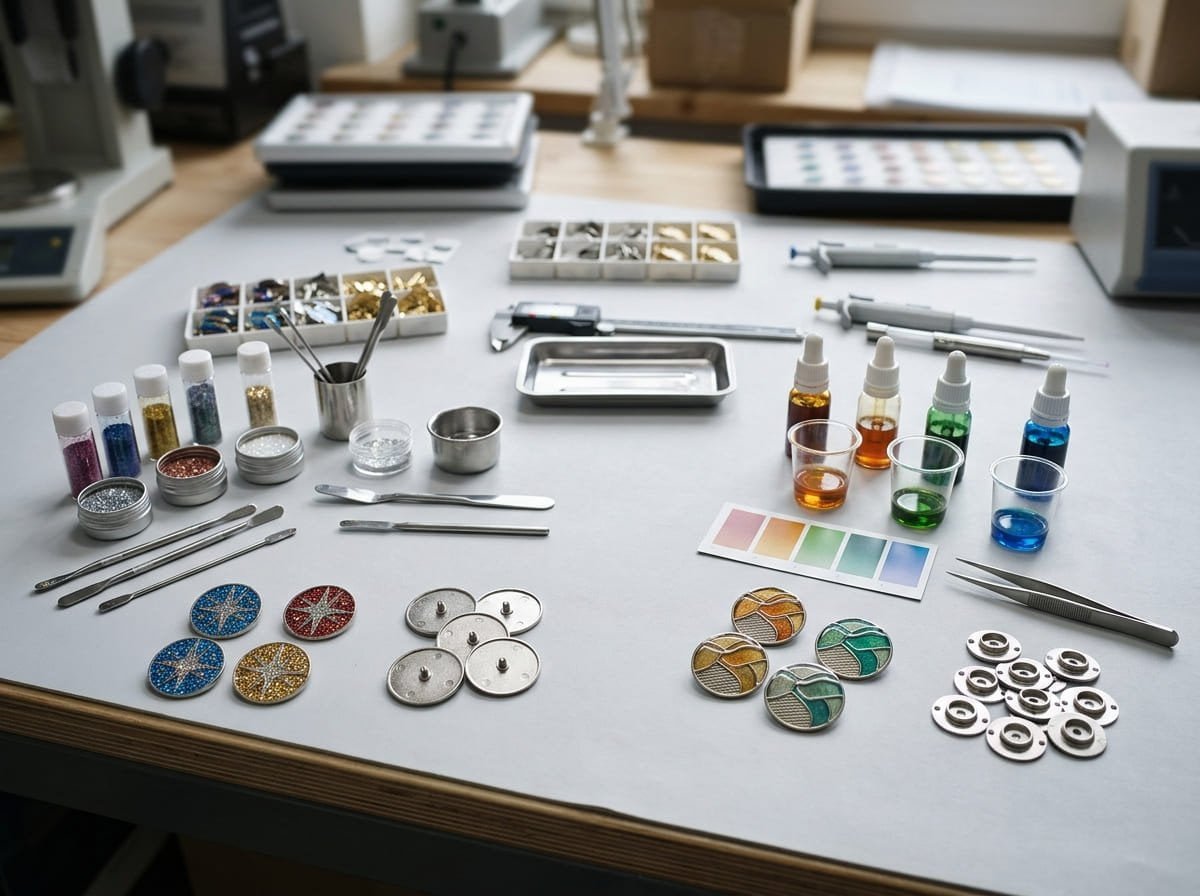
Most factories price these finishes similarly, yet subtle differences can emerge depending on volume or technical hurdles.
Factors influencing costs:
- Material wastage: Glitter enamel may require more material per batch due to its particle density, raising costs slightly for small orders.
- Color customization: Transparent enamel sometimes demands extra calibration5 to achieve consistent color clarity across pins.
- Batch size: Larger orders tend to minimize cost differentials since economies of scale apply.
Real-world insights:
From my experience working with independent pin creators, misunderstandings about material prep contribute to budget misalignment. For example, a customer pursuing layered effects with glitter enamel mistakenly assumed the look could replicate transparent enamel’s subtle details—leading to frustration and rework fees. Proper communication during the planning phase avoids these errors.
Can glitter and transparent enamel coexist in one pin?
Some creative projects call for combining materials.
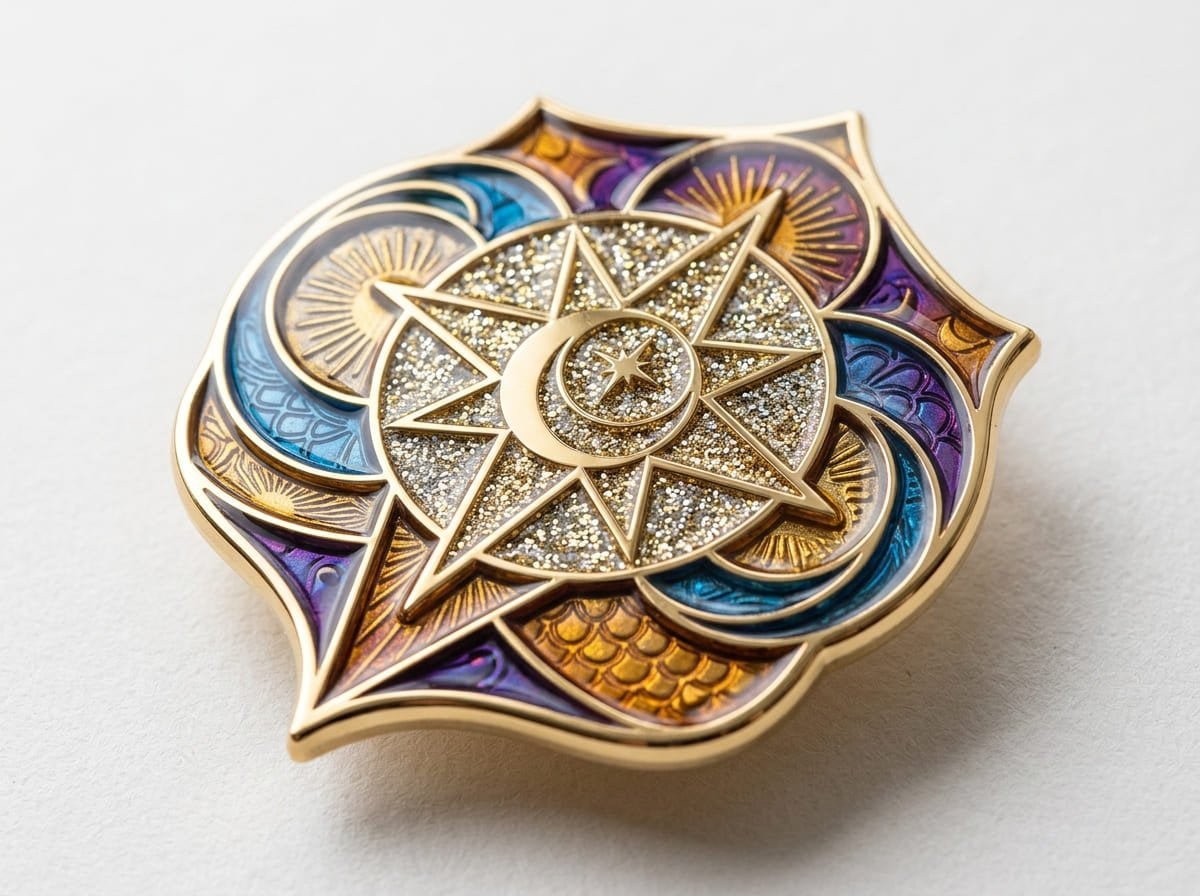
Yes, pins can use glitter and transparent enamel together to balance sparkle and intricate details—but carefully controlling their interactions is crucial.
Dive deeper: Pros and cons of dual-material designs
Using both materials adds visual contrast. For example, transparent enamel can highlight delicate line detailing, while glitter creates strong focal points. However, blending two finishes demands coordination to avoid overwhelming designs.
Key tips for combining finishes:
- Separate focal elements: Assign glitter enamel to bold areas and transparent enamel to spaces emphasizing detail.
- Test visibility balance: Ensure glitter’s intensive shine doesn’t overshadow finer layers of transparency.
- Plan production process: Factories may approach two-material pins differently, adding handling complexity.
While combining finishes creates dynamic contrasts, it works best where complementary aesthetic goals clearly exist. Otherwise, overusing glitter can dilute the nuanced benefits of transparency.
Frequently Asked Questions
Which is more durable: glitter or transparent enamel?
Both finishes are durable with proper production. However, glitter particles may slightly raise pin surfaces, increasing vulnerability to scratches. Transparent enamel adheres smoothly, safeguarding designs reliant on prolonged clarity.
How does base metal affect enamel finishes?
Transparent enamel often interacts with visible base metals6, enriching colors through reflection. Glitter enamel’s effect is independent of the metal underneath, as it fully covers the surface.
Do glitter pins take longer to produce than transparent ones?
Not necessarily. Production time varies more by design complexity than the enamel itself. However, unique glitter combinations might require additional mixing tests, extending prep time.
Can glitter enamel replicate transparent layering effects?
No, glitter enamel offers sparkle but obscures layered details. It cannot achieve the subtle, translucent depth provided by transparent enamel.
Is one enamel more expensive for small-batch orders?
Slightly. Glitter enamel may cost more for small quantities due to wastage when mixing glitter particles. Transparent enamel often maintains a stable price regardless of batch size.
Conclusion
Both glitter enamel and transparent enamel serve important roles in pin design, offering distinct visual effects that cater to specific artistic goals. Glitter enamel delivers bold sparkle, ideal for simple or statement designs, while transparent enamel focuses on subtle depth and layered detail. Understanding these nuances ensures your enamel pin creations reflect your vision.
Ready to explore the possibilities for your next enamel pin project? Contact us today to discover how we can help bring your creative ideas to life.
"Glitter", https://en.wikipedia.org/wiki/Glitter. Glitter enamel incorporates reflective particles to produce a sparkling effect, commonly used in decorative applications like pins and jewelry. Evidence role: general_support; source type: encyclopedia. Supports: Glitter enamel creates a bold, sparkling finish.. ↩
"Vitreous enamel", https://en.wikipedia.org/wiki/Vitreous_enamel. Transparent enamel is known for its translucent quality, which enhances the visibility of underlying textures and colors. Evidence role: general_support; source type: research. Supports: Transparent enamel provides clarity and depth by allowing underlying designs to show through.. ↩
"Glitter - Wikipedia", https://en.wikipedia.org/wiki/Glitter. The reflective properties of glitter particles in enamel can create a visual effect resembling three-dimensionality. Evidence role: general_support; source type: research. Supports: Glitter enamel produces a shimmering effect that can appear three-dimensional.. ↩
"The Art of Enameling: The Techniques", https://4cs.gia.edu/en-us/blog/jewelry-enameling-techniques/. Transparent enamel's translucency allows it to maintain the visibility of fine details in designs. Evidence role: general_support; source type: research. Supports: Transparent enamel is effective in preserving intricate linework and outlines.. ↩
"Next-Generation Strategies for Enamel Repair and ... - PMC", https://pmc.ncbi.nlm.nih.gov/articles/PMC12297108/. Transparent enamel's translucency can interact with base materials, necessitating careful calibration for uniform color. Evidence role: mechanism; source type: education. Supports: Transparent enamel may require additional calibration to ensure consistent color clarity.. ↩
"Optical properties of enamel and translucent composites by diffuse ...", https://pubmed.ncbi.nlm.nih.gov/22546264/. The reflective properties of base metals can influence the appearance of transparent enamel, adding depth and richness to colors. Evidence role: mechanism; source type: research. Supports: Transparent enamel interacts with base metals to enhance color through reflection.. ↩