
HiPinny Journal
How Small Can Details Be on an Enamel Pin?
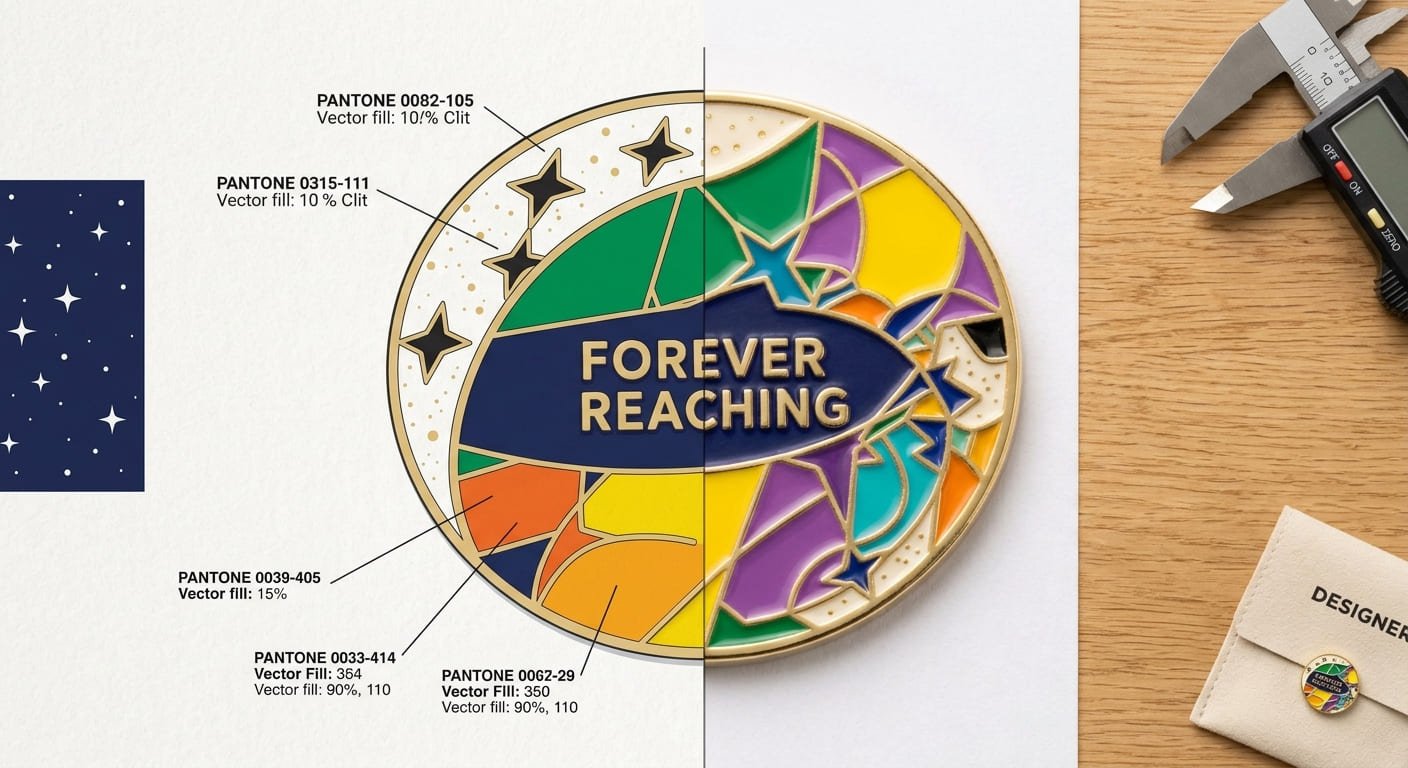
The seemingly endless possibilities of enamel pin designs often lead customers to ask: “How small can the details be?” While enamel pins can contain intricate elements, technical limits such as minimum line widths, color fill spacing, and production methods shape what’s achievable1. Understanding these limitations upfront ensures that your ambitions align with a lasting, crisp final product2.
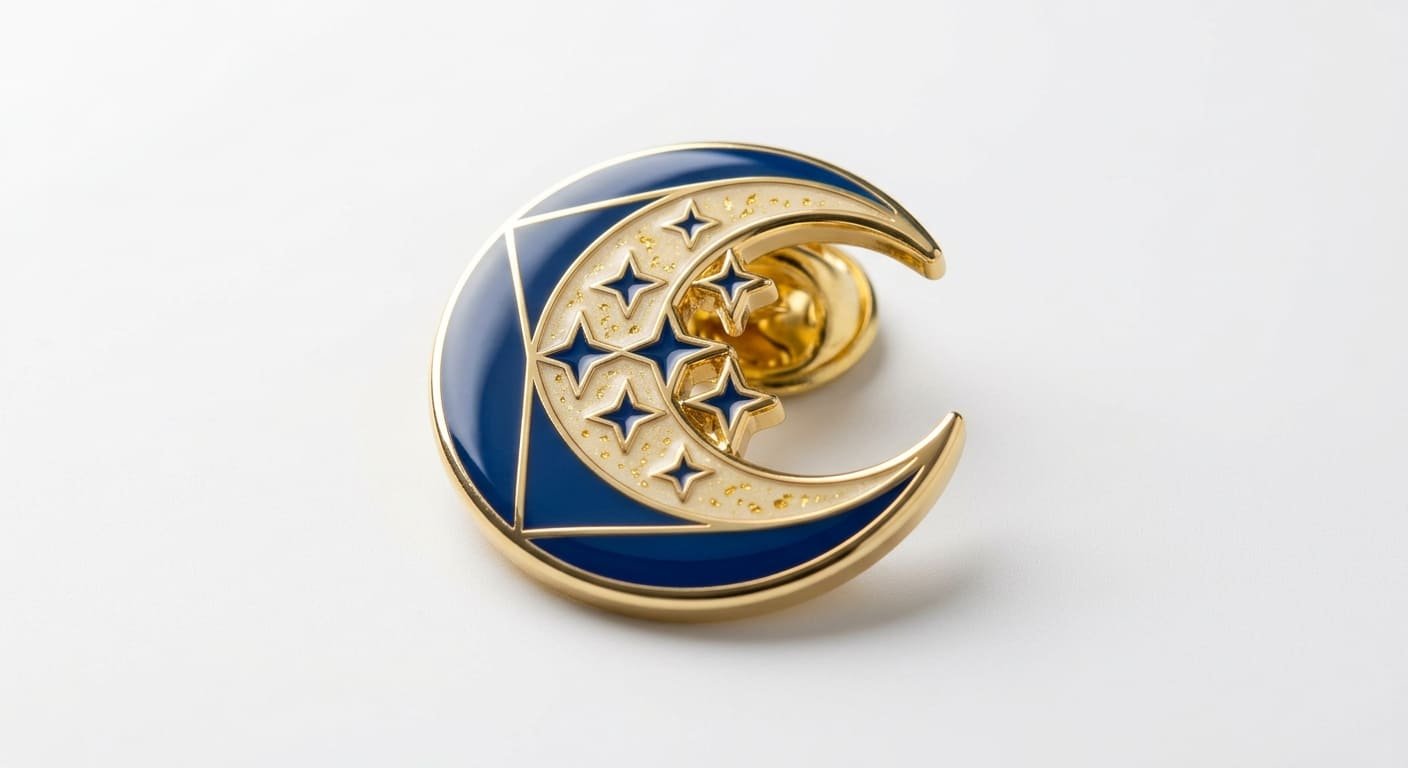
The short answer: Enamel pin details can be very small, but only to the extent that the manufacturing process allows. Minimum line widths for metal are around 0.2–0.3 mm, while color fills need spaces as wide as 0.3–0.5 mm to avoid bleeding during production. Smaller or heavily intricate designs may need adjustments to retain durability and visual clarity without compromise.
Let’s explore the factors that influence these limits—including line width, color fills, text size, and design type—so you can make informed decisions for your enamel pin design.
Why are enamel pin details limited by size?
Problem: Many pin designers assume every fine detail in their artwork can be replicated flawlessly.
Agitation: However, when pins arrive looking different from anticipated, it's often because the size limitations of lines and fills weren’t accounted for during production.
Solution: Knowing how production constraints influence the smallest achievable details will help avoid misunderstandings—and ensure your design translates seamlessly to enamel.
Details are limited because the enamel pin manufacturing process relies on precise physical tolerances. Minimizing line widths or reducing spacing too much can cause issues like bleeding colors, lack of definition, or even structural weakness in the pin.
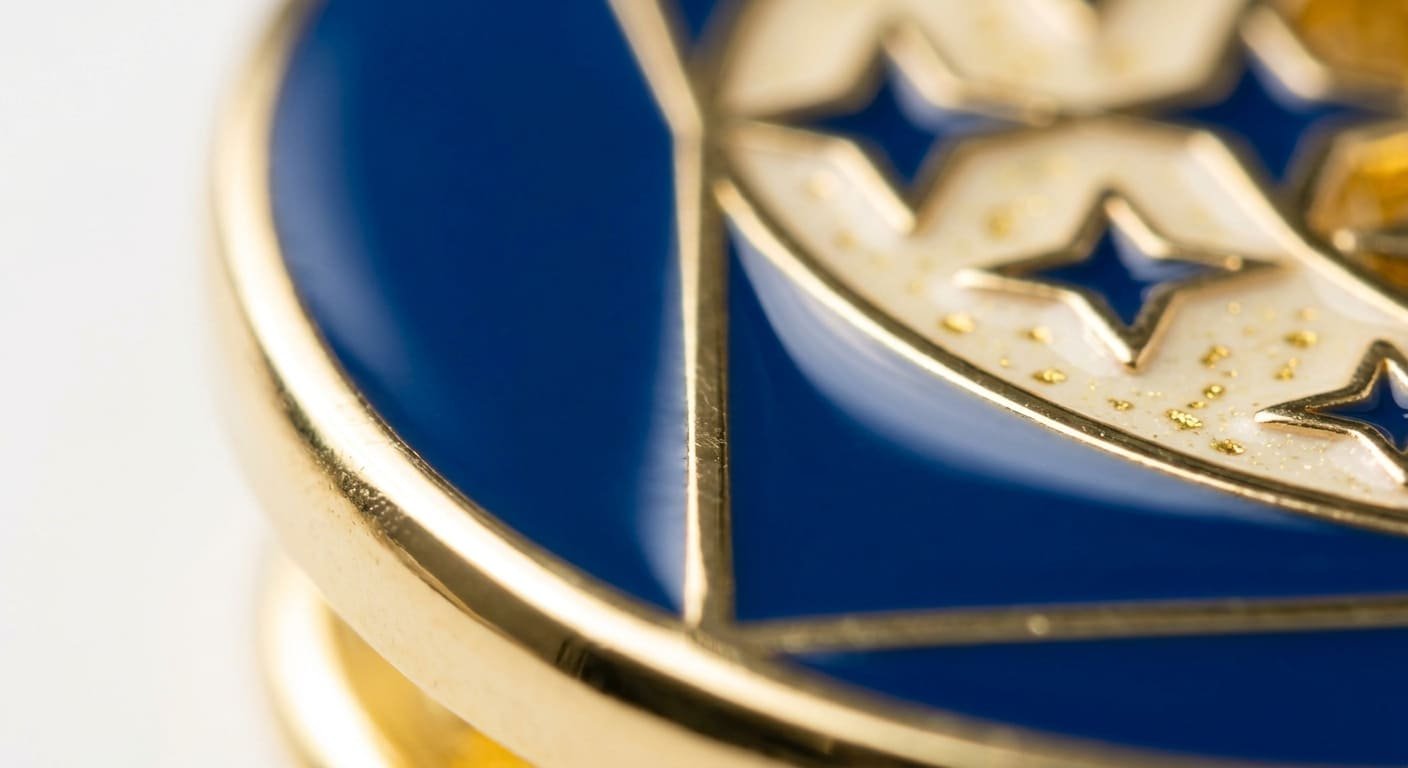
Here’s a breakdown of production-related constraints that shape the size limits:
What’s the minimum line width for an enamel pin?
Problem: Thin lines give pins their sharpness, but customers often wonder how thin is “too thin.”
Agitation: If lines are too narrow, the soft enamel or hard enamel can seep into spaces they shouldn't. Overly thin lines also risk snapping during the production or plating process.
Solution: Keep in mind that most enamel pin manufacturers recommend minimum line widths of 0.2–0.3 mm3 for metal areas to ensure clarity and durability.
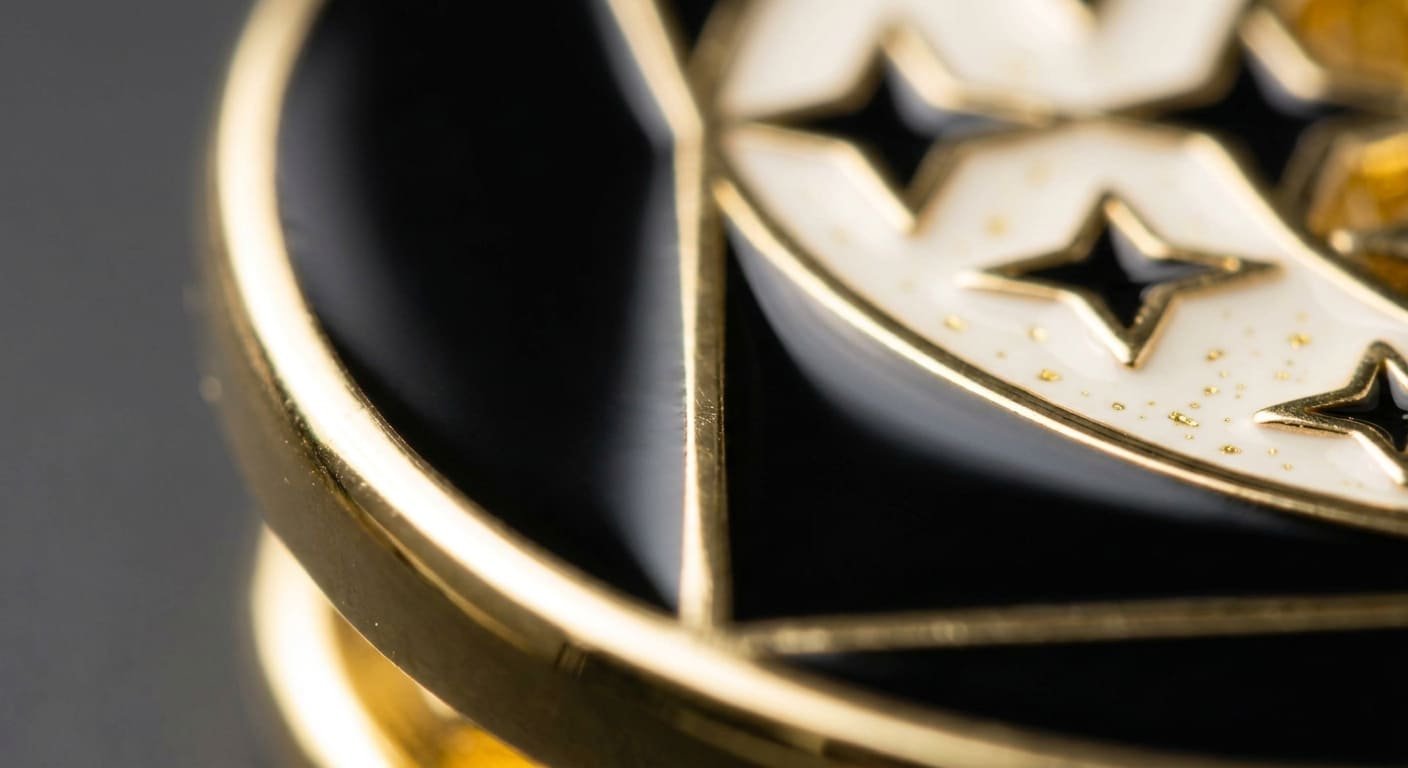
The Science of Line Widths
Enamel pin lines are typically created from filled-out recessed metal channels. These channels create boundaries when the enamel is added. If a line width falls below the minimum tolerance, the enamel may overflow into other sections or fail to contain edge detailing properly.
Key considerations include:
- Material strength: Extremely fine metal lines might chip or warp during production.
- Plating challenges: Thin metal edges are harder to electroplate evenly, especially for detailed base metals like gold or silver.
- Visual clarity: Thin lines may blur into adjacent colors post-production, detracting from the design’s definition.
If your design incorporates long, detailed lines, prioritize widths closer to 0.3 mm for better stability and aesthetic accuracy.
What color fill limitations should I consider?
Problem: Designers love bold, colorful enamel pins but often underestimate the spacing required for clean color fills.
Agitation: Color areas that sit too close risk blending, bleeding, or uneven finishes, especially with sharp contrasts between colors.
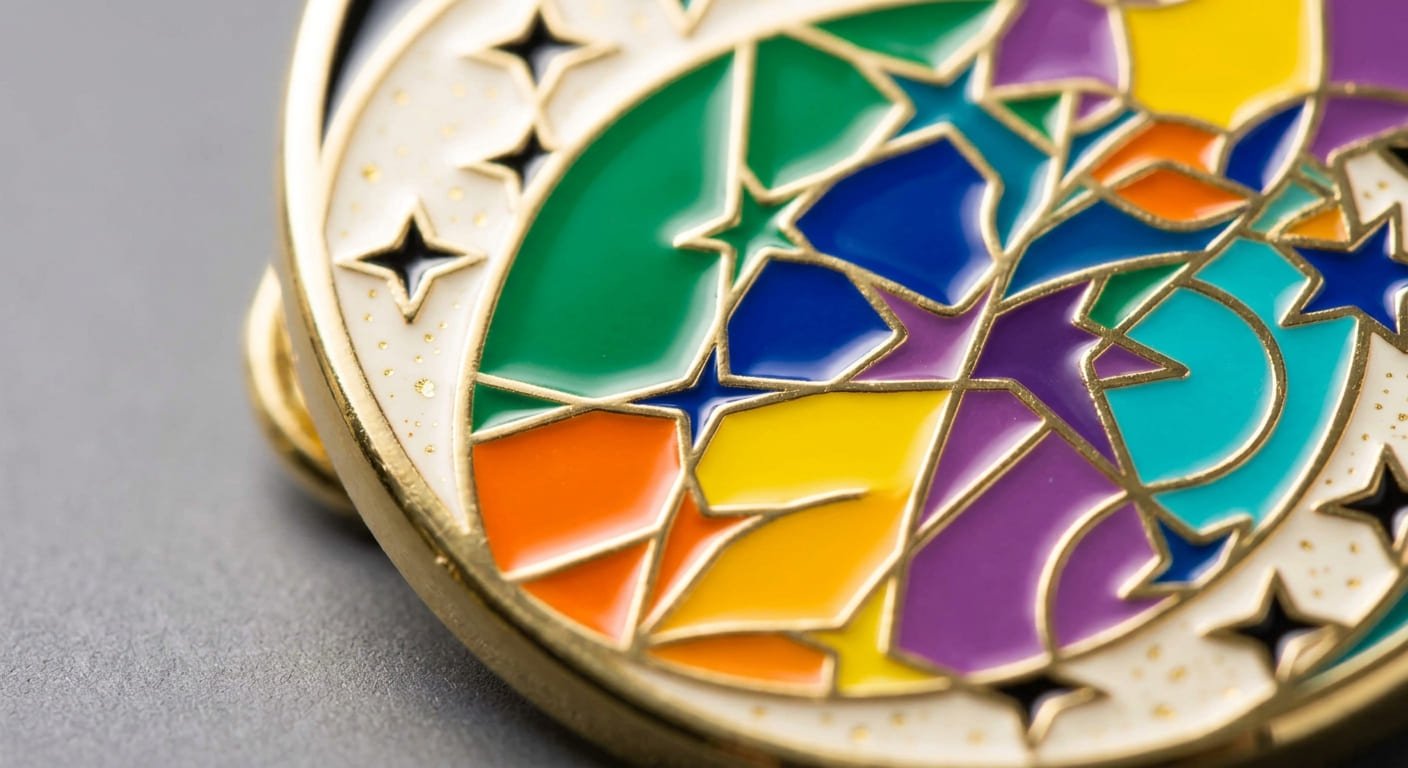
Solution: To avoid issues, pin designs should ensure minimum spacing of 0.3–0.5 mm between colors4 for optimal filling precision.
Why Spacing Matters
Color zones are separated by metal borders that act as barriers during the enamel filling and curing process. Narrow borders or insufficient spacing can lead to production problems:
- Bleeding: Enamel could flow into adjacent color areas if spacing isn’t wide enough. 2. Uneven fills: Tight spaces may result in enamel pools that appear lumpy or uneven in texture.
- Color mismatch: Spaces too small might also cause pigments not to cure evenly during heating.
To ensure clean contrasts, especially with gradients or multicolor pins, maintain generous spacing between adjacent colors.
Can text on enamel pins stay readable at small sizes?
Problem: Text adds personality and meaning to a pin design, but it’s often chosen without considering its legibility on small pins.
Agitation: Printing or engraving text that’s too small leads to smudging or illegible results upon production.
Solution: Stick to a minimum font height of approximately 1.2–1.5 mm5, and avoid overly ornate or narrow typefaces6.

Managing Text Limitations
Text readability comes down to font choice, letter spacing, and overall design scaling. Fonts with extremely thin strokes may disappear or distort during plating processes. Long format texts are also harder to incorporate well on limited pin surfaces.
Pro tips:
- Bold fonts: These enhance clarity at smaller scales.
- Avoid script fonts: Elaborate fonts with curly edges may lose definition.
- Test visibility: Print your design on paper scaled down to pin size—this reflects production readability.
How can complex designs be adjusted?
Problem: Intricate, detailed designs are beautiful on paper, but risk looking crowded or ill-defined when cut to small-scale dimensions for pins.
Agitation: Translating high-detail designs to wearable pins may require compromise, leaving customers disappointed if expectations aren’t properly managed.
Solution: Simplify design elements while keeping the most prominent features intact. Consider enlarging intricate areas and removing redundant details.
Common Adjustments
Here are typical tweaks you might see when moving from artwork to production:
- Text enlargement: Adjust letters to optimal height while maintaining proportional spacing. 2. Line simplification: Combine multiple lines into singular edges, avoiding micro design.
- Pattern reduction: Replace overly busy elements with bold geometric shapes for clarity.
These changes aim to balance artistic vision and manufacturing practicality, ensuring both aesthetics and durability.
Frequently Asked Questions
What is the smallest pin size that retains high detail?
Pins under 20 mm typically struggle to incorporate detailed designs due to limited space. Larger pins—30–40 mm—are far better for intricate elements.
Can hard enamel pins achieve smaller details than soft enamel designs?
Not usually. Hard enamel requires extra polishing that smooths out engraved channels7, meaning it works best with cleaner, simpler designs compared to soft enamel.
Does pin backing affect design possibilities?
No—it impacts assembly functionality but not design itself. However, be aware that larger designs may need sturdier backings such as dual clutch pins for stability.
Conclusion
When designing enamel pins, small details are achievable, but production constraints like line width, color spacing, and text readability must be thoughtfully considered. By aligning your vision with these practical limitations, you’ll create pins that are not only visually stunning but also durable.
Want clear advice on adjusting your pin designs? Contact us to discuss your ideas—we’ll help translate your artistry into production-ready designs that shine!
"what thickness of lines are too small? what enamel areas ...", https://www.reddit.com/r/Pins/comments/o9p47v/first_time_designer_what_thickness_of_lines_are/. Educational resources on enamel pin manufacturing often outline minimum tolerances for line widths and color spacing, which are critical for production quality. Evidence role: general_support; source type: education. Supports: Technical limitations such as line widths and color spacing affect enamel pin designs.. Scope note: Specific tolerances may vary slightly between manufacturers. ↩
"Generative Design Constraints: Setting Up Manufacturing ...", https://www.getleo.ai/blog/generative-design-manufacturing-constraints. Expert consensus in enamel pin manufacturing emphasizes the importance of aligning designs with production constraints for optimal results. Evidence role: expert_consensus; source type: education. Supports: Understanding production limitations helps align designs with achievable and durable outcomes.. Scope note: Specific constraints may vary by manufacturer and production method. ↩
"I'd like to get into pin making and have a design mostly ready. Does ...", https://www.reddit.com/r/EnamelPins/comments/164m67z/id_like_to_get_into_pin_making_and_have_a_design/. Industry guidelines from enamel pin manufacturers often specify minimum line widths to ensure production clarity and durability. Evidence role: statistic; source type: institution. Supports: Minimum line widths of 0.2–0.3 mm are commonly recommended for enamel pin designs.. Scope note: Exact tolerances may depend on the specific production method used. ↩
"Preventing Color Transfer by Bleeding or Crocking • AnswerLine", https://blogs.extension.iastate.edu/answerline/2019/04/29/color-transfer-bleeding-crocking/. Research on enamel pin manufacturing processes highlights the importance of adequate spacing to avoid color bleeding and uneven fills. Evidence role: mechanism; source type: research. Supports: Spacing of 0.3–0.5 mm between colors helps prevent bleeding and ensures clean fills in enamel pin production.. Scope note: Spacing requirements may vary based on enamel type and curing methods. ↩
"website design - Is there an optimal font size?", https://ux.stackexchange.com/questions/211/is-there-an-optimal-font-size. Educational resources on small-scale design emphasize font height thresholds for maintaining legibility in production. Evidence role: general_support; source type: education. Supports: Minimum font height of 1.2–1.5 mm ensures text readability on enamel pins.. Scope note: Font readability may also depend on typeface and pin size. ↩
"What is the best font for small, printed text? : r/typography", https://www.reddit.com/r/typography/comments/57duwe/what_is_the_best_font_for_small_printed_text/. Typography guides for small-scale designs emphasize the importance of avoiding overly ornate fonts for readability. Evidence role: general_support; source type: education. Supports: Avoiding ornate or narrow typefaces improves text readability on enamel pins.. Scope note: Typeface effectiveness may depend on pin size and font scaling. ↩
"How to Care for Enamel Pins", https://shannontalbott.com/blogs/news/how-to-care-for-enamel-pins. Research on enamel pin production processes explains how polishing impacts detail retention in hard enamel designs. Evidence role: mechanism; source type: research. Supports: Hard enamel polishing smooths out engraved channels, reducing the ability to retain fine details.. Scope note: The extent of detail loss may depend on the specific polishing method used. ↩