
HiPinny Journal
Pins vs. Keychains: Which Is Better for Branded Merchandise?
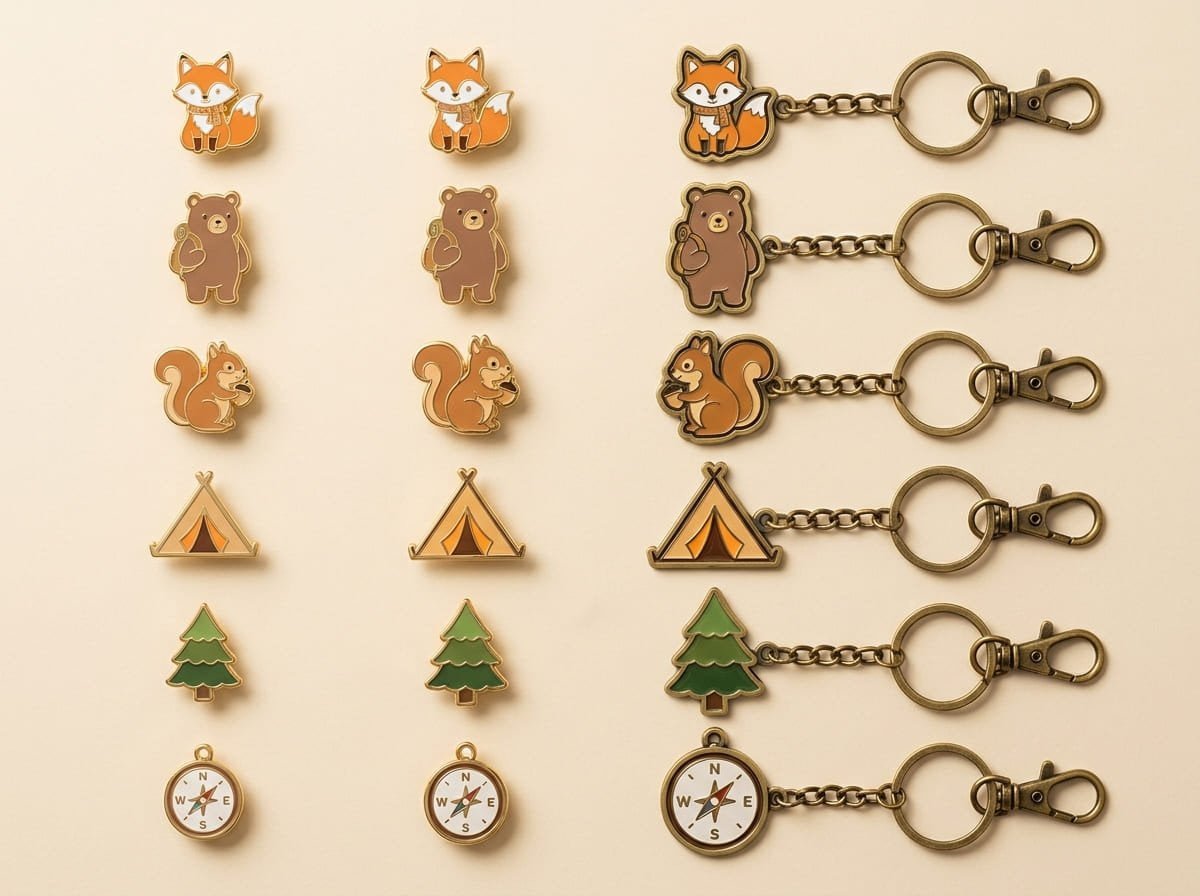
Choosing branded merchandise like enamel pins or keychains can feel overwhelming, especially when you don’t have all the facts. Both items have distinct benefits and appeal to specific audiences, so how do you decide which is the better fit for your promotional goals? Let’s dive into the details.
Enamel pins and keychains are ideal branded merchandise options, but deciding between them depends on your audience preferences, design constraints, and budget goals. Pins often attract collectors and boutique crowds, while keychains work better for general utility-focused audiences.1
When I help clients—like badge companies, event organizers, and schools—navigate this decision, I always start with these critical questions: What message does your brand aim to convey? Who do you want this merchandise to resonate with? To make an informed choice, let's dissect the unique features and considerations for both pins and keychains.
Why do audience preferences matter?
Understanding your audience is crucial for choosing the right product.
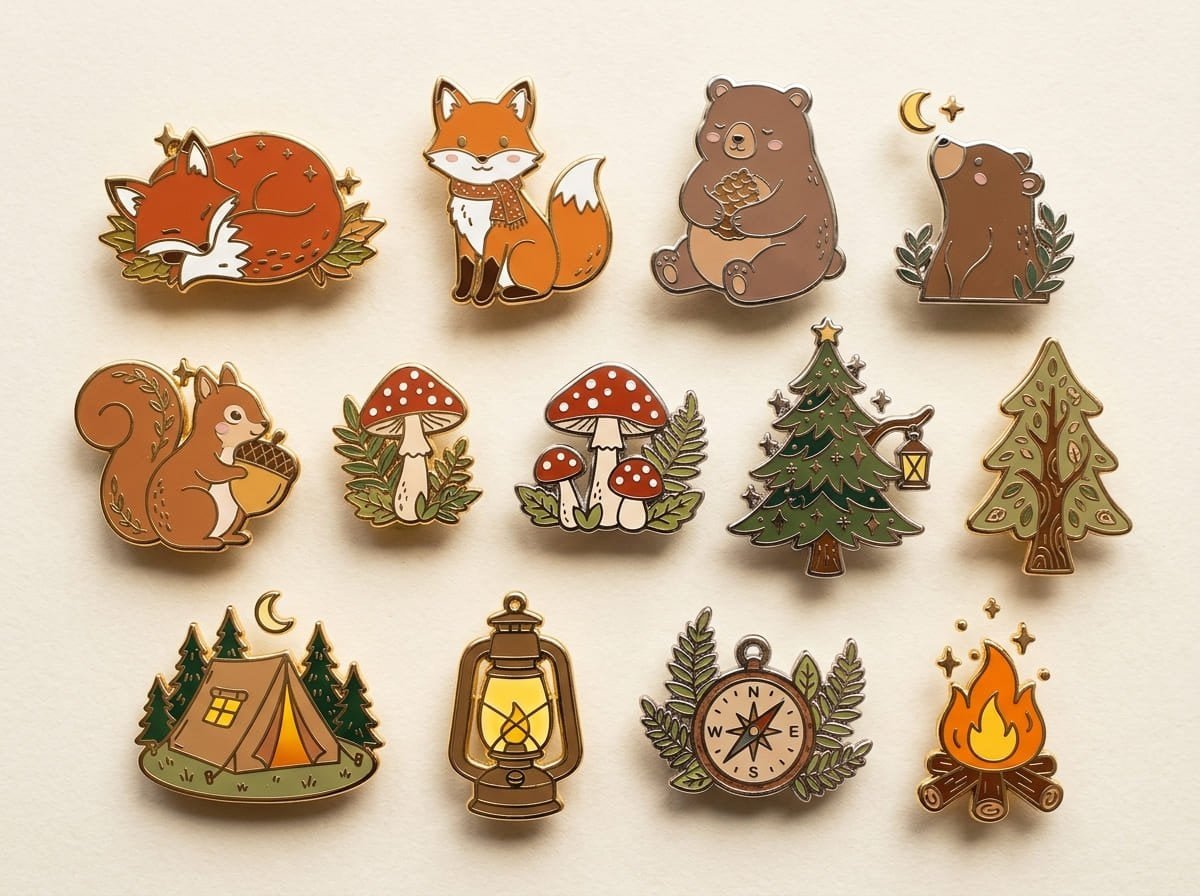
Pins appeal primarily to collectors, boutique buyers, and fans of unique designs, while keychains generally resonate with broader audiences who value practical, everyday items.
Dive deeper into audience demographics
Pins are perfect for niche communities who value artistry, aesthetic appeal, and collectability.2 For example:
- Boutique customers: Many independent pin designers market directly to collectors who look for exclusive or small-batch designs.
- Fan-based promotions: Enamel pins function as keepsakes, particularly for event attendees or club members, establishing a sense of belonging.
- Schools and organizations: Pins make excellent tokens for awards ceremonies or membership gifts.3
On the other hand, keychains capture broader appeal in functional markets. Many clients who have event-focused promotion strategies lean toward keychains due to their utility. Here are examples:
- B2C merchants: Companies targeting larger consumer bases often prefer keychains. They’re more practical for customers who want branded items with everyday utility.
- Corporate giveaways: Keychains are frequently chosen for conferences, trade shows, or employee appreciation events because they balance utility and visibility.
- Schools or youth-focused organizations: Since durability is a priority, younger audiences may favor keychains over enamel pins.
By identifying whether your target market prefers collectability or practicality, you can narrow down your choice.
What are the design possibilities?
Design flexibility is a decisive factor for many buyers.
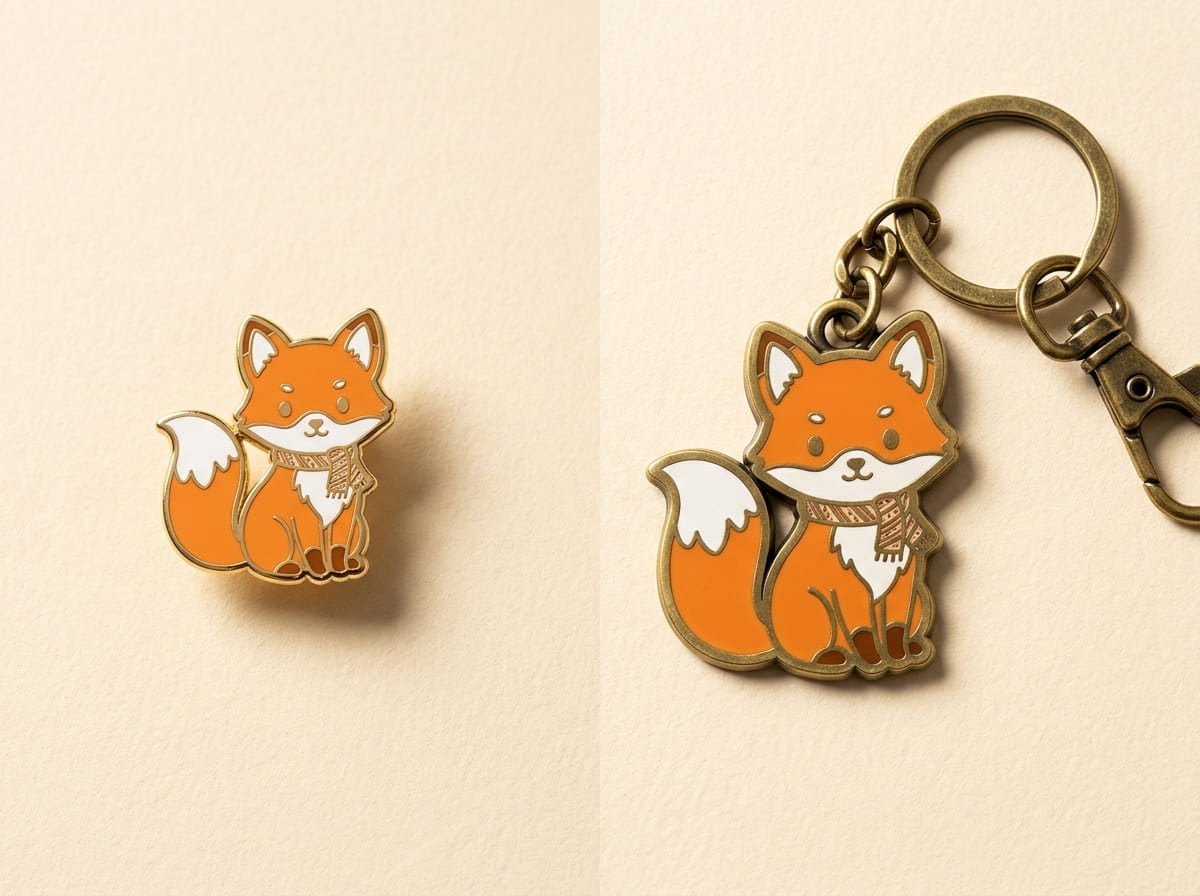
Enamel pins allow for intricate detailing and delicate, small-scale artistry, while keychains are better for sturdy, bold designs that focus on durability and utility.
Dive deeper into design constraints
Pins boast unparalleled design precision. With hard enamel or soft enamel options, your chosen artwork can feature intricate lines, small-scale text, or complex color palettes. They’re ideal for smaller items that showcase branding without sacrificing visual impact. For example:
- Badge companies love intricate custom pins for club logos and awards.
- Event organizers use pins to commemorate anniversaries or milestones.
Keychains, however, emphasize size, durability, and functionality. Due to their everyday use, designs must accommodate wear and tear. They work best for shapes that are simple yet bold enough to remain identifiable. Consider these design best practices:
- Use thicker materials to ensure structural integrity.
- Choose simple text or logos that remain visible from a distance.
- Avoid overly complex shapes that could lead to weak points in functionality.
Both items serve as portable branding tools, but customizability depends heavily on your creative vision.
How do costs compare?
Cost isn’t just about price—it’s about value and customization possibilities.
Pins typically cost less per unit in small production runs, but keychains may offer better value for high-usage scenarios due to their durability and perceived utility.
Dive deeper into manufacturing costs
From my experience, pricing for enamel pins can vary depending on materials, design techniques, and size. For example:
- Low-volume runs (10–100 units): Pins are often easier to produce thanks to their smaller size and simpler material requirements.
- Customization: The cost of custom molds and intricate coloring is balanced by the perceived high value of pins among collectors.
Keychains, while slightly pricier in low quantities, tend to shine in large-scale production due to their practicality. Many business buyers choose keychains for giveaway campaigns where robustness is a priority. Key insights include:
- Bulk savings: As durability standards rise, keychains provide value over time.
- Customization durability: Metal plating choices and size constraints can make keychains pricier upfront, but they last longer when used day-to-day.
Ultimately, evaluating cost through application-specific needs is critical. Pins perform better when appealing to boutique buyers, while keychains suit mass distribution.
Frequently Asked Questions
Are pins or keychains better for giveaways?
Keychains are often better for giveaways due to their utility and broader appeal. Pins are ideal for commemorative or collector-focused uses where uniqueness matters more.
Which product is cheaper for custom designs?
Pins tend to be cheaper at smaller production volumes, especially for designs requiring intricate detail. Keychains may offer better pricing for large-scale production runs.
Can I use both pins and keychains in one campaign?
Yes, using both can target different audience segments effectively. Pins are for collectors and fans, while keychains are practical items for general audiences.
Conclusion
When choosing between pins and keychains for branded merchandise, the decision comes down to understanding your audience, design goals, and cost priorities. Enamel pins excel in collectability and delicate artistry, while keychains are unmatched in practical appeal and durability.
If you’re looking for custom enamel pins or keychains manufacturers, I’d love to help you navigate your options. Contact me for expert advice tailored to your promotional needs!
"Keychain (software)", https://en.wikipedia.org/wiki/Keychain_(software). Research on consumer preferences for branded merchandise indicates that enamel pins are popular among collectors and niche markets, while keychains are favored for their practicality and broader appeal. Evidence role: general_support; source type: research. Supports: Pins appeal to collectors and boutique buyers, while keychains are preferred by utility-focused audiences.. Scope note: The findings may vary depending on specific market segments or cultural contexts. ↩
"I'm new to pin collecting, but are enamel pins past their ...", https://www.reddit.com/r/EnamelPins/comments/1m708bc/im_new_to_pin_collecting_but_are_enamel_pins_past/. Research on collectible merchandise highlights that enamel pins are often sought after by niche communities for their artistic designs and limited-edition appeal. Evidence role: general_support; source type: research. Supports: Niche communities value enamel pins for their artistry, aesthetic appeal, and collectability.. Scope note: The preference for enamel pins may vary depending on the specific niche or cultural context. ↩
"Lapel pin", https://en.wikipedia.org/wiki/Lapel_pin. Case studies of organizational branding strategies show that enamel pins are frequently used as awards or membership tokens due to their symbolic and collectible value. Evidence role: case_reference; source type: research. Supports: Enamel pins are often used as tokens for awards ceremonies or membership gifts.. Scope note: The use of pins for these purposes may not be universal across all organizations. ↩