
HiPinny Journal
What Factors Affect Enamel Pin Pricing?
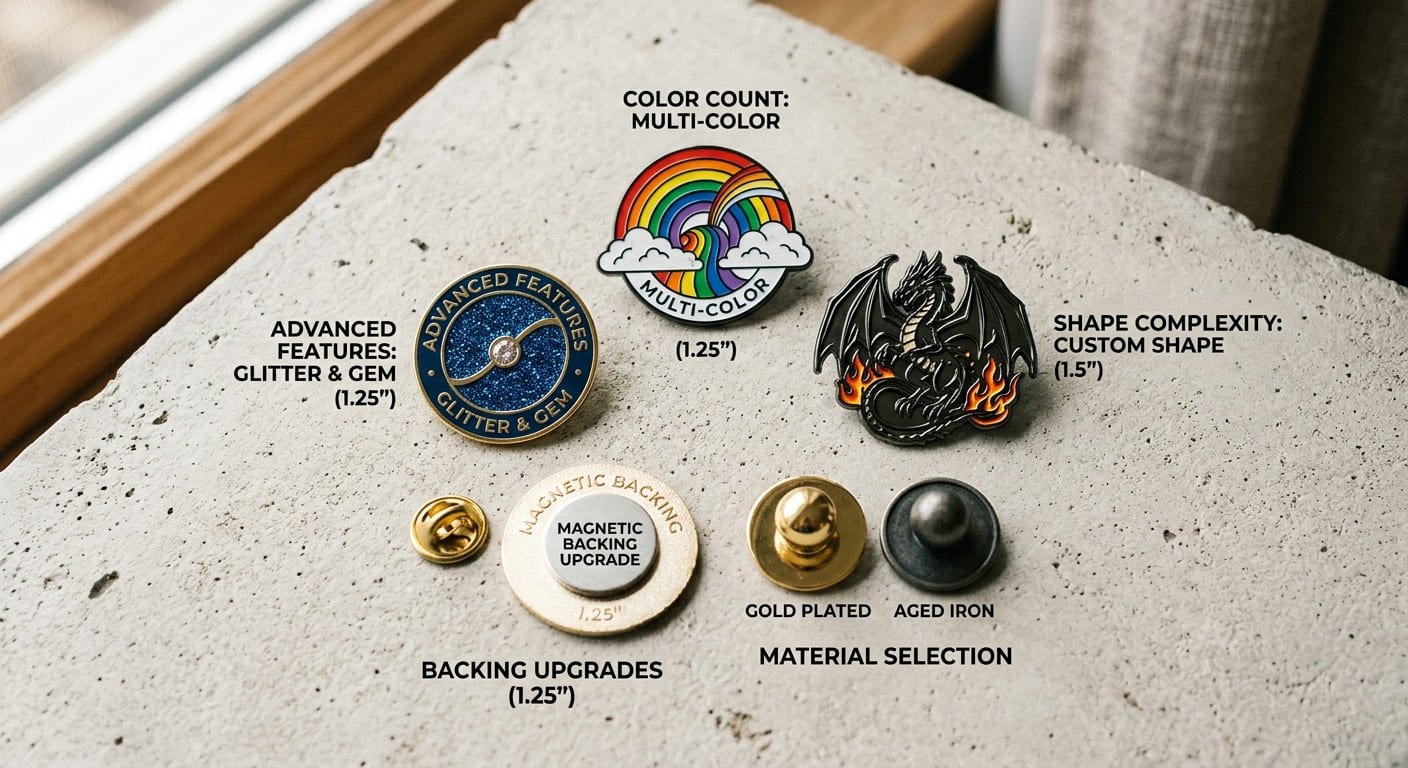
[Enamel pin pricing is a crucial consideration for designers and entrepreneurs looking to bring their custom creations to life. Many buyers assume material cost is the largest factor, but pricing actually hinges on design complexity, production techniques, and customization choices. Understanding these factors ensures you make informed, cost-effective decisions without sacrificing your product’s appeal.
Enamel pin prices depend on factors such as design complexity, quantity, material selection, and customization options. Intricate designs require advanced production techniques, which increase costs, while simpler designs and bulk orders offer cost advantages. Balancing creativity and practicality is key to optimizing enamel pin pricing.
The truth is, pin pricing reflects much more than the raw materials. If you’ve ever wondered why quotes vary so widely or why intricate designs seem disproportionately expensive, keep reading — the details below will help clarify the true cost drivers.
How does design complexity affect pricing?
A compelling design can elevate your enamel pins, but it can also affect the total production cost in ways many designers overlook.
Complex designs increase enamel pin pricing because they require advanced production techniques like multi-layer molds, intricate detailing, and precise color separation.1 Simpler designs involve fewer resources, reducing production time and cost.
Breaking it down:
Here’s how design complexity impacts your costs:
-
Color Count: Each color in your pin requires its own section in the mold for production. Pins with five or more colors involve additional labor during color filling — a process that demands careful precision to avoid errors. Some suppliers charge per color, so limiting your palette can significantly reduce costs.
-
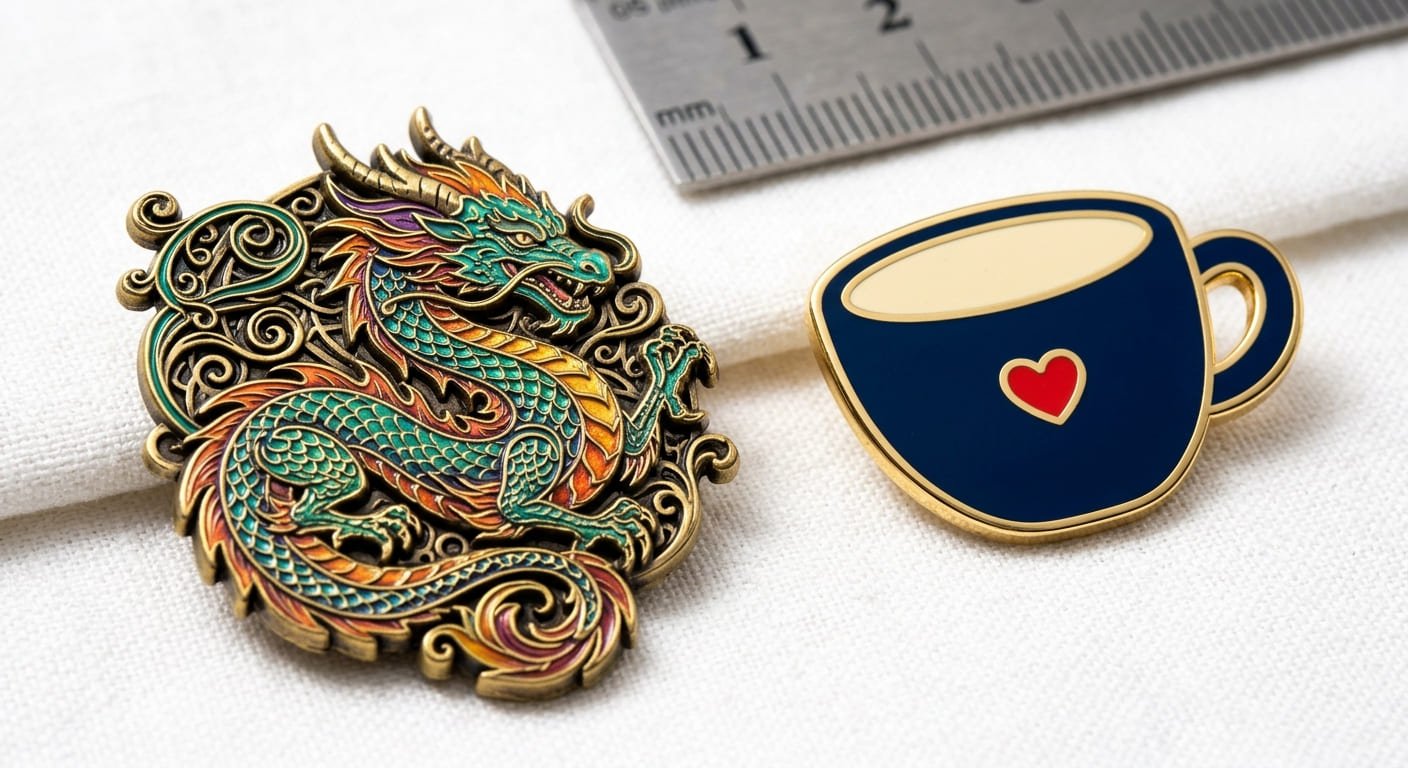
Shape Complexity: Custom shapes that deviate from traditional round or rectangle pins require tailored molds. Irregular shapes like jagged edges or intricate cutouts cost more to produce. Standard shapes often use pre-existing molds, saving time and money.
-
Detail Precision: Tiny text or delicate patterns push the limits of production capabilities, especially for smaller pin sizes. Fine details can require double-checking during inspections, making production both more time-consuming and pricey.
For example, one client wanted their brand name etched in an intricate script but was surprised when this raised costs due to tooling limitations. Simplifying the lettering allowed them to stay within budget.
What impact does order quantity have?
Order quantity is among the most decisive factors affecting enamel pin pricing, and for good reason — manufacturing economies of scale kick in when you order more.
Higher order quantities reduce per-unit costs for enamel pin production. Bulk orders benefit from shared setup costs across a larger volume, while small quantities incur higher overheads per pin due to setup, inspection, and packaging.
Dive deeper:
Some buyers mistakenly perceive bulk purchasing as risky due to upfront costs. In reality, the larger the order, the lower the per-unit price due to economies of scale:
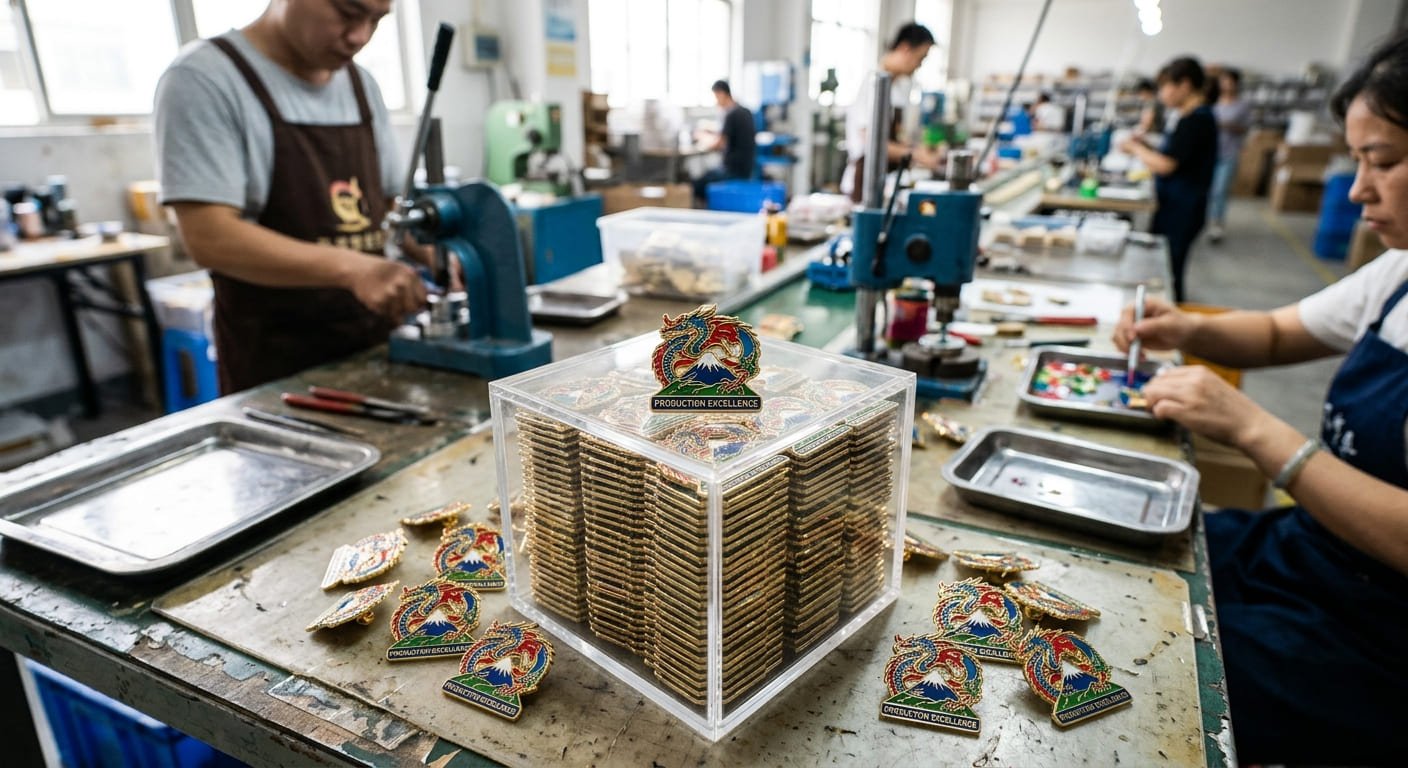
- Setup Expenses: A significant chunk of pin production costs includes fixed expenses like mold creation, plating, and setup. With larger orders, these fixed costs are diluted across more units, while smaller orders concentrate the expense into fewer pins.
- Discount Opportunities: Many manufacturers, including HiPinny, offer tiered pricing where higher quantities unlock per-unit savings.2 For example, clients ordering 500+ pins at HiPinny often cut their unit cost by 20–30%.
Unfortunately, one first-time designer chose to order 50 pins only to realize that doubling the order would have come with significant savings overall. In cases like these, understanding tier pricing could help designers allocate budgets more strategically.
How do customization choices influence costs?
Customization is where your unique vision shines, but it's also one of the top contributors to final enamel pin pricing.
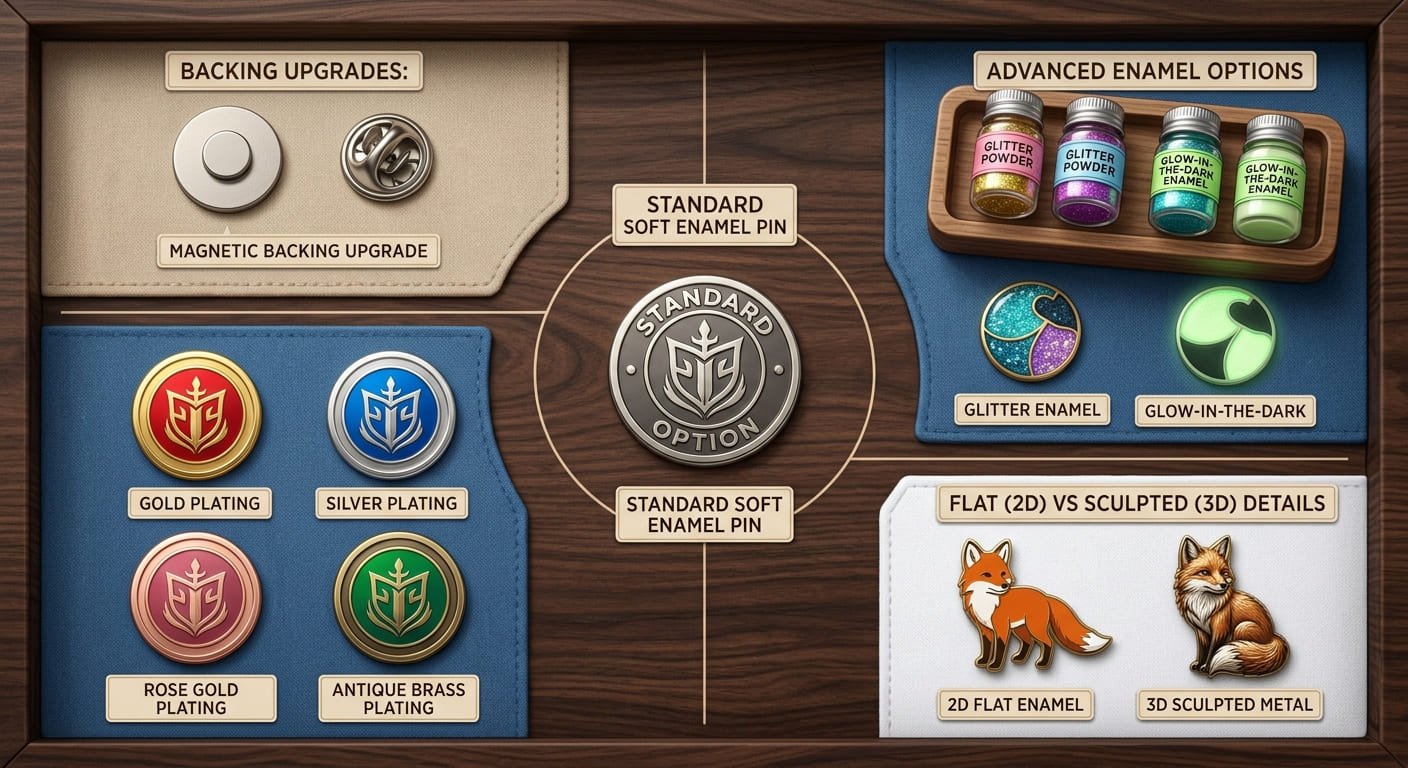
Customization options such as specialized plating, custom backing designs, and added features (e.g., glitter enamel or 3D molds) increase production costs by adding complexity and unique materials. Standard options, like soft enamel and stainless steel plating, are more cost-effective for beginners.
Pinning down the details:
Customization adds flair to your pins, but it’s important to weigh the expense of each option carefully. Here’s why:
- Plating Variants: Gold, silver, and colored plating tend to cost more compared to basic options like nickel or stainless steel. Some clients request premium double-plating, which inevitably drives up production costs.
- Backing Upgrades: Pins can feature various backing mechanisms, from classic butterfly clutches to magnetic backs. While upgrades can elevate customer satisfaction, they add material and labor costs.
- Advanced Features: Glitter enamel, glow-in-the-dark elements, or 3D raised molds require additional manufacturing steps. While these features are visually striking, they also bring proportional increases to your pricing.
For instance, one budget-conscious artist shifted from 3D molds to simpler flat designs and opted out of glow enamel — adjustments that reduced their production cost by 15%.
How can material choices optimize pricing?
While material selection may seem straightforward, it plays an important role in determining affordability and durability.
Pin materials like zinc alloy and iron are cost-effective options, while premium materials (like brass or copper) increase enamel pin pricing due to higher raw material costs.3 Selecting durable yet budget-friendly materials can help maintain quality without overspending.
Let’s compare:
Here’s how common materials impact your bottom line:
| Material | Relative Cost | Key Properties |
|---|---|---|
| Zinc Alloy | Low | Lightweight, affordable, versatile |
| Iron | Low | Durable and cost-effective |
| Brass | Medium | High finish quality, premium appearance |
| Copper | High | Superior quality, best for intricate designs |
Many beginners opt for zinc alloy to minimize expenses while maintaining professional results. In one case, a startup pin designer reduced their unit pricing by switching from brass to iron without sacrificing durability — perfect for their school-targeted product line.
Frequently Asked Questions
Why are enamel pins with glitter more expensive?
Glitter enamel requires additional materials and production steps to embed glitter particles securely into the pin’s design. Glitter-enamel pins often involve extra labor during filling and polishing, making them more expensive to produce.
What affects mold creation costs?
Mold creation costs vary based on the pin’s size, shape, and level of detail. Irregular shapes or advanced features like 3D reliefs require customized molds, which are more expensive to create.4 Standard shapes generally use pre-existing molds, lowering costs.
Are smaller pins cheaper to make?
Not necessarily. Smaller pins with intricate details may demand greater precision and quality control, offsetting the potential savings from a reduced material requirement.5 A simple design typically matters more than overall pin size for cost-effective pricing.
Conclusion
From design complexity and materials to customization and quantity, enamel pin pricing is shaped by multiple interconnected factors. Entrepreneurs can manage costs better by simplifying designs, ordering in bulk, and choosing budget-friendly materials without compromising quality. Whether you're producing pins for business or creative passion, understanding these pricing drivers ensures better supplier conversations and smarter decision-making.
Want to create stunning enamel pins that align with your budget and vision? Reach out to us—we’ll turn your design into a reality!]
"Guide to Enamel Pins", https://acmeprints.com/guide-to-enamel-pins/. Educational resources on enamel pin manufacturing explain how multi-layer molds and precise detailing require additional labor and materials, raising production costs. Evidence role: mechanism; source type: education. Supports: Advanced production techniques for complex designs increase enamel pin costs.. Scope note: Specific cost increases may depend on the scale and complexity of the design. ↩
"Tiered Pricing: Models, Pros & Cons, and Expert Tips", https://www.m3ter.com/guides/tiered-pricing-guide. Industry reports confirm that tiered pricing is a common strategy among manufacturers to incentivize larger orders. Evidence role: general_support; source type: institution. Supports: Manufacturers often use tiered pricing models to reduce per-unit costs for bulk orders.. Scope note: Specific discount rates may vary by manufacturer. ↩
"Hiiii, what is better zink alloy or steel for hard enamel pins?", https://www.facebook.com/groups/enamelpins/posts/1711647089004692/. Studies on material costs for enamel pins show that zinc alloy and iron are affordable options, while brass and copper incur higher expenses due to their premium properties. Evidence role: statistic; source type: research. Supports: Zinc alloy and iron are cost-effective materials, while brass and copper are more expensive due to higher raw material costs.. Scope note: Material costs may fluctuate based on market conditions and supplier pricing. ↩
"Advanced Injection Molding Methods: Review - PMC", https://pmc.ncbi.nlm.nih.gov/articles/PMC10489002/. Research on mold creation for enamel pins highlights how unique designs necessitate tailored molds, increasing production costs. Evidence role: mechanism; source type: research. Supports: Irregular shapes and 3D reliefs require customized molds, which are more expensive to create.. Scope note: Cost differences may depend on the complexity of the design and mold material. ↩
"Balancing Quality and Budget in Precision Pin Manufacturing", https://resources.hartfordtechnologies.com/blog/balancing-quality-and-budget-in-precision-pin-manufacturing. Research on enamel pin production explains how intricate details in smaller designs necessitate additional labor and inspection, raising costs. Evidence role: mechanism; source type: research. Supports: Smaller pins with intricate details may require greater precision and quality control, increasing costs.. Scope note: Cost increases may depend on the specific design and production capabilities. ↩