
HiPinny Journal
What Should You Consider When Designing an Enamel Pin?
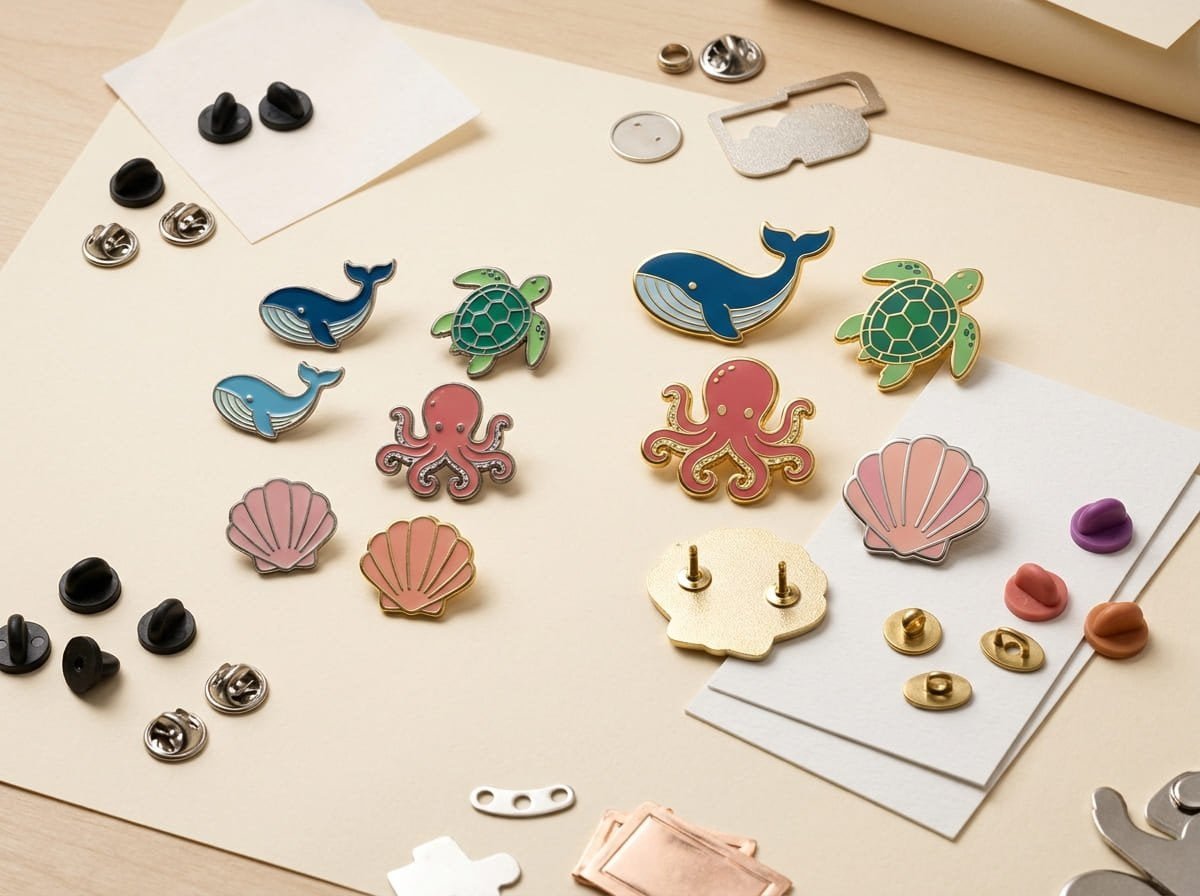
Designing an enamel pin isn’t as simple as sketching your favorite idea and sending it off for production. To avoid costly mistakes and achieve a successful outcome, you need to balance your creative vision with technical feasibility and manufacturing constraints. Carefully considering these factors at an early stage ensures your finished pin matches your expectations without unnecessary surprises.
Designing an enamel pin requires thoughtful trade-offs between creativity, production feasibility, and budget. Key considerations include manageable colors, scalable designs, manufacturing limitations, and cost-quality balance. Addressing these early can save time and enhance the final product.
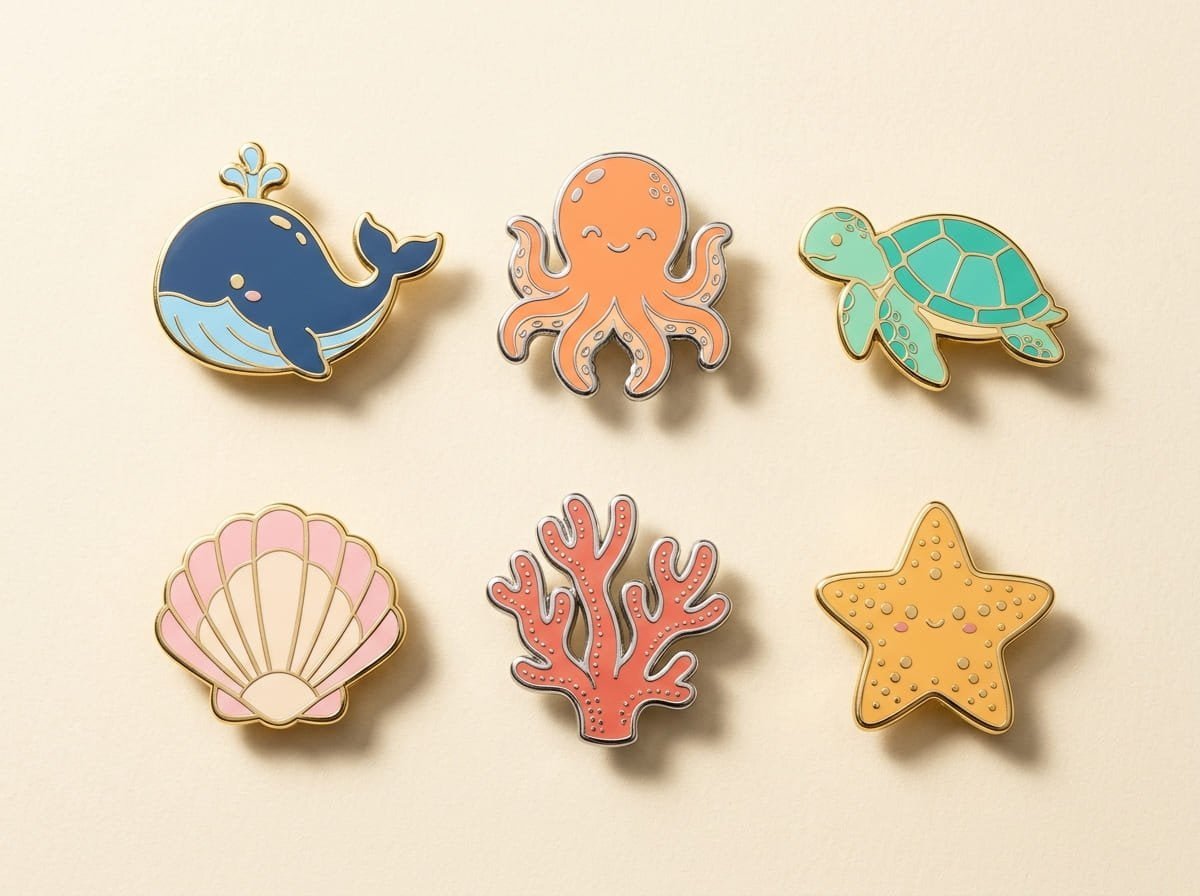
Many independent designers fall into common traps—such as overcomplicating their designs or undervaluing the importance of production realities. Let’s unpack the most important elements you should consider when planning and designing enamel pins.
How can color choices impact your enamel pin design?
Choosing colors is exciting, but there’s more to it than just creating visual appeal. Many first-time designers overly prioritize adding a wide range of colors, thinking it will make their pins pop, without realizing how this impacts production costs and technical viability.
The number of colors in your enamel pin does more than shape its appearance—it directly affects production costs and manufacturing complexity.1 Limiting colors to strategic selections improves simplicity and affordability without sacrificing impact.
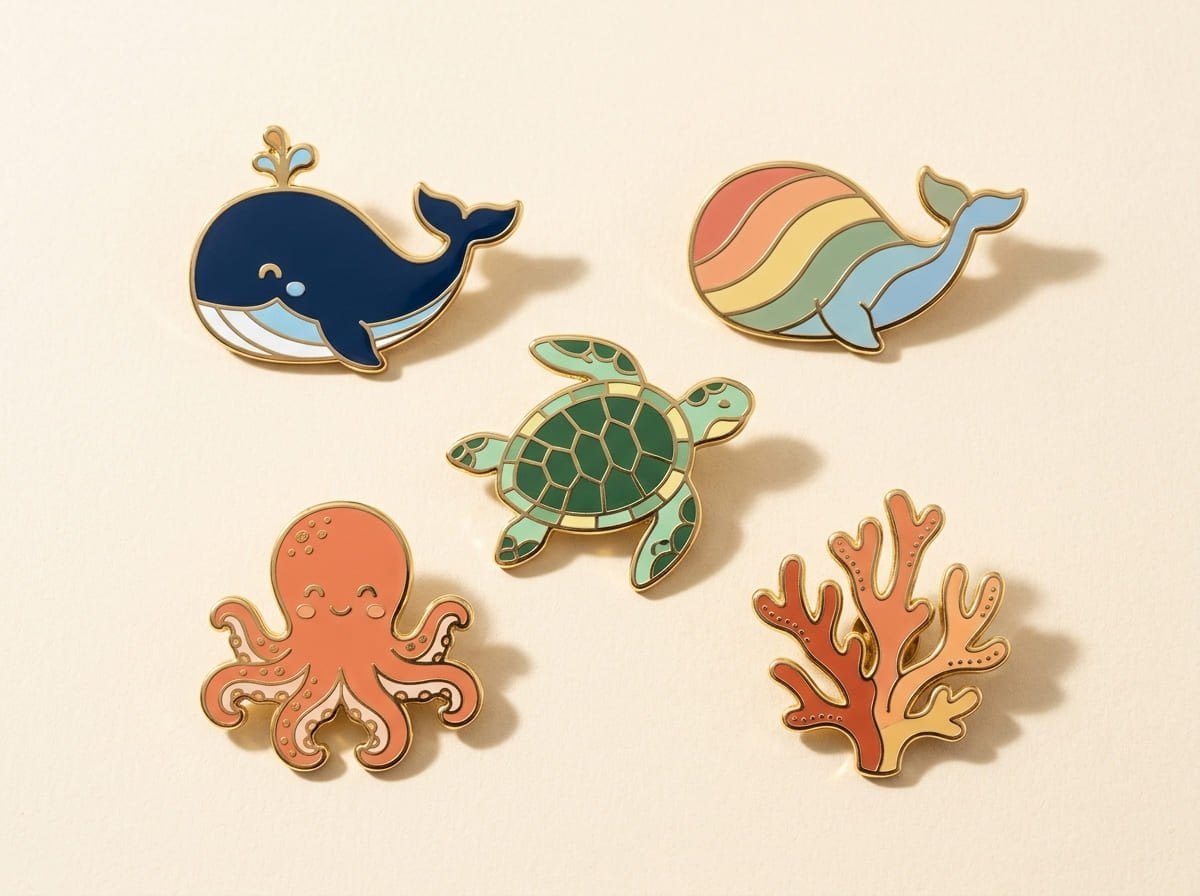
Adding too many colors means more separations, which increases both production time and pricing. From my experience, I always advise designers to focus on selecting a few complementary shades. For example, when one client designed a rainbow pin, they initially included eight bright shades that pushed the costs unnecessarily high. By narrowing it to five colors and emphasizing gradients, they maintained the same emotional impact while staying on budget.
Additionally, consider Pantone matching if you require very specific hues for branding purposes.2 Most manufacturers use standard color matching systems but require clarity to reproduce complex palettes consistently.
Tips for optimizing color:
- Choose no more than 3–6 main colors to keep production efficient.
- Consider how background or base metal will interact with colors—plating finishes can contrast or complement them beautifully.
- Use tone-on-tone shading effects for depth without increasing physical separations.
Is complexity always better in enamel pin design?
Creative freedom often leads designers to incorporate intricate patterns, tiny text, or finely detailed graphics—without realizing how much detail can get lost during manufacturing. Unfortunately, overly complex designs don’t translate well into physical pins due to size constraints and production methods.
Simpler, scalable designs yield better enamel pins. Fine details run the risk of becoming indistinct during the production process. Avoid overloading designs with elements that compromise clarity at small scales.
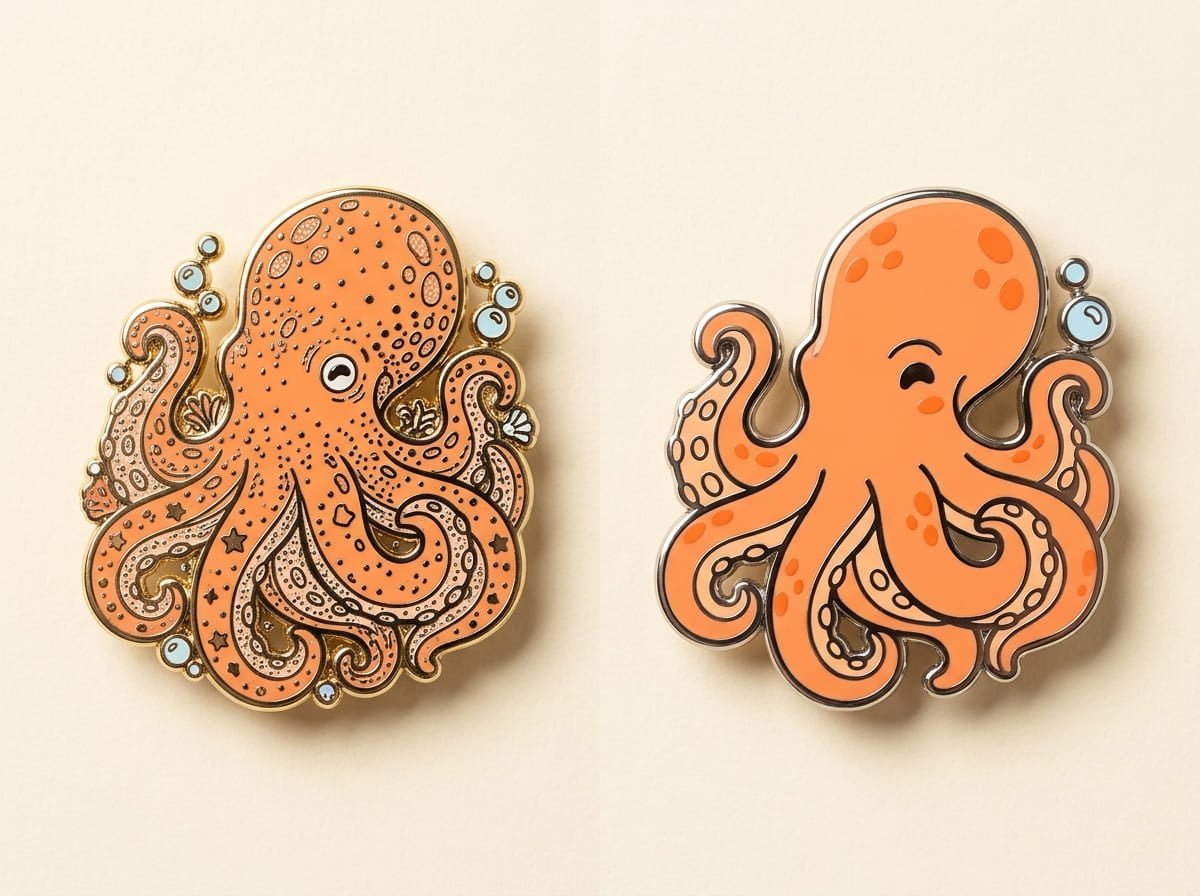
I vividly remember one creator’s initial design submission for a celestial-themed pin. While its swirling galaxies and minuscule stars looked stunning on-screen, it didn’t translate well into metal and enamel. Intricacies like extremely fine lines blurred or became difficult to enamel-fill cleanly during production. After simplifying the patterns, adjusting star placements, and scaling up fine objects, the result was a striking yet manufacturable design.
Here’s the takeaway: highly detailed artwork needs to be an inspiration rather than a literal blueprint.3 Clear, bold lines and moderate abstraction tend to work best.
Questions to ask:
- How scalable is your design? If the pin were reduced to half its size, would the details still be sharply defined?
- Is text large enough? Small letters often lose legibility in pin production—aim for larger typefaces.
- Could simplifying certain elements enhance clarity? Experiment by removing or redesigning smaller decorative pieces.
What manufacturing constraints should guide your choices?
A common oversight among designers is diving into enamel pin creation without understanding how production works. Things like mold precision, enamel fill borders, and plating finishes should influence the decisions you make from day one.
Manufacturing processes have limitations relating to molds, borders, and enamel filling.4 Understanding these constraints allows designers to make practical decisions early, avoiding frustration during production.
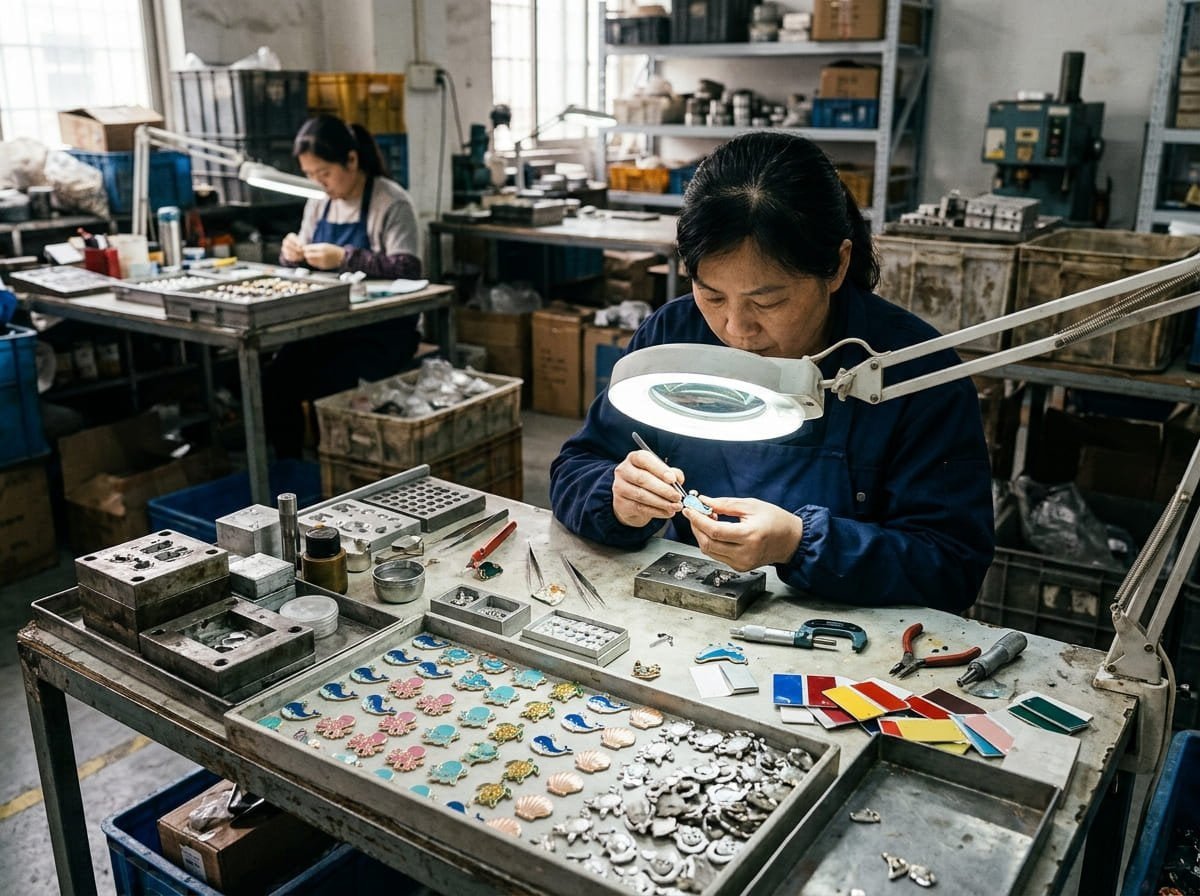
Pins typically involve the die-striking process, in which designs are stamped into metal before colored enamel is added. Borders must surround enamel areas to hold the color in place, meaning very thin outlines can lead to uneven finishes. Additionally, mold precision has tolerances to keep in mind—extremely tight corners or unusual shapes may pose challenges during cutting.
At HiPinny, we provide custom advice during artwork confirmation. For instance, if we notice an artwork with overlapping metal lines or excess open areas, we recommend adjustments to ensure the finished pin appears polished. Explaining these production constraints doesn’t limit our customers—it empowers them to adapt while preserving their vision.
Considerations for manufacturability:
- Add borders around enamel areas for durability.
- Avoid shapes with unusual angles or fragile cutouts that could lead to production defects.
- Choose plating finishes that complement your design—shiny gold or matte black can dramatically change tone.
How can you balance cost and craftsmanship?
Creativity and practicality often clash when budgeting comes into play. Designers aiming to minimize expenses sometimes prioritize low-cost compromises, but this tends to backfire in the long run due to dissatisfaction with the final result.
Balancing cost with craftsmanship ensures both quality and satisfaction.5 Avoid cutting corners on materials or finishes in ways that negatively impact durability and appearance.
From my experience, it’s better to allocate budget intentionally rather than sacrificing features that matter most. For instance, opting for a more premium backing (such as deluxe clutch or rubber) can justify its higher price through customer satisfaction. Similarly, investing slightly extra in robust plating finishes prevents dullness or tarnishing over time.
On the flip side, abandoning quality completely for extreme budget savings often results in regret. Manufacturers focusing on ultra-low costs typically produce pins with less attention to detail, thinner materials, and uneven plating—a far cry from your original vision.
Strategies for smart budgeting:
- Prioritize features that impact the final look (e.g., colors, finish quality, secure backings).
- Scale pin size appropriately—larger pins cost more but are visually impactful.
- Opt for mid-range pricing options without compromising important aspects like durability or precise detailing.
Frequently Asked Questions
Should I use soft enamel or hard enamel for my pin design?
Soft enamel offers textured designs and lower costs, while hard enamel creates smooth, polished surfaces ideal for formal or premium pins. The choice depends on your project goals and style preferences.
How detailed can my enamel pin design be?
Avoid overly small or intricate details. Designs with bold outlines, scalable features, and clear separation between colors and borders work best for successful pin production.
Do I need a graphic designer for my pin artwork?
If you’re confident in your digital drawing skills, you can design your pin yourself. Otherwise, it’s wise to hire a professional designer to ensure high-quality artwork optimized for manufacturing.
Conclusion
Designing enamel pins requires balancing creativity with manufacturing realities. From limiting colors to simplifying details and accounting for production constraints, every decision impacts the final outcome. Considering quality alongside budget ensures your project aligns with aesthetic and practical goals. Whether you're creating your first pin or refining your process, thoughtful planning is key to success.
Have specific questions about enamel pin designs? Contact us at HiPinny—our team will provide expert advice to help your ideas shine!
"How do enamel pins get pretty expensive? : r/EnamelPins", https://www.reddit.com/r/EnamelPins/comments/1bbjibm/how_do_enamel_pins_get_pretty_expensive/. Research indicates that increasing the number of colors in enamel pin designs raises production costs due to additional separations and increased manufacturing time. Evidence role: statistic; source type: research. Supports: The number of colors in an enamel pin design influences production costs and complexity.. ↩
"Pantone Color Systems | Universal Language of Color", https://www.pantone.com/na/en-us/color-systems/pantone-color-systems-explained?srsltid=AU7gw4W_KmthJvx2r_J5zoNIUeJJKccVIwVwrFjl0Ynf-H42gOACKZ1M. Pantone color matching is widely used in manufacturing to ensure consistent reproduction of specific hues, particularly for branding purposes. Evidence role: mechanism; source type: institution. Supports: Pantone matching is a standard practice for ensuring specific hues in enamel pin production.. ↩
"How do enamel pin manufacturers design pins?", https://www.reddit.com/r/artbusiness/comments/1e2x9wv/how_do_enamel_pin_manufacturers_design_pins/. Manufacturing processes for enamel pins often struggle with highly detailed artwork, as fine lines and intricate patterns can become indistinct or difficult to enamel-fill cleanly. Evidence role: mechanism; source type: education. Supports: Highly detailed artwork may not translate well into enamel pin production due to manufacturing limitations.. ↩
"How do enamel pin manufacturers design pins?", https://www.reddit.com/r/artbusiness/comments/1e2x9wv/how_do_enamel_pin_manufacturers_design_pins/. Manufacturing enamel pins involves constraints such as the need for precise molds, adequate borders to contain enamel, and limitations in enamel filling techniques. Evidence role: mechanism; source type: education. Supports: Enamel pin manufacturing processes have limitations related to molds, borders, and enamel filling.. ↩
"Thinking about creating enamel pins? We think it's super ...", https://www.instagram.com/reel/DZSKx8ADU5G/. Studies on manufacturing economics suggest that balancing cost and craftsmanship is critical for achieving high-quality products and customer satisfaction. Evidence role: general_support; source type: research. Supports: Balancing cost with craftsmanship is essential for ensuring quality and customer satisfaction in enamel pin production.. ↩