
HiPinny Journal
What Types of Glitter Enamel Pins Are Available?
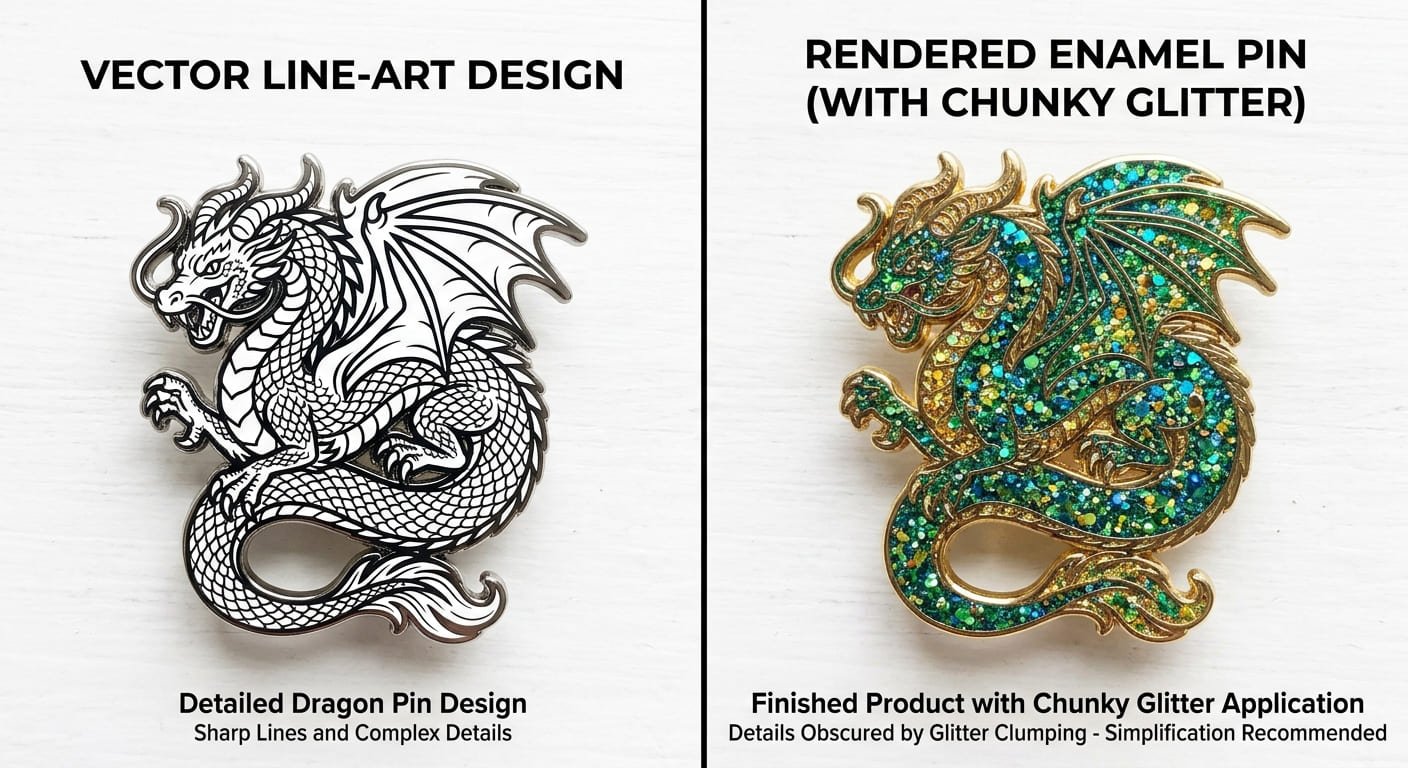
Glitter enamel pins are a popular choice for adding sparkle and vibrancy to designs, but understanding your options is key to achieving the perfect end product. From glitter types and color limitations to design adjustments and cost impacts, knowing what works and what doesn’t can save you time and money.
Glitter enamel pins come in different types based on glitter pigments, achievable colors, and design constraints. Buyers should know how glitter affects surface smoothness, production costs, and timelines to make informed decisions.
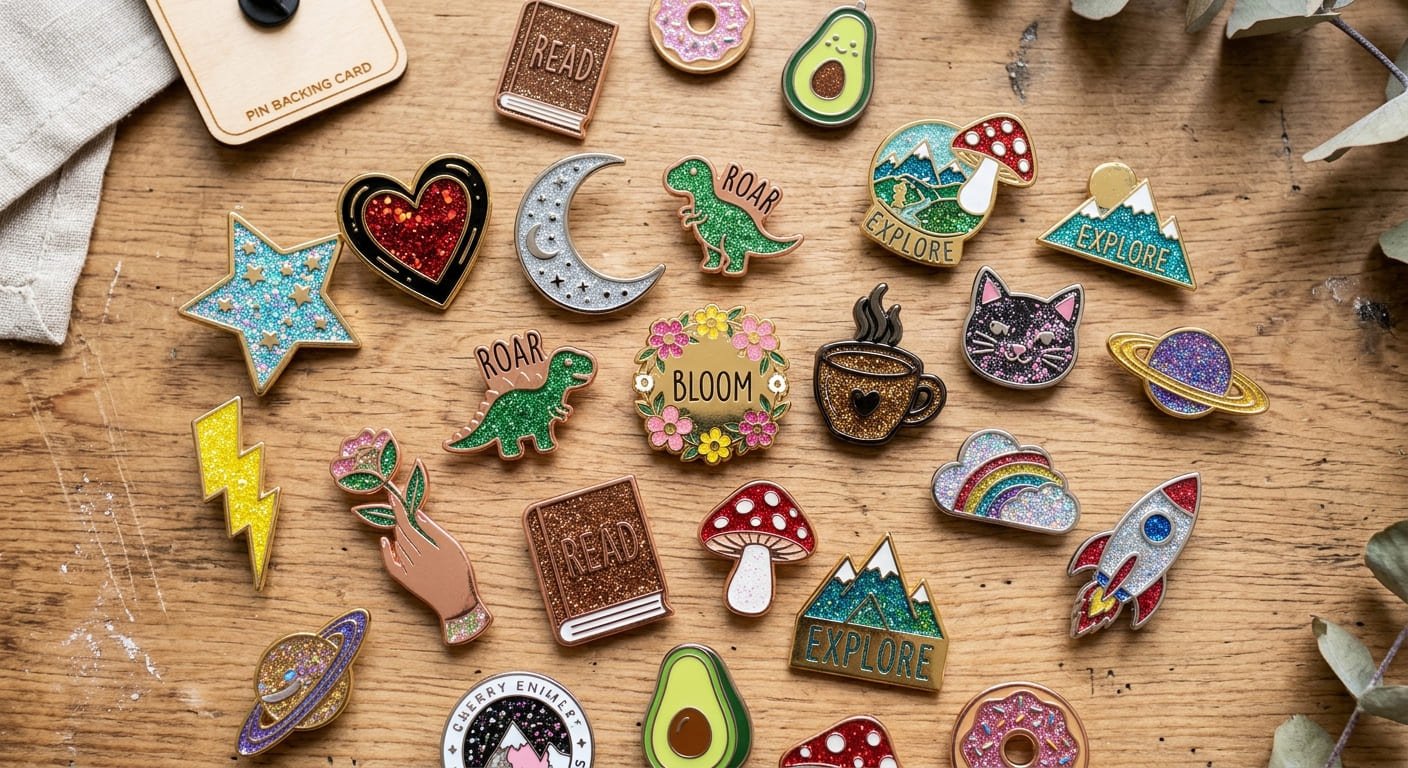
The world of glitter enamel isn’t as simple as adding sparkle to any design or color. If you’re considering glitter for your enamel pins, it’s crucial to understand how technical factors and design decisions can influence the outcome. Let’s dive into the options and considerations for glitter enamel pins.
What colors of glitter enamel can you choose?
Adding glitter to enamel is eye-catching, but not all colors translate seamlessly into glitter finishes. Why? Glitter pigments interact differently with enamel bases, often creating subtle tonal shifts or limitations in vibrancy. Let’s break this down.
You can choose glitter options for many enamel colors, but specific shades may be unavailable due to pigment compatibility1. Metallic tones and deeper hues typically work best.
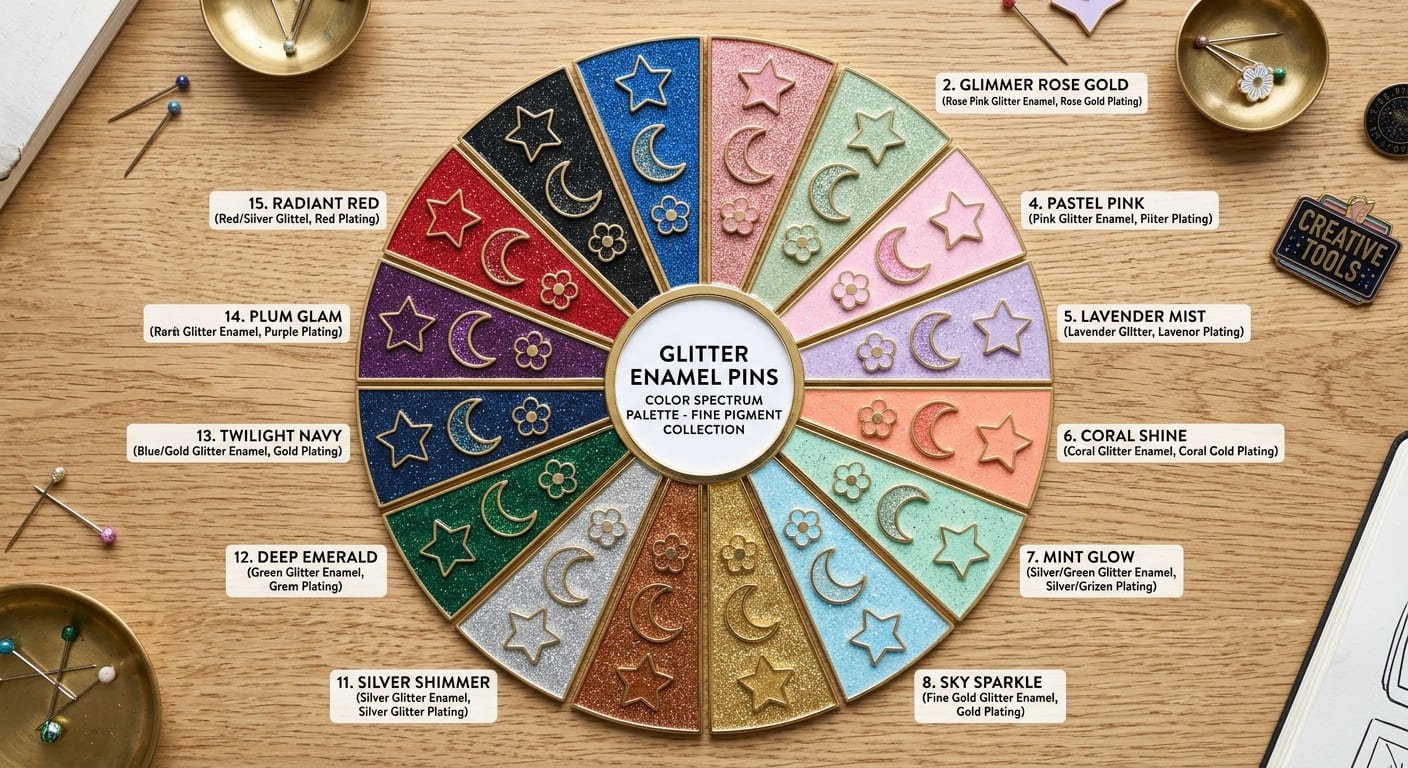
The glitter pigments available for enamel pins are generally metallic or pastel tones. While vibrant primary colors like reds, yellows, and blues may be achievable, darker shades or neon hues can pose challenges. Glitter pigments may dilute the richness of certain colors or interact unevenly with enamel, resulting in unpredictable finishes.
Optimizing glitter in design
- Stick to tried-and-true glitter colors, such as silver, gold, or iridescent pastels.
- Consult with your manufacturer about limitations for brighter or neon hues.
- Expect slight color variations due to glitter’s impact on enamel pigments.
Because glitter changes how light interacts with the surface, the results can differ dramatically across designs. That’s why testing and confirming finishes during prototyping is highly recommended.
Does glitter affect pin surfaces?
When you think of enamel pins, you likely imagine smooth surfaces with vibrant details. Glitter enamel introduces texture, which can affect the way your design feels and appears. This often surprises first-time buyers, especially for intricate designs.
Glitter enamel can result in a less smooth surface due to embedded glitter particles2. This may subtly alter design finishes and pin durability.
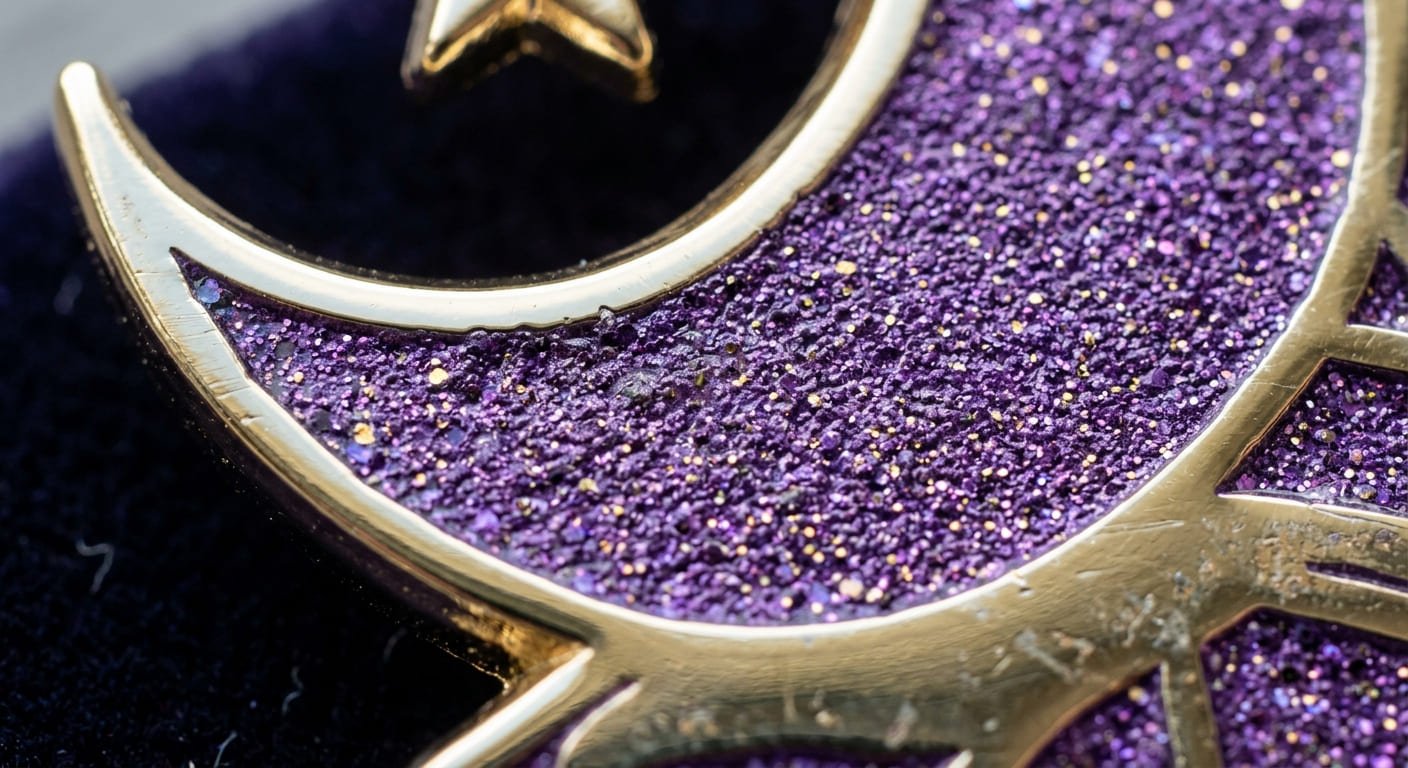
The glitter enamel finish isn’t completely smooth. Glitter particles within the enamel can create slight texture variations, which are more noticeable if large sections of your pin feature glitter. While this can enhance the pin’s sparkle, buyers should be aware that:
- Glitter-enriched surfaces may wear differently over time compared to smooth finishes.
- Designs with glitter should avoid ultra-fine details where the rough texture might interfere.
- Handling glitter pins often feels less polished than non-glitter pins due to the embedded particles.
To mitigate potential issues, consider limiting glitter use to accent areas of the pin rather than covering large centerpieces. This approach minimizes textural differences while highlighting key design elements.
What design adjustments should you make for glitter enamel pins?
Customization is a major draw for enamel pins, but glitter designs require specific adjustments to ensure they look great post-production. Many buyers underestimate the importance of integrating glitter considerations early in the design process.
Design adjustments for glitter pins should focus on simplifying detailed elements and previewing how glitter impacts color and texture. An early integration prevents costly edits later.
Here’s why early design edits are critical: Glitter changes how light reflects off the enamel, which can obscure fine lines and details. Some key recommendations include:
Steps for glitter-friendly designs:
- Simplify intricate lines: If your design features fine text or detailed patterns, glitter may obscure visibility. Plan for bold, clean shapes.
- Restrict glitter use: Use glitter strategically—small accents can elevate a design without overwhelming key features.
- Coordinate colors: Glitter can distort adjacent colors slightly3. Choose complementary hues to maintain balance.
- Confirm prototypes: Ask your manufacturer for samples with glitter applications to preview realistic finishes.
Starting with glitter-friendly designs avoids making expensive corrections during production.
How does glitter affect costs and delivery times?
Special finishes like glitter enamel aren’t free—they often increase production costs and lead times, especially for completely custom color blends. Buyers should account for these impacts in their budgets.
Adding glitter to enamel pins increases costs due to specialized pigments and adjustments during production. It may also extend delivery timelines depending on complexity.
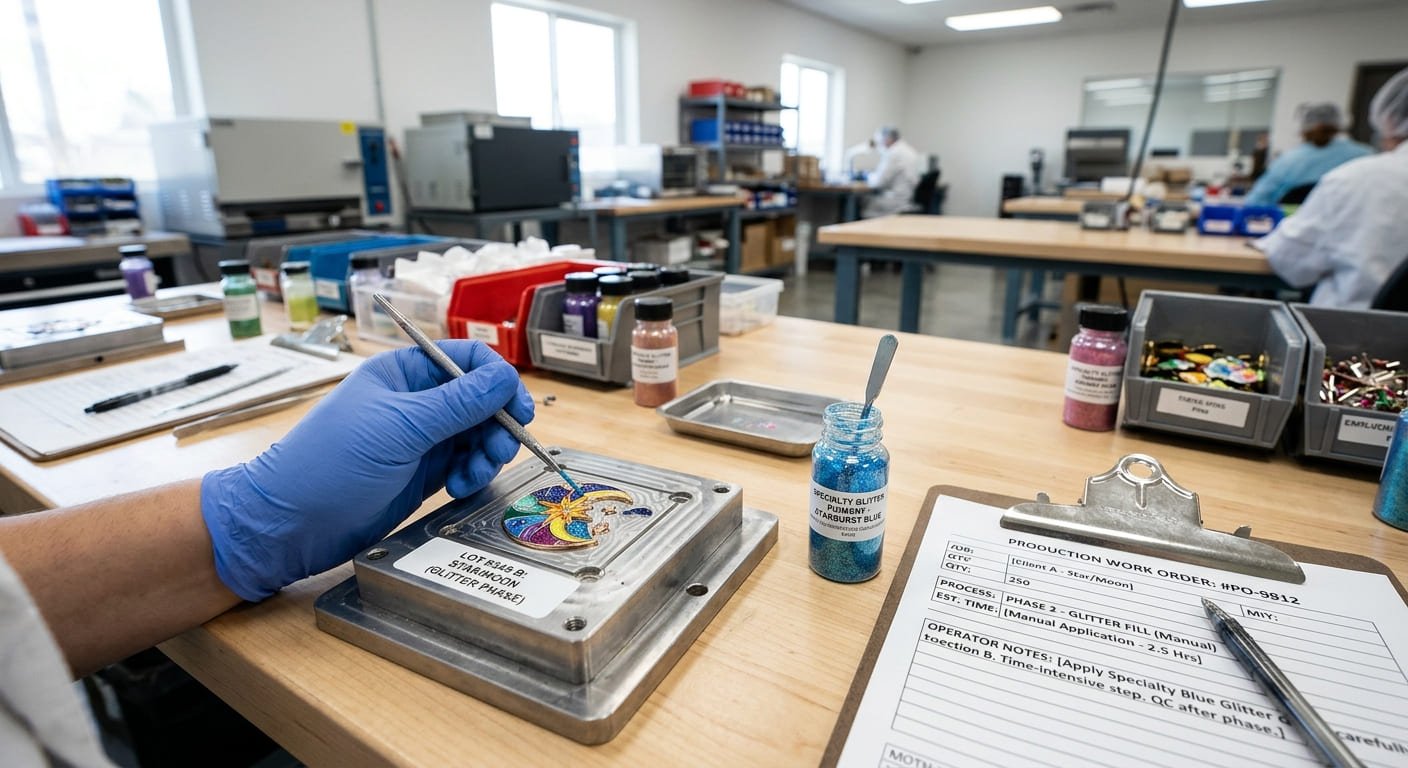
Glitter pigments typically cost more than standard enamel colors4, and the manufacturing process must account for adjustments related to layering and textural consistency. Consider these factors:
Cost and timeline considerations:
- Pigment pricing: Glitter pigments may cost slightly more due to production complexity.
- Time impact: Layering glitter with enamel can extend timelines5, particularly for larger orders.
- Custom blends: Unique glitter colors often require more prep time, which could delay overall delivery.
To mitigate delays and monitor costs, communicate openly with your supplier. Provide adequate lead time for your order and opt for standard glitter colors to streamline production.
Frequently Asked Questions
Can I use glitter on small detailed areas of my pin?
Using glitter on small details isn’t recommended. Glitter particles can obscure fine designs, such as small text or intricate lines. Instead, incorporate glitter in larger accents or simplified sections of your design.
Does glitter affect the durability of enamel pins?
Glitter enamel isn’t less durable overall, but its slightly textured surface may show wear more quickly in handling or display. Limiting glitter application to accents can help preserve the finish.
How do I confirm the glitter color options with my manufacturer?
Request swatches of the available glitter pigments or ask for sample pins showcasing glitter applications. This ensures you know the colors and finishes achievable for your design.
Is adding glitter to my pins very expensive?
Glitter enamel finishes are more expensive than regular enamel6, but the price difference is usually moderate. Custom glitter blends or extensive application areas may increase costs substantially.
Does glitter add time to production?
Yes, applying glitter usually adds time to your production because the process requires careful layering and curing. Consult your supplier to plan timelines accordingly.
Conclusion
Glitter enamel pins are an exciting customization option that can bring shine to your designs, but achieving the perfect finish requires careful planning. From understanding color limitations to making essential design adjustments and accounting for cost impacts, navigating glitter options ensures your pins turn out as intended. By collaborating closely with your manufacturer and confirming options early, you can create glitter enamel pins that dazzle your audience without exceeding your budget or timeline.
Ready to design your glitter enamel pins? Reach out today and let’s bring your creative ideas to life!
"Inorganic pigments for enamel glazes", https://www.facebook.com/groups/758930549119377/posts/1368287524850340/. Educational resources on enamel production explain how pigment interactions with enamel bases can restrict achievable glitter shades. Evidence role: mechanism; source type: education. Supports: Pigment compatibility issues can limit the range of glitter enamel colors available.. Scope note: The explanation may not cover all pigment types or manufacturing methods. ↩
"Enamel surface roughness after debonding - PMC - NIH", https://pmc.ncbi.nlm.nih.gov/articles/PMC8929481/. Research on enamel finishes describes how glitter particles embedded in enamel layers can alter surface texture. Evidence role: mechanism; source type: research. Supports: Embedded glitter particles in enamel can create textural variations, reducing surface smoothness.. Scope note: The findings may vary depending on the specific manufacturing process or glitter particle size. ↩
"Interactions between colour-producing mechanisms and their ...", https://pmc.ncbi.nlm.nih.gov/articles/PMC5444072/. Studies on pigment interactions in enamel describe how glitter particles can alter the perception of nearby colors. Evidence role: mechanism; source type: research. Supports: Glitter can distort adjacent colors in enamel designs due to its reflective properties.. Scope note: The findings may depend on specific glitter types and enamel formulations. ↩
"Its more expensive bc its pink (yes, its the same description ...", https://www.reddit.com/r/pointlesslygendered/comments/nriv7w/its_more_expensive_bc_its_pink_yes_its_the_same/. Industry reports on enamel pin manufacturing indicate that glitter pigments incur higher costs due to specialized production processes. Evidence role: statistic; source type: institution. Supports: Glitter pigments are priced higher than standard enamel colors due to their production complexity.. Scope note: The report may not account for regional variations in production costs. ↩
"Glitter", https://en.wikipedia.org/wiki/Glitter. Manufacturing guidelines for enamel pins detail how glitter layering requires extra steps, increasing production time. Evidence role: mechanism; source type: institution. Supports: Layering glitter with enamel can extend production timelines due to additional curing and application steps.. Scope note: The guidelines may vary depending on the specific manufacturing process used. ↩
"How do enamel pins get pretty expensive? : r/EnamelPins", https://www.reddit.com/r/EnamelPins/comments/1bbjibm/how_do_enamel_pins_get_pretty_expensive/. Industry pricing data confirms that glitter enamel finishes incur higher costs compared to standard enamel finishes. Evidence role: statistic; source type: institution. Supports: Glitter enamel finishes are priced higher than regular enamel finishes due to production complexity.. Scope note: The data may not account for all manufacturers or production methods. ↩